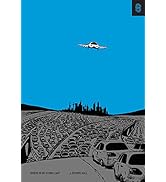
Used - Very Good
$21.01$21.01
Ships from: Amazon Sold by: Shakespeare Book House
Return this item for free
We offer easy, convenient returns with at least one free return option: no shipping charges. All returns must comply with our returns policy.
Learn more about free returns.- Go to your orders and start the return
- Select your preferred free shipping option
- Drop off and leave!
Sorry, there was a problem.
There was an error retrieving your Wish Lists. Please try again.Sorry, there was a problem.
List unavailable.
Download the free Kindle app and start reading Kindle books instantly on your smartphone, tablet, or computer - no Kindle device required.
Read instantly on your browser with Kindle for Web.
Using your mobile phone camera - scan the code below and download the Kindle app.
Follow the authors
OK
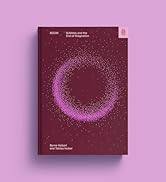
Boom: Bubbles and the End of Stagnation
Purchase options and add-ons
“Read this book for the alternative history of our age.”
—Peter Thiel, investor and author of Zero to One
“A must-read for those who seek to build the future.”
—Marc Andreessen, cofounder of Netscape and Andreessen Horowitz
From the Moon landing to the dawning of the atomic age, the decades prior to the 1970s were characterized by the routine invention of transformative technologies at breakneck speed. By comparison, ours is an age of stagnation. Median wage growth has slowed, inequality and income concentration are on the rise, and scientific research has become increasingly expensive and incremental.
Why are we unable to replicate the rate of progress of past decades? What can we do to reinvigorate innovation?
In Boom, Byrne Hobart and Tobias Huber take an inductive approach to the problem. In a series of case studies tracking some of the most significant breakthroughs of the past 100 years—from the Manhattan Project and the Apollo program to fracking and Bitcoin—they reverse-engineer how transformative progress arises from small groups with a unified vision, vast funding, and surprisingly poor accountability. They conclude that financial bubbles, while often maligned as destructive and destabilizing forces, have in fact been the engine of past breakthroughs and will drive future advances. In other words: Bubbles aren’t all bad.
Integrating insights from economics, philosophy, and history, Boom identifies the root causes of the Great Stagnation and provides a blueprint for accelerating innovation. By decreasing collective risk aversion, overfunding experimental processes, and organizing high-agency individuals around a transcendent mission, bubbles are the key to realizing a future that is radically different from the present. Boom offers a definite and optimistic vision of our future—and a path to unleash a new era of global prosperity.
- ISBN-101953953476
- ISBN-13978-1953953476
- PublisherStripe Press
- Publication dateNovember 19, 2024
- LanguageEnglish
- Dimensions6.5 x 1.25 x 9.5 inches
- Print length304 pages
Discover the latest buzz-worthy books, from mysteries and romance to humor and nonfiction. Explore more
Explore your book, then jump right back to where you left off with Page Flip.
View high quality images that let you zoom in to take a closer look.
Enjoy features only possible in digital – start reading right away, carry your library with you, adjust the font, create shareable notes and highlights, and more.
Discover additional details about the events, people, and places in your book, with Wikipedia integration.
Frequently bought together

Customers who viewed this item also viewed
The Art of Doing Science and Engineering: Learning to LearnHardcoverFREE Shipping on orders over $35 shipped by AmazonGet it as soon as Wednesday, May 27Only 1 left in stock (more on the way).
The Origins of EfficiencyHardcoverFREE Shipping on orders over $35 shipped by AmazonGet it as soon as Wednesday, May 27
The Scaling Era: An Oral History of AI, 2019–2025HardcoverFREE Shipping on orders over $35 shipped by AmazonGet it as soon as Wednesday, May 27
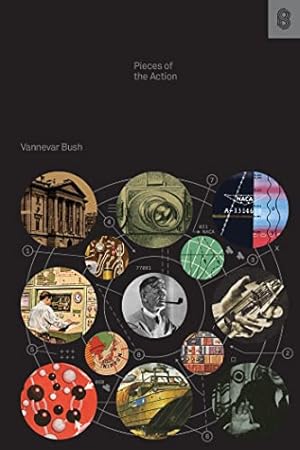
Pieces of the ActionHardcoverFREE Shipping on orders over $35 shipped by AmazonGet it as soon as Wednesday, May 27
The Big Score: The Billion Dollar Story of Silicon ValleyHardcoverFREE Shipping on orders over $35 shipped by AmazonGet it as soon as Wednesday, May 27
Customers also bought or read
- Stubborn Attachments: A Vision for a Society of Free, Prosperous, and Responsible Individuals
Hardcover$15.02$15.02Delivery Wed, May 27 - The Origins of Efficiency#1 Best SellerIndustrial Manufacturing
Hardcover$25.30$25.30Delivery Wed, May 27 - Maintenance of Everything: Part One#1 Best SellerVehicle Owner's Manuals & Maintenance Guides
Hardcover$31.98$31.98Delivery May 30 - Jun 2 - The Art of Doing Science and Engineering: Learning to Learn#1 Best SellerInformation Theory
Hardcover$24.21$24.21Delivery Wed, May 27 - The Revolt of the Public and the Crisis of Authority in the New Millennium
Hardcover$28.44$28.44FREE delivery Jun 1 - 5 - Technological Revolutions and Financial Capital: The Dynamics of Bubbles and Golden Ages
Paperback$41.95$41.95FREE delivery Wed, May 27 - The Technological Republic: Hard Power, Soft Belief, and the Future of the West
Hardcover$13.36$13.36Delivery Wed, May 27 - Breakneck: China's Quest to Engineer the Future#1 Best SellerAsian Politics
Hardcover$26.09$26.09Delivery Wed, May 27 - Engines That Move Markets: Technology Investing from Railroads to the Internet and Beyond
Hardcover$50.32$50.32FREE delivery Wed, May 27 - The Anthology of Balaji: A Guide to Technology, Truth, and Building the Future
Paperback$18.63$18.63Delivery Wed, May 27 - Fragile by Design: The Political Origins of Banking Crises and Scarce Credit (The Princeton Economic History of the Western World)
Paperback$23.73$23.73Delivery Thu, May 28 - Mobilize: How to Reboot the American Industrial Base and Stop World War III
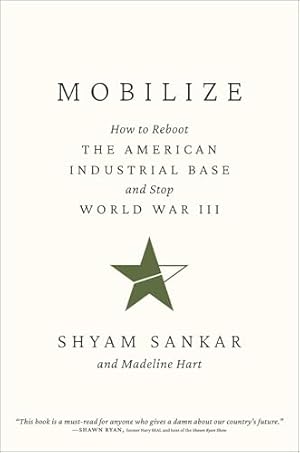
Just releasedHardcover$19.95$19.95Delivery Wed, May 27 - The Making of a Permabear: The Perils of Long-term Investing in a Short-term World
Hardcover$16.97$16.97Delivery Wed, May 27 - The Unaccountability Machine: Why Big Systems Make Terrible Decisions—and How the World Lost Its Mind
Paperback$18.64$18.64Delivery Wed, May 27 - Seeing Like a State: How Certain Schemes to Improve the Human Condition Have Failed (Veritas Paperbacks)
Paperback$20.46$20.46Delivery Jun 5 - 18 - A Culture of Growth: The Origins of the Modern Economy (The Graz Schumpeter Lectures)
Paperback$13.72$13.72Delivery Wed, May 27 - The Fairfax Way: Inside Prem Watsa's Secret to Lasting Success
Hardcover$25.65$25.65Delivery Wed, May 27 - The Great Mental Models, Volume 1: General Thinking Concepts (The Great Mental Models Series)
Hardcover$17.45$17.45Delivery Wed, May 27 - The Power Law: Venture Capital and the Making of the New Future
Hardcover$11.38$11.38Delivery Wed, May 27 - The Rise and Fall of American Growth: The U.S. Standard of Living since the Civil War (The Princeton Economic History of the Western World)
Paperback$15.70$15.70Delivery Wed, May 27 - The Complex World: An Introduction to the Foundations of Complexity Science
Paperback$5.99$5.99Delivery Wed, May 27
From the brand

Stripe Press
-
-
New & Forthcoming
-
Business & Management
-
Economics & History
-
Ideas & Innovation
-
Science & Technology
From the Publisher
Praise for Boom
The alternative history of our age.
“The dot-com bubble looked like the peak of delusion, but the truly deluded were those who wanted to indefinitely defer the future. Everyone knows bubbles can disguise madness as wisdom; read this book for the alternative history of our age.”
—Peter Thiel, investor and author of Zero to One
For those who seek to build the future.
“Boom makes the case that humanity's greatest risk is not climate change or misaligned superintelligent Al but not making enough progress. A must-read for those who seek to build the future.”
—Marc Andreessen, cofounder of Netscape and Andreessen Horowitz
Bubbles can drive progress.
"When is it that temporary bubbles can help drive forward progress? This happened with the railroads, with the internet, and it is likely to happen with AI. Byrne Hobart and Tobias Huber have produced some essential reading on a very important and also understudied topic."
—Tyler Cowen, author of The Great Stagnation and professor of economics at George Mason University
About the author
Byrne Hobart is an investor, consultant, and writer. He is the author of The Diff, a daily newsletter covering inflection points in finance and technology. He is also a founding partner at Anomaly, a frontier tech investment firm.
About the editor
Tobias Huber is a writer and investor. He is a partner at Anomaly, a frontier tech investment firm. He has a background in philosophy and holds a doctor of science degree from ETH Zurich.
About the publisher
Stripe Press publishes ideas for progress in science, technology, and economics. Our collection includes new ideas from emerging and established thinkers and industry leaders, as well as reimagined editions of enduring works. We curate our titles for a global audience of builders and practitioners who are shaping the future of policy and industry.
Stripe Press is based in South San Francisco, with team members across the US and in London. We are a part of the global payments infrastructure company Stripe.
Recent titles by Stripe Press:
- Poor Charlie's Almanack by Charles T. Munger and Peter D. Kaufman
- Scaling People by Claire Hughes Johnson
- Pieces of the Action by Vannevar Bush
Editorial Reviews
Review
“The dot-com bubble looked like the peak of delusion, but the truly deluded were those who wanted to indefinitely defer the future. Everyone knows bubbles can disguise madness as wisdom; read this book for the alternative history of our age.”—Peter Thiel, investor and author of Zero to One
“Boom makes the case that humanity's greatest risk is not climate change or misaligned superintelligent Al but not making enough progress. A must-read for those who seek to build the future.”—Marc Andreessen, cofounder of Netscape and Andreessen Horowitz
"When is it that temporary bubbles can help drive forward progress? This happened with the railroads, with the internet, and it is likely to happen with AI. Byrne Hobart and Tobias Huber have produced some essential reading on a very important and also understudied topic."—Tyler Cowen, author of The Great Stagnation and professor of economics at George Mason University
About the Author
Tobias Huber is a writer and investor. He is a partner at Anomaly, a frontier tech investment firm. He has a background in philosophy and holds a doctor of science degree from ETH Zurich.
Product details
- Publisher : Stripe Press
- Publication date : November 19, 2024
- Language : English
- Print length : 304 pages
- ISBN-10 : 1953953476
- ISBN-13 : 978-1953953476
- Item Weight : 1.45 pounds
- Dimensions : 6.5 x 1.25 x 9.5 inches
- Best Sellers Rank: #78,082 in Books (See Top 100 in Books)
- #45 in History of Technology
- #55 in Theory of Economics
- #325 in Entrepreneurship (Books)
- Customer Reviews:
About the authors

Tobias Huber is a writer and investor. He is a partner at Anomaly, a frontier tech investment firm. He has a background in philosophy and holds a doctor of science degree from ETH Zurich.

Discover more of the author’s books, see similar authors, read book recommendations and more.
Customer reviews
Customer Reviews, including Product Star Ratings help customers to learn more about the product and decide whether it is the right product for them.
To calculate the overall star rating and percentage breakdown by star, we don’t use a simple average. Instead, our system considers things like how recent a review is and if the reviewer bought the item on Amazon. It also analyzed reviews to verify trustworthiness.
Learn more how customers reviews work on AmazonTop reviews from the United States
- 5 out of 5 stars
Human Action and Transcendence Matter
Reviewed in the United States on December 20, 2024The genre of sociology of knowledge is filled with often fantastic tales of adventure drawn from science and industry. Society is facing an enduring problem that has finally reached is pique. All the wise men are gathered, reflecting on the Gordian knot. Meanwhile, through a concatenation of events a virtual unknown from a nameless hamlet emerges to rescue humanity. The Kuhnian story is a classic in the genre. However, we're left with potentially empty theme. Too much emphasis on the machinations of History erases the human actor (see also: War and Peace by Tolstoy).
But what if ideas create their own demand? That's the elementary thesis that these two authors offer. The shift from a concentration on the typical architecture that has built the cathedral of the sociology of knowledge from things to the intangible is as profound as it is desperately needed in our material age. Their opening and closing argument lay great emphasis on mankind's gift for a transcendent vision. The vision, driven by a consuming passion to press the boundaries of our literal frontier outward is not one than can be explained in a Mertonian manner. What makes a bold vision emerge and a bubble fill is a visceral yearning for a new experiential range. That passion cannot be explained with a typical regression model filled with economic inputs or stochastic historical events; it demands a sentient human actor consumed with an idea (that intangible non-material factor). And yes, that idea may indeed be inspired by search to see the face of God.
The toughest sell in the book is their running headlong into a defense of bubbles. Not to fear, they kindly offer a few identifiers to help the reader differentiate those that are pregnant with opportunity from those that are (at best) barren. Take their advice and avoid the temptation to buy the dip. Take the risk of joining Peter Thiel and Marc Andreessen on an intoxicating adventure with this enthusiastic vision.
2 people found this helpfulSending feedback...Sending feedback...HelpfulThank you for your feedback.Sorry, we failed to record your vote. Please try againThanks, we'll investigate in the next few days.Sorry, We failed to report this review. Please try again - 4 out of 5 stars
Ok but
Reviewed in the United States on January 12, 2026Nice cover and good quality. But the content is not very enlightening
Sending feedback...Sending feedback...HelpfulThank you for your feedback.Sorry, we failed to record your vote. Please try againThanks, we'll investigate in the next few days.Sorry, We failed to report this review. Please try again - 5 out of 5 stars
Buy the hardcover!
Reviewed in the United States on November 21, 2024If the publisher (Stripe Press) and author names (Byrne Hobart and Tobias Huber) don't already speak for themselves — you've been missing out!
I have trouble deciding whether to first compliment the quality of the hardcover itself or the taste and attention to detail imbued within every nearly passage and citation, so you'll have to purchase it yourself to find out! Truly a multidisciplinary work of art.
6 people found this helpfulSending feedback...Sending feedback...HelpfulThank you for your feedback.Sorry, we failed to record your vote. Please try againThanks, we'll investigate in the next few days.Sorry, We failed to report this review. Please try again - 3 out of 5 stars
Good, but one dimensional
Reviewed in the United States on December 27, 2024The book presents a rational argument on why “bubbles” or excessive hype for a given concept lead to great long-term outcomes in society. Six examples of technological revolutions are used to back this argument — the Manhattan Project, the Apollo Program, computer chips, corporate R&D, fracking, & bitcoin. The book briefly touches on each example and presents well-written reasoning to why the argument stands true. If you’ve studied the history of modern technology, you likely know something about each of these advancements.
My main issue with the book is how often Peter Thiel is referenced. His name is mentioned at least once in every chapter, often more. Nothing is terribly wrong with this since he’s an intellectual thought leader on many topics. But it gave the impression that the entire book comes from the perspective of “what would Peter Thiel think” instead of a more diverse offering of inspiration from other brilliant thinkers throughout history.
So overall, I found this book to be a classic case of the Silicon Valley thought bubble completely ignoring the outside world. Was it interesting & entertaining? Sure. But the book wasn’t as rich and expansive as it could've been.
16 people found this helpfulSending feedback...Sending feedback...HelpfulThank you for your feedback.Sorry, we failed to record your vote. Please try againThanks, we'll investigate in the next few days.Sorry, We failed to report this review. Please try again - 5 out of 5 stars
Clear explanation of the pros and cons of bubbles
Reviewed in the United States on September 26, 2025An incredibly insightful book, especially these days where we’re seeing tech Titans literally pouring money into data center build outs for generative AI. Are we in a bubble? Probably. Is that such a bad thing? That depends!
Sending feedback...Sending feedback...HelpfulThank you for your feedback.Sorry, we failed to record your vote. Please try againThanks, we'll investigate in the next few days.Sorry, We failed to report this review. Please try again - 5 out of 5 stars
Booms are good, actually
Reviewed in the United States on November 25, 2024This is a fundamentally optimistic book about the future. It argues that many great things are in-the-moment and at-the-margin irrational for individual steps and individual actors, and the solution is some external force, hype, "boom", etc. which makes it happen anyway -- being rational at the larger scale. Essentially, why do A, B, and C if each only make sense if the others are also successful, but betting everything that B and C will be done, going all-in on A (even if it has to be tried in multiple parallel ways, so only one method works) can make everything work. They give some great examples from technology and history (Manhattan project, Apollo, and fracking), show how these were enabled by being built during "booms", and the positive results. It's interesting that the naive response to the boom/bust cycle of markets is that it's bad and one should sit them out, but many of the greatest investors (Warren Buffett) jump in as early as possible, and the cycle seems to be responsible for much of the progress in the world.
3 people found this helpfulSending feedback...Sending feedback...HelpfulThank you for your feedback.Sorry, we failed to record your vote. Please try againThanks, we'll investigate in the next few days.Sorry, We failed to report this review. Please try again - 4 out of 5 stars
interesting and brilliant in parts but uneven
Reviewed in the United States on February 5, 2025Some of the chapters on bubbles and their dynamics are truly fascinating and I learned a lot but a number of the chapters are painful and a slog. I recommend it for the inspiration but note it is not a perfect read.
Sending feedback...Sending feedback...HelpfulThank you for your feedback.Sorry, we failed to record your vote. Please try againThanks, we'll investigate in the next few days.Sorry, We failed to report this review. Please try again - 1 out of 5 stars
Coherence missing
Reviewed in the United States on January 7, 2025Coherence is not the only one thing missing in the book. Arguments have no true sources or data to back them, which are usually false, and with good narrative, turn false.
Often they use false past readings to make case for some thesis.
Finally, distortion of reality would easilly lead to a false hipothesis.
Finally, not much else to say, as everyone can see there is not a single event in tech that proves that stagnation is not the case in tech, rather than hyper growth, at the present , built mainly on AI.
I d prefer to listen to jensen Huang. Dont see any slowing eveolving, rather epic frowth and developments.
3 people found this helpfulSending feedback...Sending feedback...HelpfulThank you for your feedback.Sorry, we failed to record your vote. Please try againThanks, we'll investigate in the next few days.Sorry, We failed to report this review. Please try again
Top reviews from other countries
Jeremy Webb2 out of 5 starsNot worth jt
Reviewed in Australia on February 17, 2026Not a very good read really, lots of comparing apples to oranges in a vacuum.
Not quite sure how or why it became so highly recommended.
Sending feedback...Thanks, we'll investigate in the next few days.Sorry, We failed to report this review. Please try again
J. Lewis5 out of 5 starsSlay the doomers
Reviewed in Belgium on December 29, 2025Boom is the antidote you need to fight the stagnation and Doom monsters present all around us. Just gives you hope.
Sending feedback...Thanks, we'll investigate in the next few days.Sorry, We failed to report this review. Please try again
コーディー5 out of 5 starsBubbles within bubbles within bubbles 🫧
Reviewed in Japan on February 20, 2025I was a bit put off by the postmodern idea of hyperreality included, but I love this idea of small communities as bubbles where otherwise unsafe undertakings can be explored. Still in the process of reading but it’s a very thought provoking and fun book!
Sending feedback...Thanks, we'll investigate in the next few days.Sorry, We failed to report this review. Please try again
OldSam5 out of 5 starsA rare gem
Reviewed in the United Kingdom on February 23, 2025This book is a rare gem. A refreshing view into tech and financial bubbles' dynamics and why they don't always have to be a bad thing.
Sending feedback...Thanks, we'll investigate in the next few days.Sorry, We failed to report this review. Please try again
Federico Quiros Malagon5 out of 5 starsA must read for anyone interested in being a part of building the future
Reviewed in Mexico on November 27, 2024If you liked Zero to One, this book is for you. It opened my mind about the unintuitive positives of bubbles and gave me an appetite for taking more risks and having definite views about the future.
Sending feedback...Thanks, we'll investigate in the next few days.Sorry, We failed to report this review. Please try again