
EduCloud is a premium, offline-first educational platform that leverages on-device LLMs (Google Gemma 4) to transform local documents into immersive, interactive learning experiences.
Designed for students who need a distraction-free, privacy-preserving environment, EduCloud brings Generative UI (GenUI), Retrieval-Augmented Generation (RAG), and constrained function-call generation directly to the edge.
Watch the full walkthrough on YouTube: https://youtu.be/dVYz8xq2L_8
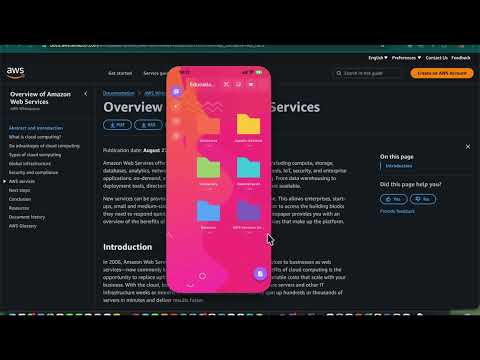
- Local Document Ingestion (RAG): Turn PDFs, textbooks, and images into a searchable knowledge base. All chunking, vectorization, and retrieval happen on-device using a local Gecko 512 embedder with per-page + per-chunk progress.
- Structured Workshops: Auto-generated multi-lesson courses with learning objectives, lazy-loaded lesson bodies (streaming Markdown), and milestone badges.
- Interactive Quizzes & Flashcards: AI-generated study materials grounded in your own documents — and guaranteed structurally valid via flutter_gemma's function-calling API.
- GenUI-Lite Chat: An interactive tutor that doesn't just talk — it acts. The AI triggers focus timers, awards achievement badges, narrates explanations, and launches subject-specific mini-games.
- Background Task Queues: Generation and ingestion run on non-blocking queues with timeouts, retries, and visible per-chunk progress. No more frozen spinners.
- Premium UX: A "glassmorphic" design system with smooth animations and a dark-mode-optimized interface for long study sessions.
A full visual diagram is at architecture.excalidraw — open it on https://excalidraw.com (File → Open). Highlights below.
EduCloud uses the flutter_gemma plugin (^0.15.1) to run Google's Gemma 4 E2B locally via LiteRT-LM, plus Gecko 512 for sentence embeddings.
- Privacy: No user data, documents, or chat history ever leave the device.
- Offline Access: Fully functional with zero connectivity once models are downloaded.
- Models: Gemma 4 E2B
.task(~4 GB, 4096 token context) for generation + vision OCR; Gecko 512.tflitefor 512-dim retrieval embeddings. - Native runtime: LiteRT-LM prebuilt dylibs for iOS / macOS / Linux / Windows / Android, fetched once by
hook/build.dartfrom a SHA256-pinned GitHub Release.
The biggest reliability upgrade in EduCloud: quiz, flashcards, and workshop outlines are generated via tool calling with ToolChoice.required. The runtime constrains generation at the token level so the model literally cannot emit invalid JSON — there is no parsing step that can fail.
- Each structured content type has a schema defined in
EducationalToolService. BackgroundGenerationServicebranches on type and creates the chat with the matching tool.- The response comes back as a
FunctionCallResponsewith already-parsedMap<String, dynamic>args. - Falls back gracefully to text-mode + JSON repair if a model variant ignores the constraint, so you always get some result.
Still in place as a defensive backstop for mind_map (no schema yet) and as the fallback path when tool calling isn't honored. The _universalGemmaRepair pipeline runs a series of state-aware passes:
| Pass | What it fixes |
|---|---|
| Smart-quote normalization | " " ' ' → ASCII quotes |
| Asymmetric key quotes | 'title": "Foo" → "title": "Foo" |
| Single-quote conversion | {'title': 'Foo'} → {"title": "Foo"} |
| Stray escapes outside strings | ,\n (literal backslash-n) → , |
| Missing object braces in arrays | },\n "title": ... → },\n {"title": ...} |
| Inner-quote normalizer | Unescaped " inside strings → ' |
| Invalid in-string escapes | \X → \\X (fixes "Unrecognized string escape") |
| Dropped opening quote on array item | [36:11809-...] → ["36:11809-..."] |
| Force-closure | Adds missing }/] to truncated output |
After repair, _validateAndCleanQuiz / _validateAndCleanFlashcards drop semantically-bad entries (citation-shaped options, empty strings, unresolvable answers) and re-encode. Invalid JSON is never stored — saves either succeed with clean content or throw a clean retry message.
- Vector Database: ObjectBox with HNSW index on
Float32List(512)embeddings for fast nearest-neighbor search. - Chunking:
RecursiveCharacterTextSplitter(chunk size 400, overlap 50). Chunks shorter than 20 chars are dropped (titles, page numbers, junk). - Batched embedding:
Embedder.generateEmbeddings(List<String>)— 32 chunks per native call, ~10× faster than per-chunk. - Per-page + per-chunk progress:
onPageProgressandonChunkProgresscallbacks surface live counters likePage 87 of 205/Embedded 287 of 412 chunks. - Contextual injection: For tool-call types, RAG context is kept small (4-6 chunks) to leave headroom for the response and tool schema.
- Vision OCR: Images go through Gemma 4's vision modality (
Message.withImage) for text extraction before chunking.
Two ChangeNotifier singletons run non-blocking task queues so the UI never blocks on model inference.
BackgroundGenerationService (quiz / flashcards / workshop generation)
- FIFO queue with one task in-flight at a time (the model is a singleton).
- 6-minute hard timeout per task — failed timeouts surface as a snackbar with the reason.
_toolForType(type)maps content types to function-call schemas.- Routes saves through
StudyMaterialService.saveMaterialso semantic validators always run. - Sends a notification on success or failure.
BackgroundIngestionService (PDF + image ingestion)
- FIFO queue, same singleton pattern.
- Phase A (text extraction): yields one frame per page so the UI keeps painting.
- Phase B (embedding): batched 32 chunks per call with a 1-frame yield between batches.
- Falls back to per-chunk embedding if the batch API fails on the active embedder.
For the conversational tutor, EducationalToolService.educationalTools defines five action tools the model can call during chat. The UI detects FunctionCallResponse and renders native Flutter widgets inline (no markdown, no parsing).
Eight function-calling tools are defined in lib/services/educational_tool_service.dart:
| Tool | Purpose | Schema (top-level) |
|---|---|---|
create_quiz |
Multi-question MCQ quiz | questions: [{question, options[4], answerIndex, explanation}] |
create_flashcards |
Q&A study cards | cards: [{question, answer}] |
create_workshop_outline |
Multi-lesson course outline | {title, description, lessons: [{title, summary, keyPoints[], estimatedMinutes}]} |
Used by StudyMaterialService.generateWorkshopMaterial, generateLessonQuiz, and BackgroundGenerationService._processNextTask. ToolChoice.required forces the model to emit a function call, eliminating JSON parsing as a failure surface.
| Tool | Purpose | Schema |
|---|---|---|
generate_interactive_quiz |
Inline mini-quiz during a chat | {subject, questions: [{question, options[], correct_answer, explanation}]} |
award_badge |
Celebrate a learning milestone | {badge_name, reason, animation_type} |
start_focus_timer |
Pomodoro-style focus session | {duration_minutes, focus_topic} |
narrate_explanation |
TTS readback | {text_to_read, voice_style} |
launch_mini_game |
Subject-specific interactive game | {game_type, difficulty} |
The chat layer (createEducationalChat) loads all five with supportsFunctionCalls: true and lets the model decide which (if any) to call based on conversation context.
- Framework: Flutter (Dart)
- AI Models: Gemma 4 E2B (text + vision + tool calling), Gecko 512 (embeddings)
- AI Plugin:
flutter_gemma^0.15.1 (LiteRT-LM under the hood) - Database:
objectbox— NoSQL with HNSW vector index - PDF Parsing:
syncfusion_flutter_pdf - Text Splitting:
langchain(RecursiveCharacterTextSplitter) - TTS:
flutter_tts - Confetti / Animations:
confetti, custom Glass theme - Notifications:
flutter_local_notifications
lib/
├── main.dart                          // Entry point + ObjectBox init
├── models/
│   ├── entities.dart                  // ObjectBox entities (5 tables)
│   ├── model.dart                     // Gemma 4 metadata
│   ├── embedding_model.dart           // Gecko 512 metadata
│   └── base_model.dart                // Shared base class
├── services/
│   ├── study_material_service.dart    // Prompts + repair pipeline + validators
│   ├── rag_service.dart               // PDF ingest + chunking + HNSW search
│   ├── educational_tool_service.dart  // All 8 tool schemas
│   ├── background_generation_service.dart  // Generation task queue
│   ├── background_ingestion_service.dart   // Ingestion task queue
│   ├── model_download_service.dart    // Gemma 4 download
│   ├── embedding_download_service.dart     // Gecko 512 download
│   ├── notification_service.dart      // Local push notifications
│   ├── tts_service.dart               // Text-to-speech
│   ├── auth_token_service.dart        // Hugging Face token storage
│   ├── knowledge_share_service.dart   // Peer-to-peer material sharing
│   ├── usage_tracking_service.dart    // Local analytics
│   └── objectbox_manager.dart         // DB lifecycle
├── screens/
│   ├── main_navigation_screen.dart    // Bottom-nav shell
│   ├── study_hub_screen.dart          // Generate quiz/flashcards/workshop
│   ├── ingestion_workflow_screen.dart // PDF/image upload + progress
│   ├── workshop_screen.dart           // Workshop overview
│   ├── lesson_screen.dart             // Individual lesson reader + per-lesson quiz
│   ├── quiz_screen.dart               // Quiz player
│   ├── analytics_screen.dart          // Usage stats
│   └── settings_screen.dart           // Preferences
├── widgets/
│   ├── educational_widgets.dart       // QuizCard, FlashcardCarousel, badges
│   ├── glass_theme.dart               // Glassmorphic color/decoration system
│   └── universal_model_card.dart      // Model download UI
└── utils/
    ├── json_utils.dart                // Minimal JSON cleanup helpers
    ├── audio_converter.dart           // PCM ↔ WAV conversion
    └── platform_io*.dart              // Web/IO conditional imports

architecture.excalidraw                // Full visual architecture diagram
prompts.md                             // Catalog of model prompts
- Clone & install:
flutter pub get
- Native dependencies:
- iOS:
cd ios && pod install --repo-update - Android: ensure
minSdkVersion≥ 21
- iOS:
- First launch:
- Open the Model Downloads screen → grab Gemma 4 E2B (~4 GB) and Gecko 512 (~80 MB).
- LiteRT-LM native dylibs are downloaded automatically by
hook/build.dartduring build, SHA256-pinned to a specific GitHub Release.
- Add a subject:
- In Knowledge Ingestion, type a category name and upload a PDF or image.
- Wait for "Embedded N of N chunks" to complete.
- Generate:
- Open the subject's Study Hub → tap Quiz / Cards / Workshop.
- Generation runs in the background; you'll get a notification on completion (or a snackbar on failure with a Details button).
EduCloud is built around the assumption that on-device generation will occasionally fail. Every failure has a clean, visible recovery path:
| Failure | Surface | Recovery |
|---|---|---|
| Generation timeout (6 min) | Snackbar + notification | "Try again — lowering the question count often helps" |
| Tool call ignored by model | Silent fallback to JSON repair | Result still saved; logged in console |
| JSON repair fails | Snackbar with offending region | Tap Details for full multi-line error |
| Validator drops all questions | Snackbar with per-rule breakdown | Console shows which rule fired on which option |
| Empty model response | "Model returned empty response" | One-tap retry |
| KV-cache leak | Auto-released via chat.close() in finally |
No action needed |
| Native double-free | Prevented by never calling model.close() |
Singleton model is reused across tasks |
Open architecture.excalidraw in https://excalidraw.com or the desktop app for the full picture. Seven layers, color-coded flows for generation (blue), ingestion (orange), and RAG search (green).
A complete catalog of system prompts and tool-call instructions used to guide the model is in prompts.md.
EduCloud demonstrates that sophisticated AI isn't dependent on the cloud. By combining:
- Local RAG with HNSW vector search,
- Constrained generation via tool calling,
- A defensive JSON repair pipeline,
- Non-blocking background task queues with visible progress,
- Graceful failure surfaces,
- Premium glassmorphic UI/UX,
we've created a study tool that is private, permanent, and performant — setting a new bar for on-device generative applications.
