 Blogcritics The critical lens on today's culture & entertainment
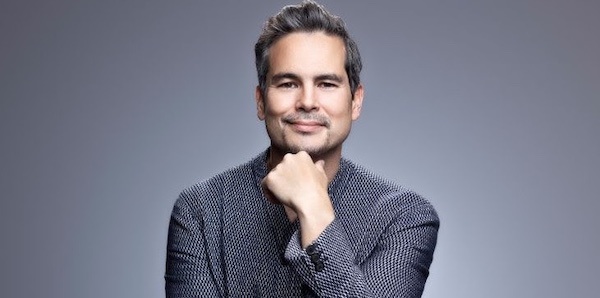
We’ve been fortunate to have the opportunity to interview a number of prominent conductors over the years, but never one quite like Dane Lam. Though only in his early 40s, the Australian-Chinese-Singaporean maestro is forging one of the world’s most wide-ranging careers among international music directors.
He is the only conductor in the world to simultaneously hold leadership positions at major institutions in the U.S., Australia, and Asia, serving as Music and Artistic Director of the Hawaii Symphony Orchestra; Artistic Director of State Opera South Australia; and Principal Conductor of the Xi’an Symphony Orchestra.
The imminent release of Lam’s Signum Classics recording, The Backyard of the Village, with the Royal Liverpool Philharmonic Orchestra and music by the eminent Chinese composer Xiaogang Ye, seemed a good opportunity to find out what the globe-trotting conductor has been up to – including some bold statements he makes about classical music itself.
First, the album.
Xiaogang Ye: History in Music
Composer Xiaogang Ye was born in Shanghai in 1955. He grew up during the Cultural Revolution and studied in Beijing and New York. The Backyard of the Village collects four of his orchestral works inspired by Chinese history, beginning with the title track in which Ye draws on folk elements to create a portrait of rural life.
The lyrical “The Memories of Mount Jing Gang” for viola and orchestra celebrates the Jinggang Mountains of southeastern China and features Berlin Philharmonic first principal viola Diyang Mei. Cellist Guy Johnston is the soloist in “My Faraway Nanjing,” a concerto commemorating the victims of the 1937 Nanjing Massacre.
Finally, Ye pays tribute to the landscapes and legends of Hebei province in “The Loquat in Five Colors,” an overture for large orchestra.
I asked Lam about the album, the music, and plying his trade in China.
Even as Chinese and other Asian artists become increasingly prominent in the classical music universe, recordings devoted entirely to music by Chinese composers remains rare in the West. How did the project come about, and what’s your history with the music of Xiaogang Ye?
I’ve been regularly conducting in China for more than a decade and have had the privilege of encountering, firsthand, how rich and varied its symphonic tradition really is — something that many listeners in the West still underestimate. One little known fact outside of China is that the Shanghai Symphony Orchestra is almost 150 years old.
One of my strongest convictions is that great orchestral music, whether European, Chinese, American or otherwise, belongs to our shared human inheritance rather than to a single geography.

I first encountered Xiaogang Ye’s music when I became Principal Conductor of the Xi’an Symphony Orchestra in 2014, an orchestra founded the year before in one of the world’s most ancient cities. He is one of China’s most significant living composers, and what makes him especially compelling is the way he absorbs very different worlds without sounding derivative of either. His Southern Chinese heritage is deeply present in the inflection of the music, but so too is the breadth of his Western training – including his time at Eastman. [In the late 1980s Ye studied at the Eastman School of Music in Rochester, New York.]
That makes his voice unusually fluid. One work may feel luminous and almost translucent, another rhythmically jagged or darkly dramatic, but there is almost always something unmistakably Chinese beneath the surface: in the modal turns, the rhythmic profile, the contour of melodic thought, even in the way the orchestra breathes.
Our recording with the Royal Liverpool Philharmonic Orchestra was important to me precisely because it allowed this music to stand on its own terms rather than appear as a token alongside more familiar repertoire. My hope is that listeners stop hearing Chinese orchestral music as a curiosity placed beside the canon, and begin hearing it as part of the living repertoire of our time [Italics added by the editor].
Our recent Lunar New Year concert in Hawai’i reinforced this in my mind: In a concert that was predominantly Chinese and Asian music, the audience thrilled to and loved the music on its own terms, as great music.
Classical Music Belongs to the World
Ateş Orga writes in the liner notes that Ye’s music “bridges and blends the Euro-Asian cultural divide with elegance, inhabiting a world where the order of the hour is integration rather than imposition.” It strikes me that this aligns very well with your own pan-cultural philosophy and what has been called your “rare ability to lead across borders – musically, geographically, and institutionally.” Would you agree? And is this part of why you feel close to Ye’s music?
Yes, I do feel close to that idea, because many of humanity’s greatest artistic achievements eventually cease to belong only to the culture that first produced them. The pyramids are Egyptian, but they also belong to the imagination of the world. Ludwig van Beethoven was European, but Beethoven belongs to humanity.
For historical reasons, most classical music emerged from Europe, but that fact should not trap us into thinking that its meaning remains geographically fixed. Beethoven’s Ninth Symphony belongs as much to a listener in Xi’an or Honolulu as it does to Vienna. The Mozart operas, Messiaen’s Turangalîla-Symphonie – these are now part of a shared human archive.
At the same time, orchestras ignore their own communities at their peril. A service-driven orchestra should never sound as though it is carrying the same suitcase from continent to continent. Programming has to speak to where you are, who is in the room, and what histories meet there.
My ideal program usually contains three elements: a great work we inherit, a living voice, and something that speaks directly to the place where we are standing. Rather than some fawning compromise, this is how a repertoire remains alive.
The Future is East
You have said that the future of classical music is in the Asia-Pacific. That may surprise some people, given the music’s roots and development over centuries in Europe and the Americas. But classical music and opera are thriving in China and other countries of the Asia-Pacific, drawing massive, enthusiastic audiences and training generations of virtuosic practitioners. What do you think is driving this? And do you see it as classical music being in relative decline in the West, or as growing cultural globalization?
I believe the greatest energy and growth in classical music now lies in the Asia-Pacific, because that is where demographic, economic and cultural momentum increasingly lies. It is home to most of the world’s population, sits at the centre of enormous geopolitical change, and includes countries where a growing middle class is actively seeking meaningful cultural experiences.

What strikes me most in China is not simply the number of new halls – though those are remarkable – but the audiences. I often look into the hall and see families, students, young children: audiences encountering this music not as inherited obligation, but as discovery. That changes the atmosphere completely.
Across the region, concert halls continue to rise, orchestras are expanding, and opera companies are growing in confidence. This is not a peripheral story. The Asia-Pacific has become one of the great testing grounds for what classical music can mean in the 21st century.
And there is a larger lesson here. At a moment when nations often define themselves through suspicion and competition, orchestras and opera companies quietly model another possibility: listening across differences, blending distinct voices, building something larger than any single line. That is not sentimental rhetoric; it is a practical lesson in how complex societies endure.
In Hawai‘i, we recently placed Beethoven alongside Pacific Rim composers so that the European canon entered direct conversation with Chinese, Korean, Japanese and Indigenous voices. This season we present Donald Womack’s Black Dragon Concerto with Yoon-Jeong Heo performing on the geomungo [a traditional Korean string instrumet] alongside Brahms’ Fourth Symphony, and Zhao Jiping’s Pipa Concerto played by Wu Man alongside Richard Strauss’ Don Quixote and Respighi’s Pines of Rome.

At State Opera South Australia in Adelaide, I conducted The Magic Flute in a co-production with Opera Hong Kong and the Beijing Music Festival – the first opera co-production ever between Australia and China. In Xi’an, audiences embrace Wolfgang Amadeus Mozart and Giuseppe Verdi not as foreign imports, but as part of their own cultural life.
Keeping it Together
I often ask music and artistic directors how they straddle positions with organizations in different parts of the world. But one might say you are an extreme case, holding leadership positions in Hawai’i, Australia, and China (not to mention guest appearances, as when you recorded the Ye album in Liverpool with the Royal Liverpool Philharmonic Orchestra!). So how do you marshal the creative and physical energy to maintain leadership commitments across continents?
The truth is that some days I feel more energetic than others. Crossing multiple datelines repeatedly is not glamorous in practice; it demands discipline, preparation, and a certain amount of stubbornness. Long flights have taught me that score study has to happen before the plane, not on it; once travel begins you are already spending mental currency.
International work only functions if preparation becomes structural: scores learned early, decisions made clearly, schedules stripped of unnecessary chaos. Otherwise travel begins to consume the very energy you need in the room.
I also have to think carefully about my young family, because a career spread across continents only works if the human side of life remains coherent.
What I have learned is that I must protect time in nature almost as seriously as rehearsal time – at the beach, walking, hiking, in the mountains or forests. We arts leaders are, ultimately, in the business of having ideas, and ideas rarely arrive in departure lounges. For me they usually come when the mind has finally stopped performing productivity. If that worked for Beethoven and Mahler, I see no reason to argue with them.
All Together Now
You work both with symphonic orchestras and in opera. Does each genre have its own challenges and rewards?
They are complementary and indispensable to me. In fact, I often think opera is one of the best possible training grounds for any conductor because opera is dangerous: anything can go wrong at any time, and when it does, everyone looks to the conductor.
Singers step onto the stage carrying extraordinary technical and dramatic demands – often in difficult costumes, following physically demanding staging, sometimes 50 meters away from the pit, and doing all of it from memory. Opera teaches humility because the score is never the only reality in the room.
The conductor’s task is to unify orchestra, singers, chorus, stage action, language, and dramatic pacing into one living structure. There is never a dull moment because there is never complete control. In some productions you are essentially conducting three different acoustics at once: what the singer hears, what the orchestra hears, and what the audience hears.
Symphonic conducting asks for a different authority: less emergency medicine, more architecture. The distances are smaller, players hear one another more directly, and the challenge becomes shaping a long argument so that everyone breathes the same musical thought.
It has always seemed strange to me that in North America conductors are often treated as either symphonic or operatic specialists, because each form strengthens the other. I could not imagine giving one up.
Operas are also among the last great large-scale art forms that remain entirely acoustic. In an amplified age, that encounter between human breath, wood, metal, silence, and collective concentration feels almost radical.
Better?
I understand you’re writing a book with the working title Why Classical Music Really Is Better,” subtitled “Reclaiming Complexity, Emotion, and Attention in a Noisy World.” You seek to make “a passionate, clear-eyed case for the unique, enduring, and transformative power of classical music in the 21st century – and why, even amid the noise of our era, it offers something more.” Can you give us the nutshell version of your main arguments?
The title is deliberately provocative because the art form deserves defending without apology. But beneath that title, the book is really part love letter and part manifesto: an attempt to explain why classical music still matters urgently in a culture increasingly shaped by distraction.
The central claim is not that this music is morally superior to everything else, but that it cultivates forms of attention and emotional patience that modern life increasingly erodes. We live amid compressed language, repeated slogans, and algorithms that reward immediacy over reflection. Classical music asks something quite different: that we stay with complexity long enough for meaning to emerge.
That makes it oddly countercultural now. Its long forms, internal logic, delayed gratification, ambiguity, and emotional depth resist many of the habits the digital world trains into us.

I also argue that the greatest enemy of classical music is not elitism but access. Nobody objects to excellence in sport; we fill stadiums for it. The problem is that many people are simply never given a meaningful way in. I was reminded of this recently, after speaking to a group of audience members in Hawai’i, who told me that nobody had ever explained the music to them before without either apology or intimidation.
The book moves through examples ranging from the orchestra itself as a model of civic cooperation, to the unamplified human voice, to Giuseppe Verdi and nationhood, to rhythm as one of the deepest human impulses. It also explores neglected voices, practical listening, and why form still matters.
At heart, I suspect many people are hungry for depth, ambiguity, and seriousness long before they have the language to say so. Classical music can meet that hunger unlike any other art form.
April 3, 2026 is the release date for the Signum Classics album The Backyard of the Village, with Dane Lam conducting the Royal Liverpool Philharmonic Orchestra in music by Xiaogang Ye. Visit the conductor’s website for more about him and videos of recent performances.