

The East, Southeast Asia, and the Pacific (ESEAP) Wikimedia Community reached a defining milestone as delegates gathered in Manila, Philippines, for the ESEAP Strategy Summit 2025. Led by Wiki Advocates Philippines and supported by other local user groups, the Summit was held from May 23 to 25, marking a decisive shift from conceptualizing our regional future to active implementation. Driven by this proactive goal, the gathering fostered deep regional solidarity as participants co-created the governance, strategy, and advocacy roadmaps required to transition the ESEAP Hub from theory into a living reality.

A Synthesis of Strategic Direction
As the Summit was intentionally positioned as a high-level strategic gathering, its primary objective was to move beyond general networking and focus on the governance of the ESEAP Hub and the future of the Movement Strategy in our region.
The core success of the Summit lay in its ability to bridge high-level strategy with actionable, on-the-ground initiatives. The “HUB, Action!” sessions served as the foundational pillar of the event, successfully delivering on the objective to provide a dedicated avenue for regional strategic discussions and the creation of the ESEAP Hub. Participants engaged deeply in mapping a governance system, with sessions on “Landscaping Global and ESEAP Regulatory Trends for Advocacy” and “Collective Advocacy Actions” emerging as critical points of interest. These discussions underscored a powerful theme: the successful link between regional goals and local implementation. Attendees reported gaining a clearer understanding of how these high-level frameworks directly empower their individual affiliate work and grassroots initiatives.
The following table summarizes the country-specific policy focuses discussed during the regional landscape sessions:
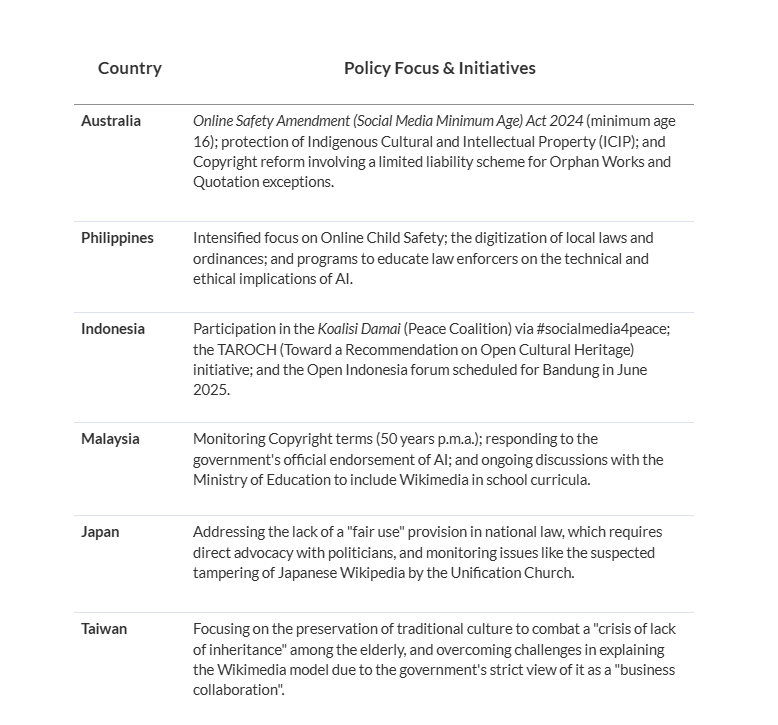
Strategic Themes in Advocacy
During group exercises, regional priorities were distilled into a unified advocacy roadmap. As community advocates, participants identified that digital information created and verified by humans—like the content on Wikipedia—is the “most valuable asset in the AI tech platform wars”. The strategy focuses on:
- Explaining the Wikimedia Model: Championing the human-curated, non-profit content moderation model as a vital, proven antidote to online misinformation.
- AI and Public Interest: Ensuring that public interest platforms are not excluded from AI policy discussions or treated identically to for-profit entities, which could inadvertently suppress protected speech.
- Indigenous Knowledge: Partnering with experts like Dr. Terri Janke to protect language rights and Indigenous Cultural Intellectual Property (ICIP), ensuring First Nations’ sovereignty over their cultural expressions.
- Online Safety: Nuancing the community’s stance on child safety laws to ensure they protect young users without creating barriers to accessing educational and legitimate speech.
Collaboration, Skill Mapping, and Cross-Border Ties
Day 2 introduced the Skill Tree mapping activity. This was more than a mere inventory; it was a dynamic exercise to mix and match regional strengths and weaknesses. By identifying which affiliates possess advanced technical skills or grant-writing expertise, the Hub can now facilitate targeted mentorship across borders.
The community also strengthened ties with the Central and Eastern Europe (CEE) Hub. This exchange included a dedicated Q&A session to address community questions previously collected via Google Form. To guide future growth, the “Build-Measure-Learn” model was adopted as a strategic playbook for finding and fostering productive external partnerships.
GLAM-Wiki and Future Horizons
The final day focused on the intersection of cultural heritage and collective action. During the GLAM-Wiki meetup, participants aligned local museum initiatives with a common regional direction, ensuring that our efforts to preserve heritage are supported by robust advocacy.
A major milestone was celebrated during the closing session: the official reveal that the ESEAP Conference 2026 will be held in Kaohsiung, Taiwan. In a beloved community tradition, the session included the ceremonial handover of the Quokka (the ESEAP mascot) to the next host team. Additionally, the community received vital updates on the Global Resource Distribution Committee guidelines, clarifying the path for future regional grants.


The Heart of the Summit
Volunteer Engagement
Behind the scenes, the event was a masterclass in volunteer empowerment. Ten volunteers from our host affiliates—Wiki Advocates Philippines, Pilipinas Panorama Community, and Shared Knowledge Asia Pacific—contributed a remarkable 267 total hours of service, with technical support and airport transfers standing out as their most frequently performed tasks.
The volunteer experience was defined by:
- Unity in Diversity: Volunteers from varied cultural backgrounds found common ground, learning that diverse communities can unite effectively for a shared purpose.
- Adaptability as a Core Skill: Faced with the fast-paced, evolving nature of the event and challenges in communication clarity, volunteers developed essential competencies in proactive problem-solving and thinking on their feet.
- Leadership Through Service: Many participants discovered that leadership manifests through supporting logistics and ensuring a welcoming environment for fellow Wikimedians. In fact, “Facilitation and volunteer relation” and “Listening skills” emerged as their most highly developed leadership competencies.
- High-Level Support: Volunteers rated the overall support they received from the organizers—specifically noting accommodations and allowances—at an exceptionally high level, which empowered them to perform their duties effectively.


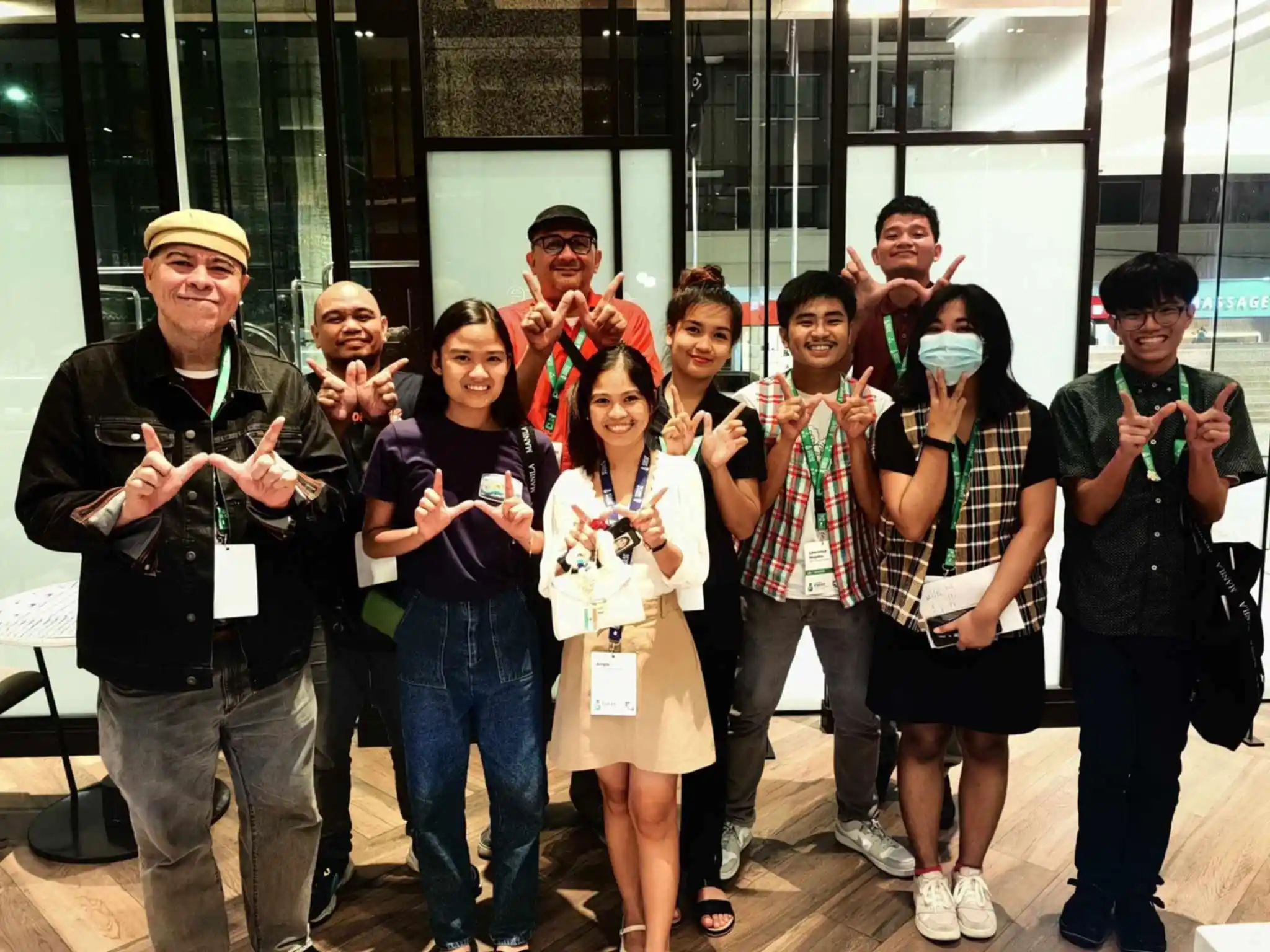
Participant Reviews: A Quality-Driven Experience
This strong logistical foundation directly complemented the strategic outcomes of the event. The feedback from attendees reflects an overwhelmingly positive outcome, underscored by a robust 39.77% response rate to our post-summit survey. The data indicates high levels of satisfaction across the board:
- Relevance: 88.5% of respondents rated the topics as highly relevant and useful.
- Content and Facilitation: An impressive 91.4% expressed satisfaction with the session content, citing it as insightful and forward-thinking. Attendees underscored the event’s overall efficacy by giving the speakers and facilitators an equally high 91.4% favorable rating.
- Community Building: Beyond formal sessions, the human connection—reconnecting with old friends and meeting new colleagues—was described by many as the most important part of the event.
- Strategic Themes for the Future: When looking toward the region’s future, attendees consistently pinpointed “GLAM-Wiki,” “Collaboration,” and “Advocacy” as the most vital themes for future regional development.
Collaboration in Action
The ESEAP Strategy Summit 2025 stood as a powerful testament to the principle of diversity and collaboration, a theme that resonated deeply throughout the event’s organization and execution. Taking the helm of this monumental effort was Wiki Advocates Philippines User Group, which stepped forward to serve as the official legal entity and primary grant holder for the Summit. Under the executive leadership of Project Lead Imelda Brazal, Wiki Advocates Philippines provided the crucial foundational framework and administrative oversight necessary to bring the region’s shared vision to life. Their proactive approach to volunteer mobilization and event management ensured that the high-level strategic goals of the ESEAP Hub were met with well-coordinated support, demonstrating how a dedicated affiliate can successfully guide a major international gathering.

While Wiki Advocates Philippines anchored the event’s execution, the Summit’s success was further enriched by the collaborative spirit of other local groups, including Wiki Society of the Philippines, Shared Knowledge Asia Pacific, and Pilipinas Panorama Community. Much like the many islands that make up the Philippine archipelago, these various user groups might operate with distinct focuses and regional approaches, yet they proved they are deeply connected by the same foundational mission. This supporting cast complemented Wiki Advocates Philippine’s primary leadership seamlessly, creating a unified and welcoming environment that proved how diverse communities can unite effectively to host the global Wikimedia movement.
Introducing the ESEAP Impact Report
To ensure these strategic insights are accessible to the entire movement, we are pleased to announce the creation of this report can also be accessed in PDF format via Wikimedia Commons. This document serves as the primary technical resource for those who wish to dive deeper into our governance proposals, the skill mapping results, and the technical details of the regional advocacy roadmap.

Building the ESEAP Hub is a collective journey that relies on the passion of our community, and the action phase of the Hub has truly begun. We extend our deepest gratitude to every participant who brought their local expertise to Manila, along with our incredible host affiliates from the Philippines and the rest of the Core Organizing Team (COT).

A special note of thanks goes to the community contributors, authors, designers, and photographers who documented this journey and made this comprehensive impact report possible:
- Josh Lim, for his insights on showcasing the Philippines to the global movement.
- Chlod Aidan Alejandro, for leading best communication practices.
- Anthony Diaz, for his reflections on the scholarship process and COT experience.
- Johnny Alegre, for his leadership in the GLAM-Wiki excursions and cultural programming.
- Bianca Brazal, for her design expertise that put together a beautiful masterpiece.
- Contributors: Raflinoer32 , Wiki Asmah, Ernest Malsin, Wadakuramon
As we look toward the next gathering in Kaohsiung, Taiwan, the ESEAP region stands on firmer ground. We have mapped our skills, deepened our collaborative ties, and reaffirmed our commitment to the Wikimedia mission. The 2025 Summit has not only shaped our strategy, it has strengthened the resilience and spirit of our regional community.
Sa gabos, Dios mabalos!
For further insights into the ESEAP Strategy Summit 2025 and to access detailed reports, please visit the community resource pages.

Can you help us translate this article?
In order for this article to reach as many people as possible we would like your help. Can you translate this article to get the message out?
Start translation