Starting in 1996, Alexa Internet has been donating their crawl data to the Internet Archive. Flowing in every day, these data are added to the Wayback Machine after an embargo period.
Starting in 1996, Alexa Internet has been donating their crawl data to the Internet Archive. Flowing in every day, these data are added to the Wayback Machine after an embargo period.
TIMESTAMPS
The Wayback Machine - https://web.archive.org/web/20120110021300/http://www.workcompcomplexcare.com:80/
Did you know that there will be over 200,00 new cases of invasive breast cancer in United States in 2011, and approximately 2,000 of those are found in men?
Breast cancer is an unbias, disease plauging our sisters, mothers, daughters and friends. Huge strides have been made so far in the fight to KNOCK OUT breast cancer, but there is still work to be done.
Total Medical Solutions is pulling out the boxing gloves and teaming up to fight. Will you join in the match against breast cancer?
From October 15 - October 31, for every referral TMS receives, we will donate $10 to the Susan G. Komen for the Cure.
Internally, TMS also has social and fundraising events during the month of "Pinktober" including Pink Friday, a Pink Bake Sale, and a local 5k Pink Walk. Check out our Facebook page to keep up with all the fun! Have you caught our pink fever yet?
Every 48 minutes, another person in the United States will become paralyzed. That is simply unacceptable. The Miami Project & Buoniconti Fund has made it their mission to advance research towards curing paralysis.
Spinal cord injury (SCI) occurs when the spinal cord becomes damaged, most commonly, when motor vehicle accidents, falls, acts of violence, and sporting accidents fracture vertebrae and crush or transect the spinal cord. According to the National SCI Statistical Center (NSCISC), 12,000 new traumatic spinal cord injuries each year in the USA; approximately 80.7% occur in men in the USA. There are also approximately 232,000 to 316,000 people in the USA living with chronic SCI, caused by a trauma, and the average age at the time of injury is 40.7 years old.
In 1985, Barth A. Green, M.D. and NFL Hall of Fame linebacker Nick Buoniconti helped found The Miami Project to Cure Paralysis after Nick's son, Marc, sustained a spinal cord injury during a college football game. Today, The Miami Project is the world's most comprehensive spinal cord injury research center, housed in the Lois Pope LIFE Center, a Center of Excellence at the University of Miami Miller School of Medicine. The Miami Project's international team of more than 200 scientists, researchers and clinicians take innovative approaches to the challenge of spinal cord injury.
The goal of the campaign is to ask"Will You Stand Up For Those Who Can't?" The intent is to create a national conversation about the devastation of paralysis, and to bring this condition to the forefront of public awareness.
"Paralysis does not discriminate. People need to realize that paralysis can happen to anyone at any time," said Nick Buoniconti. "But the reality of today's statistics can't be disputed. Every 48 minutes another person in the U.S. will become paralyzed. That is simply unacceptable. Each of us must do what we can to make a difference. I am personally asking you, will you stand up for those who can't and do one or more of the following?"
At the present time, neither Miami Project researchers nor any other scientist can predict when human trials to promote regeneration in the spinal cord will lead to a cure. The steps for moving a discovery from an idea in the laboratory to a treatment that can be tested in human trials are many. Researchers must gather sufficient proof of functional recovery in animal studies to justify the use of a treatment in human trials. They also need to demonstrate that the results can be repeated in independent laboratories and that the treatment works when tested in larger and chronically injured animals. In addition, to test a treatment in clinical trial, the proposed trial needs to be approved by regulatory agencies such as the Food and Drug Administration (FDA). The total process is incredibly time consuming and expensive, but it is essential to develop reliable cure therapies that can be used in the greatest number of people with predictable beneficial results.
Each of us must promise to do something to help create a national conversation about what it means to be paralyzed and the urgent need to find this cure. Help spread the word during the month of September to raise awareness for both those deal with a spinal cord injury and to support The Miami Project as the fight to find a cure. You can like their Facebook Page, follow them on Twitter, and even donate! Check out this remarkable video:
I remember at the age of 14 being afraid to call the pizza man for fear I wouldn't speak clearly or get our family's dinner order incorrect. I can't imagine having enough gumption to ask, for example, Mercedes-Benz to pick up the tab for, hypothetically, a bionic hand.
14-year old Matthew James was born without a left hand. He dreamed of having a sophisticated bionic hand, but his family couldn't afford the $43,000. But a chance meeting with Ross Brawn gave Matthew a life-changing experience: a new hand, for free.
He wrote to Ross Brawn, the man in charge of the Mercedes GP Petronas team, after Brawn visited his school in Berkshire, England. Matthew asked the F1 team to help his family raise the money, and even offered to have the hand sponsored by Mercedes-Benz to compensate. A member of the team reached out to Touch Bionics, a Scottish company specializing in advanced medical devices. They waived the cost of installing the hand and training Matthew on how to use it, while Mercedes was kind enough to cover the rest. And the hand is advanced enough for an F1 team: it features five individual motors, allowing each finger to move independently. The F1 team and Touch Bionics have agreed to share technology that could benefit both organizations.
Touch Bionics just introduced i-LIMB, a significant advance for the product line, with a host of enhancements including pulsing grip strength, multiple software-enabled grip patterns and robust aluminum features for improved user confidence. The i-LIMB Pulse joins a family of products that has been fitted to more than 1,200 patients worldwide.
The version received by the kid has a see-through outer-shell and will get a little Mercedes badge by the wrist. Meanwhile, after touring the Mercedes factory and meeting Michael Schumacher, Matthew now hopes to pursue a career as an engineer with F1.
Here Matthew explains the mechanics of his gifted hand.
I'm always so intrigued and amazed when I see such incredible technological advances such as this. It is especially mind-blowing when I see such cutting-edge devices created by two bright college students. This innovation in prosthetics will revolutionize the way we aid injured workers on their road to recovery.
Two Ryerson University undergraduate biomedical engineering students are changing the world of medical prosthetics with a newly developed prosthetic arm that is controlled by brain signals. The Artificial Muscle-Operated (AMO) Arm not only enables amputees more range of movement as compared to other prosthetic arms but it allows amputees to avoid invasive surgeries and could potentially save hundreds of thousands of dollars.
Developed by third-year student Thiago Caires and second-year student Michal Prywata, the AMO Arm is controlled by the brain and uses compressed air as the main source of power. The digital device makes use of signals in the brain that continue to fire even after a limb is amputated. Unlike most mind-operated prosthesis, the Artificial Muscle-Operated (AMO) Arm doesn't require invasive surgery, and according to its inventors, it costs a quarter of the price to make. This is such a unique aspect to this device. It only makes sense that struggling college students are wallet-conscious!
It took a year to develop the software program for the AMO Arm while the actual prototype was created during a marathon 72-hour design session. Although they are still students, Prywata and Caires are moving ahead on the commercialization of their innovations. They have formed their own company, Bionik Laboratories Inc., and are currently seeking three patents for the AMO Arm and their other technologies. Their recent acceptance into Ryerson's home of innovation and commercialization: the Digital Media Zone (DMZ) will help them in achieving these goals. These brilliant student's work was also featured at the 2011 American Society of Mechanical Engineers (ASME) IShow, designed to showcase student's innovative designs, and provides high-profile exposure that these student's concepts might not otherwise receive.
In future, they plan to develop the AMO Arm further by making it able to sense different materials (e.g., an egg versus a full bottle of water) and adjust the applied force proportionately.
Check out this fascinatned video from creators and students, Michal Prywata and Thiago Caires, as they quickly explain the arm:
Wound V.A.C. (Vacuum Assisted Closure) Treatment is a therapy used widely within the workers’ comp and healthcare world. It’s known to expedite the healing process, essentially returning an injured worker back to work or a familiar way of life sooner. However, it’s equally important to understand how V.A.C. Therapy works deep inside the wound to achieve these outcomes.
V.A.C. Therapy provides negative pressure wound therapy for applications ranging from severe wounds and grafts/flaps to post-surgical incision management. The variety of V.A.C. Dressing configurations enhances ease-of-application and reduces the need for dressing changes to only every 48-72 hours. The durability and portability of the battery-powered V.A.C. Therapy System enables patients to receive treatment during ambulation or other arrangements.
KCI offers a wide range of clinically proven, economically beneficial wound healing therapies and technologies designed to deliver positive outcomes for patients and healthcare professionals. They even have a branch designed for veteranarian use — KCI Animal Health.
We are used to seeing this used for injured workers, but interestingly enough, this technology was repurposed to save the life of a sea turtle after sustaining two propeller injuries - and even shortened his healing time.
When any injured employees become wheelchair bound, it is important to have a reliable vendor partner who is knowledgeable in the installation of modular aluminum ramping. It is important that the necessary adjustments are made to ensure a claimant's home is both safe and accessible. These aluminum ramps far outweigh their wooden ramp counterparts. Did you realize the hidden costs involved in setting up wooden ramps? They require regular maintenance, must be installed by a licensed contractor or carpenter, require a building permit and typically take two to three days to install. Can you just hear the "cha-ching" noises going off! Plus, they have no resale value and could contain dangerous chemicals or applied treatments.
This Real Ramping Project is brought to us by Mobility Specialist, Mike Connor. This was of particular interest because of the unique shape of the home and the porch addition to the side of the home. "It was more of a challenging install because he had a steel ramp that had to be removed because it didn't have railing and wasn't up to the ADA code." says Mike. "That day I learned how to operate a tractor and how to use a cutting torch. I was very determined to get the unsafe ramping removed and out of the way. The install turned out really nice and the customer not only has a safe exit from the back porch but was also happy with the way it turned out."
Craig Hospital in Denver, Colorado is one of a handful of centers that specialize in rehabilitation and research for people with spinal cord injury and traumatic brain injury.
Craig Hospital is a 93-bed, private, not-for-profit, free-standing, acute care and rehabilitation hospital that provides a comprehensive system of inpatient and outpatient medical care, rehabilitation, neurosurgical rehabilitative care, and long-term follow up services. Nearly half of Craig's patients come from outside of Colorado, and in 2010 the hospital treated patients from 48 states and several foreign countries. The hospital's comprehensive system of care begins at the onset of injury, continues through initial rehabilitation, and can assist through a lifetime of follow-up care.
Craig stays committed to its mission statement. "To advocate for and provide exemplary rehabilitation care to people affected by spinal cord and traumatic brain injury so that they can achieve optimal health, independence, and life quality."
In a previous post, we highlighted a special edition of Extreme Makeover Home Edition where they aided a quadriplegic father regain his love for coaching through a special sip-n-puff pitching machine. In this behind the scenes footage from that episode, Paige visited Craig Hospital to learn about their specialties and how they could integrate these advance rehabilitation technologies into the home.
Total Medical Solutions is honored to work alongside Craig Hospital with many of its patients, as well as with several of the other prestigious rehabilitation hospitals across the nation.
We all grow up hearing about the health concerns associated with smoking: coronary heart disease, stroke, lung cancer, etc. How about the adverse effects of secondhand smoke? According to American Cancer Society, secondhand smoke immediately affects the heart and blood circulation in a harmful way.
Now, imagine a home of four adults, including an injured worker trying to recover - all of which are chronic smokers. Ultimately, the smoke within the home can cripple the injured worker's road to recovery, but not just because of the health issues related to smoking. What about the equipment used to facilitate that recovery? Can equipment be victim to secondhand smoke? If smoke can have such damaging effects on an individual, imagine the effect it can have on a low air-loss mattress - another "breathing" unit within the home.
Zack Craft, Vice President of Rehabilitation Technology and Complex Care with Total Medical Solutions, addresses the impact smoking has the equipment in his most recent article, Smoking Kills...Equipment too, published on the Property Casualty 360° website. After reading this article, think of those cases you are currently dealing with that may have a similar underlying issue that, at surface, isn't visible, but underneath causes long-term, costly problems.
This Real Ramping Project is brought to us by Mobility Specialist, Tony LaLonde. "This was a unique project because the ramp was built to the unusually high threshold." Tony tells us. "It descends from the back door 4th to a platform turns 90 and descends another 20 ft discharging on the sidewalk giving it a 12:1 pitch and a safe discharge point."
When injured employees become wheelchair bound, it is important to have a reliable vendor partner who is knowledgeable in the installation of modular aluminum ramping.
The benefits of aluminum ramping include: • Installation within hours • No building permit required • Maintenance free • Virtually indestructible • Can be stored or "banked" for later use • Does not reduce value of property • American made
If you have any questions about your upcoming ramping needs, feel free to contact Total Medical Solutions at 1.800.700.9393 or intakes@newtms.com or www.NewTMS.com.
Whenever you need a good cry, Extreme Makeover: Home Edition never fails. Their stories are so touching and uplifting, you can't help but to be moved to tears. This past Sunday's episode was no different. This episode featured the Hall Family from Kansas. The family of six was hit hard by tragedy on June 26, 2010, when a car accident left dad, Carl, paralyzed from the shoulders down, leaving him a quadriplegic. Wheelchair bound for the rest of his life, Carl depended on Sip-n-Puff technology to maneuver.
Carl was a baseball star at Wichita State, and later went on to play semi-professional baseball and coach his son's baseball team. The accident robbed him of his passion and the special bond of baseball with his son, Logan. Brent Bushnell of Syyn Labs worked with the design team to create a special machine that would allow him to use sip-n-puff technology to control a pitching machine to make it possible for him to pitch to Logan again.
"Sip-n-puff is like mores code. A long puff and a short puff mean something. Stitch them together to create its own little language" says Brent. "When creating this special machine, we designed it to recognize one short puff to control speeds, and one long puff sets it up to fire the ball." This ultimately allowed Carl to pitch either a fast ball, curve ball, slide ball, etc. to Logan. "I never thought it would be possible to pitch to my son again" Carl said with such appreciation for returning to his two biggest loves - baseball and his son. "I'm actually playing sports with my Dad again. It makes me so happy" exclaimed Logan.
It's amazing to see such a deserving family receive what they need to help them move forward from such a tragedy. They have such a great perspective on life - turning lemons into lemonade. "We're just making lemonade", explained Carl, "you get handed something that may not be the best, but you can do something with it." To remind the family daily of their lemonade story, the design team completed their home with a bright yellow, lemonade-themed kitchen. Incredibly inspiring.
To see the full episode, click here - I highly recommend it!


 Did you know that there will be over 200,00 new cases of invasive breast cancer in United States in 2011, and approximately 2,000 of those are found in men?


 In 1985, Barth A. Green, M.D. and NFL Hall of Fame linebacker Nick Buoniconti helped found The Miami Project to Cure Paralysis after Nick's son, Marc, sustained a spinal cord injury during a college football game. Today, The Miami Project is the world's most comprehensive spinal cord injury research center, housed in the Lois Pope LIFE Center, a Center of Excellence at the University of Miami Miller School of Medicine. The Miami Project's international team of more than 200 scientists, researchers and clinicians take innovative approaches to the challenge of spinal cord injury.
 He wrote to Ross Brawn, the man in charge of the
  Developed by third-year student Thiago Caires and second-year student Michal Prywata, the AMO Arm is controlled by the brain and uses compressed air as the main source of power. The digital device makes use of signals in the brain that continue to fire even after a limb is amputated. Unlike most mind-operated prosthesis, the Artificial Muscle-Operated (AMO) Arm doesn't require invasive surgery, and according to its inventors, it costs a quarter of the price to make. This is such a unique aspect to this device. It only makes sense that struggling college students are wallet-conscious!

![CH_hlogotag[1].jpg](/Code-https-web.archive.org/web/20120110021300im_/http://www.workcompcomplexcare.com/CH_hlogotag%5B1%5D.jpg)
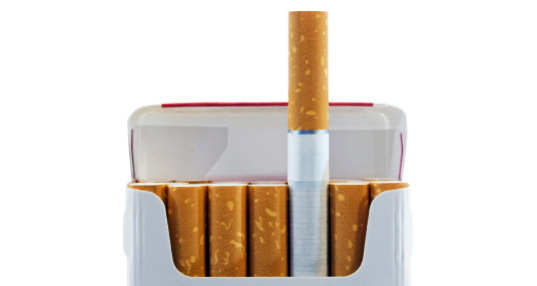 Now, imagine a home of four adults, including an injured worker trying to recover - all of which are chronic smokers. Ultimately, the smoke within the home can cripple the injured worker's road to recovery, but not just because of the health issues related to smoking. What about the equipment used to facilitate that recovery? Can equipment be victim to secondhand smoke? If smoke can have such damaging effects on an individual, imagine the effect it can have on a low air-loss mattress - another "breathing" unit within the home.
  When injured employees become wheelchair bound, it is important to have a reliable vendor partner who is knowledgeable in the installation of modular aluminum ramping.
  "Sip-n-puff is like mores code. A long puff and a short puff mean something. Stitch them together to create its own little language" says Brent. "When creating this special machine, we designed it to recognize one short puff to control speeds, and one long puff sets it up to fire the ball." This ultimately allowed Carl to pitch either a fast ball, curve ball, slide ball, etc. to Logan. "I never thought it would be possible to pitch to my son again" Carl said with such appreciation for returning to his two biggest loves - baseball and his son. "I'm actually playing sports with my Dad again. It makes me so happy" exclaimed Logan.


