close
The Wayback Machine - https://web.archive.org/web/20111230143901/http://methodistthinker.com:80/
Feeds:
Posts
Comments

Farewell

After three years and 236 posts — including 30 podcasts and more than 60 pieces of original reporting — MethodistThinker.com is going on hiatus for an indefinite period.

The ThinkerTwitter and Facebook feeds will continue, albeit on a reduced schedule.

Thank you for reading MethodistThinker.com.
-
BERJAYAUpdate: I invite you to listen to a new weekly radio program that I am co-hosting — The World & Everything in It. The program, produced by WORLD News Group, is heard on more than 150 broadcast outlets in the U.S.

TW&E is also available as a podcast. Details here.

Joseph Slife
MethodistThinker.com

The following commentary is by Riley B. Case, associate executive director of the Confessing Movement Within the United Methodist Church.

BERJAYA

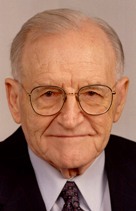
Dr. Riley B. Case

Dr. Case served for many years as a pastor and district superintendent in the UMC’s North Indiana Conference (now the Indiana Conference).

He is the author of Evangelical and Methodist: A Popular History (Abingdon Press) and has served as a delegate to five UM General Conferences.

This opinion pieced was originally published in a slightly longer form in the Confessing Movement’s e-publication, “Happenings Around the Church.”

Links below have been added by MethodistThinker.com. — Ed.

-
United Methodists are in the news again — not because of what UMs are doing in flood-ravaged areas, or for the numbers of mission teams serving in various places, or for spectacular evangelistic efforts, but for internal conflicts over issues related to marriage and homosexuality.

Major articles have appeared in TIME magazine, the Boston Globe, and USA Today. This is because of the Amy DeLong church trial in the Wisconsin Annual Conference, and because hundreds of United Methodist clergy have pledged to defy church law and perform homosexual unions.

Not surprisingly, most articles in the secular press have given wrong impressions.

-

A vocal minority

The secular media makes it sound as though there is strong support for changing the church’s historic stand that supports celibacy in singleness and faithfulness in marriage. According to several reports, there is “growing pressure” for the United Methodist Church to join other mainline churches in ordaining sexually active homosexuals; clergy are willing to defy church law; a major battle is looming at the 2012 General Conference, etc.

The truth is quite different. Despite the publicity, despite the equivocating on the part of the bishops, despite manipulated trials, despite statements from retired bishops and seminary faculty and boards and agencies, The United Methodist Church is not about to change its biblical stance. Overwhelming numbers of church members would oppose it. We need to assure our troubled church members that this is so.

-

Nearly 40 years of fighting

In speaking of General Conference 2012, the secular media suggest that the General Conference (the only body in the UMC that can change the Book of Discipline) will “settle” the issue of homosexuality for United Methodists. This is the same mantra touted in 1976, 1980, 1984, 1988, 1992, 1996, 2000, 2004, and 2008.

Let’s face reality: whatever happens on this issue at next year’s General Conference, there will not be peace in the denomination. There will be talk about civility, but civility will not take place. There will be talk about a compromise that will make everyone happy, but no conceivable compromise will make everyone happy. There will be talk about unity around “core values,” but we seem not to agree what those core values might be.

BERJAYA

UM bishops stand in support of homosexual protesters
at the 2000 General Conference (UMNS photo)

Does anyone see a hopeful future for United Methodism over this issue?

It needs to be pointed out — and written boldly — that it is not evangelicals who are creating controversy, disunity, and lack of civility in the church. It is not evangelicals who are talking about demonstrations, undermining the Discipline, pledging themselves to ecclesiastical disobedience, and going to extraordinary lengths to obstruct justice. It is not evangelicals who are breaking covenant and making a mockery of church law.

Nor is it evangelicals at the General Conference who break chalices and cover the altar with black and disrupt the conference with demonstrations and rants from bishops.

What are evangelicals seeking? Simply this: Since the United Methodist Church has officially approved and (supposedly) operates with written doctrines, social principles, and covenant relationships, we want those in the church to honor and submit to these doctrines and principles and relationships.

-

A challenge to the connection

Some secular news accounts have given a wrong impression when they speak of those pledging to perform same-sex unions as primarily defying “church authorities” — as if it is the “authorities” (whoever they are) who are the block to loosening standards in regard to sexuality.

From the UM
Book of Discipline

¶161F Human Sexuality — We affirm that sexuality is God’s good gift to all persons. We call everyone to responsible stewardship of this sacred gift.

Although all persons are sexual beings whether or not they are married, sexual relations are affirmed only within the covenant of monogamous, heterosexual marriage.

We deplore all forms of the commercialization, abuse, and exploitation of sex. We call for strict global enforcement of laws prohibiting the sexual exploitation of children and for adequate protection, guidance, and counseling for abused children.

All persons, regardless of age, gender, marital status, or sexual orientation, are entitled to have their human and civil rights ensured and to be protected against violence. The Church should support the family in providing age-appropriate education regarding sexuality to children, youth, and adults.

We affirm that all persons are individuals of sacred worth, created in the image of God. All persons need the ministry of the Church in their struggles for human fulfillment, as well as the spiritual and emotional care of a fellowship that enables reconciling relationships with God, with others, and with self.

The United Methodist Church does not condone the practice of homosexuality and consider this practice incompatible with Christian teaching. We affirm that God’s grace is available to all. We will seek to live together in Christian community, welcoming, forgiving, and loving one another, as Christ has loved and accepted us. We implore families and churches not to reject or condemn lesbian and gay members and friends. We commit ourselves to be in ministry for and with all persons.

¶304.3 Regarding Clergy — While persons set apart by the Church for ordained ministry are subject to all the frailties of the human condition and the pressures of society, they are required to maintain the highest standards of holy living in the world.

Since the practice of homosexuality is incompatible with Christian teaching, self-avowed practicing homosexuals are not to be accepted as candidates, ordained as ministers, or appointed to serve in The United Methodist Church.

The defiance is more serious that simply “defying authorities.” What is being defied and undermined is the United Methodist connection itself, including covenant relationships, ordination vows, and our commitment to one another as United Methodists.

The progressive strategy, at least on the part of some, is to wage civil war. This war is not against some outside imposed authority being foisted upon them, but against the very church to which these persons vowed faithfulness.

In other words, some in our connection desire to overturn the understandings, the promises, the ordination vows, and the Discipline that have made us who we are as United Methodists and replace them with something different — all in the name of some higher good. The higher good is variously stated: conscience, justice, inclusivity — all of which are defined not by Scripture, tradition, and reason, or by our vows, doctrine, and heritage, but by progressive preferences.

At the trial of Jimmy Creech some years ago, the defendant didn’t offer a defense, or even a plea of innocent or guilty. Rather, he urged the jury to make a prophetic judgment — namely that it is not the practice of homosexuality that is incompatible with Christian teaching (as Methodist doctrine states), but the prohibition against the practice of homosexuality that is incompatible with Christian teaching. In other words, bring the whole system down by judicial decree.

Or by any means. Obfuscate. Overload the system to make it inoperative (if 900 UM clergy perform same-sex unions, the system will blow all circuits and simply cease to function). Challenge all language so that words such as “practicing,” “self-avowed,” “heresy,” “status,” “celibacy,” “faithfulness” must be defined in such a legalistic way that they are inoperative.

Our covenant relationships were never meant to be business contracts that need 10 pages of legal language to make them operative. Our covenant together is based on relationships and relationship language is based on trust. At the present time, trust is in short supply.

So there is a problem — a serious problem. Numbers of United Methodists, both clergy and lay, feel like aliens in their own denomination. How can we exist in a denomination when some seek to undermine the core values that make us United Methodists and when the covenant relationships we speak of seem to mean nothing?

-
Where are the bishops?

In our system of church government, we have an executive branch (the bishops). We need to hear from that executive branch — and it needs to be something more than “Let’s stay at the table” or “We feel your pain” or “Let’s wait until the next General Conference.”

Even bishops who do not support the teachings of the Book of Discipline in regard to human sexuality (which itself raises questions about how sincere they were when they took their vows*) must realize that if the present strategy of ecclesiastical disobedience and intentional obfuscation continues, the whole system could come crashing down. To continue down the present road without intervention cannot be good for United Methodism.

The bishops seem quite capable of strong action when they want to act. They were effective in blocking the election of judicial council members in 2008 who voted in favor of Judicial Council Decision 1032. There have been numbers of instances where bishops (and cabinets and conferences) have taken care of moral problems and loyalty problems without having to hold trials and without public fanfare.

In 1844 the Methodist Episcopal Church — one of our predecessor denominations — was being rent apart by attitudes toward slavery. The bishops at the time could not work through their own conflicting attitudes about slavery, or, perhaps more accurately, what the church should be doing about a stated position of the Discipline which was being undermined and defied by a part of the church.

In what must be considered as one of the greatest historical “cop-outs” in the history of the church, the bishops encouraged the General Conference to “table” any action for four more years.

But the church had been tabling the issue far too long. In 1845, the denomination divided.

Let’s pray that history will not repeat itself.

    *Each newly elected United Methodist bishop is asked, “Will you guard the faith, order, liturgy, doctrine, and discipline of the Church against all that is contrary to God’s Word?”
Related posts
Outcome of DeLong trial likely to exacerbate disunity of UMC
Bishop Mack Stokes: Holiness in human sexuality
A word from Mr. Wesley: Holiness in singleness
Why the United Methodist Church cannot condone homosexuality
Pro-homosexuality foundation pours millions into Catholic and mainline Protestant dissident groups
Breaking the covenant: Why aren’t ‘Reconciling’ churches being held to account?
Renewal & Reform Coalition responds to retired bishops’ call to alter UMC’s sexuality standards
In embracing homosexual marriage, Foundry UMC rejects UM boundaries, breaks with 2 millennia of church teaching
Board of Church and Society sex-ed writer: Sex outside of marriage can be ‘moral, ethical’
In Mississippi Conference, testimony from lesbian couple stirs controversy
Judicial Council says no to same-sex marriage
Billy Abraham on United Methodism: ‘There is no common faith among us’

Related information
UM clergy vow to wed homosexual couples | Sam Hodges, UM Reporter (July 15, 2011)
Lesbian elder’s penalty takes different path | Heather Hahn, United Methodist News Service (June 24, 2011)
Eros defended or eros defiled — What do Wesley and the Bible say? | Ben Witherington, The Bible and Culture (Patheos.com) (Feb. 14, 2011)
Christianity elevates sexual morality (a historical overview of the Christian church’s teaching on sexual morality) — Chapter 3 of How Christianity Changed the World | Alvin Schmidt (Zondervan, 2004 — via Google Books)
Book: Staying the Course: Supporting the Church’s Position on Homosexuality (ordering details) | Maxie Dunnam and H. Newton Malony, ed. (Abingdon Press, 2003)
Anyone who works under the authority or auspices of the Church must be held to the highest standards of behavior, free of misconduct in any form | UMSexualEthics.org
United Methodist churches perform same-sex weddings with one foot in the closet | Amanda Hess, TBD.com (Sept. 30, 2010)
UM Judicial Council backs clergy dismissal over affair | Linda Bloom, UMNS (April 27, 2010)
What the evidence really says about Scripture and homosexual practice: Five issues (PDF) | Robert A. J. Gagnon (March 2009)
Slavery, homosexuality, and not being of one mind | Riley B. Case, via The Sundry Times (July 1, 2008)
How churches can refine message on homosexuality | Robin Russell, United Methodist Reporter (May 19, 2008)
United Methodists uphold homosexuality stance | Robin Russell, United Methodist News Service (April 30, 2008)
Methodists strengthen stand against homosexual practice | Christianity Today (May 5, 2004)
Homosexuality and the Great Commandment (an address to the Episcopal Diocese of Pittsburgh) | Peter C. Moore (November 2002)
‘Good News’ says push to accept homosexual practice threatens to split United Methodist Church | United Methodist News Service (May 6, 1997)

The final podcast of our spring season features a conversation with Mark Tooley, president of the Institute on Religion and Democracy and the author of Taking Back the United Methodist Church (Bristol House, 2010).

BERJAYATo listen (7 min.), click the arrow on the audio player below — or download an mp3 file (6.7 MB).

For previous MethodistThinker Podcasts, click the “podcasts” tab at the top of this page. To subscribe, use the “Subscribe to Podcasts” link near the top of the right column.

Mark Tooley, a native of Arlington, Va., is a graduate of Georgetown University in Washington, D.C.. After college, Tooley went to work as an analyst for the Central Intelligence Agency.

In 1994, he joined Institute on Religion and Democracy and led the organization’s United Methodist committee (UMAction). IRD, founded in 1981 by United Methodists Ed Robb and David Jessup, describes itself as “an ecumenical alliance of U.S. Christians working to reform their churches’ social witness, in accord with biblical and historic Christian teachings, thereby contributing to the renewal of democratic society at home and abroad.” Tooley was named president of IRD in 2009.

A prolific writer, Tooley’s work has appeared in The Wall Street Journal, National Review Online, The American Spectator, The Weekly Standard, Touchstone, and The Washington Times.

His second book, Methodism and Politics in the 20th Century (Bristol House), is scheduled for release later this year.


Related posts
Mark Tooley profiled in WORLD magazine
Renewal & Reform Coalition responds to retired bishops’ call to alter UMC’s sexuality standards
Renewal & Reform Coalition releases letter to Council of Bishops
Podcast: Rob Renfroe on ‘The Deeper Issues of Methodist Renewal’
Podcast: Charles Keysor – ‘How then should UM evangelicals fight?’

Related articles and information
Same-Sex Marriage for United Methodists? | Mark Tooley, The American Spectator (June 27, 2011)
Mark Tooley discusses the Wisconsin Conference church trial of Amy DeLong | Issues Etc., Lutheran Public Radio (June 24, 2011)

Mere-O Interview: Mark Tooley | Mere Orthodoxy (March 14, 2011)
United Methodist ‘Call to Action’ finds 15% of UM churches highly ‘vital’ | Mark Tooley, UMAction—IRD (July 17, 2010)
Wesleyan surge: A review of Taking Back the United Methodist Church | William Murchison, Touchstone (May/June, 2010)
From CIA to IRD: Advocate Mark Tooley knows that ‘God often has surprises for us’ | WORLD (Oct. 10, 2009)
A conversation with Mark Tooley, president of the Institute on Religion and Democracy | The King’s College (New York City) Distinguished Visitor Series (Sept. 9, 2009)

Review: Taking Back The United Methodist Church (2008 ed.) | Ray Nothstine, Acton Institute Power Blog (April 10, 2008)
United Methodism in crisis: Scriptural renewal through the Good News Movement | Chapter 4 of Public Pulpits: Methodists and Mainline Churches in the Moral Argument of Public Life by Steven M. Tipton (University of Chicago Press, 2008 — via Google Books)
Turning Around the Mainline: How Renewal Movements Are Changing the Church (ordering info) | Thomas C. Oden, Baker Books (2006)
40 years of vision for United Methodist Renewal (PDF) | James V. Heidinger II, Good News (November/December 2007)
The Junaluska Affirmation: Scriptural Christianity for United Methodists (PDF) | Forum for Scriptural Christianity (Good News) (July 20, 1975)

BERJAYAThis is the latest in a monthly series that presents excerpts from the writings of John Wesley, co-founder (with his brother Charles) of the Methodist movement.

The following is condensed from “The Marks of the New Birth,” Sermon 18 among Mr. Wesley’s standard sermons. For easier reading, some of the wording in this condensation has been slightly updated, based on the adaptation found in Renew My Heart (Barbour Books, 2011).

A link to the full text of the original sermon is included in the links below.

Sin shall not have dominion over you. (Romans 6:14)

When we have the true, living faith by which we are born of God from above, a fruit which cannot be separated from it is power over outward sin of every kind, over every evil word and work. Wherever the blood of Christ is by faith applied to the heart, it “cleanse[s] your conscience from dead works” (Heb. 9:14).

His blood also gives power over inward sin; for it purifies the heart from every unholy desire and temper.

“How,” asked St. Paul, “shall we who [by faith] are dead to sin, live any longer in it?” (Rom. 6:2). For “[o]ur old man was crucified with Him, that the body of sin might be done away with, that we should no longer be slaves of sin” (Rom. 6:6).

“Likewise, reckon yourselves to be dead unto sin, but alive unto God, through Jesus Christ our Lord. Let not sin therefore reign in your mortal body,” Paul urges, “but yield yourselves unto God, as those that are alive from the dead…. For sin shall not have dominion over you.” (Rom. 6:11-14).

Paul then says, “God be thanked, that though you were [i.e., in time past] the servants of sin,” yet now “being free from sin, you have become the servants of righteousness” (Rom. 6:17-18).

St. John asserts this same invaluable privilege of the sons of God, particularly with regard to power over outward sin. After he had been crying out, as one astonished at the depth of the riches of the goodness of God, “Behold, what manner of love the Father hath bestowed upon us, that we should be called the sons of God!” (1 John 3:1), he soon adds, “Whoever is born of God doth not commit sin; for [God’s] seed remains in him: And he cannot sin, because he is born of God” (1 John 3:9).

BERJAYASome will say, “True: Whoever is born of God does not commit sin habitually.” Habitually! Where is that in the text? I read it not. It is not written in the whole Book.

Adding “habitually” quite swallows up the text. The precious promise is utterly lost and the word of God is made of none effect.

Shall we not St. John interpret his own words? Examine the whole tenor of his discourse. In John 3:5, he had said, “Ye know that [Jesus Christ] was manifested to take away our sins; and in him is no sin.” What is the inference he draws from this? “Whosoever abides in him sins not. Whoever sins has not seen him, neither known him” (1 John 3:6).

To his enforcement of this important doctrine, he adds a highly necessary caution: “Little children, let no one deceive you” (1 John 3:7) — for many will endeavor so to do, to persuade you that you may be unrighteous, that you may commit sin, and yet be children of God! “He who practices righteousness is righteous, even as [Jesus] is righteous. He who commits sin is of the devil; for the devil has sinned from the beginning.”

It is then that the apostle says: “Whosoever is born of God does not commit sin; for [God’s] seed remains in him: And he cannot sin, because he is born of God. In this,” adds the apostle, “the children of God and the children of the devil are manifest.” By this plain mark — the committing or not committing sin — are they distinguished from each other.
-

Adapted in part from Renew My Heart,
published by Barbour Publishing, Inc. Used by permission.

Related posts
A word from Mr. Wesley: ‘You must be born again’
A word from Mr. Wesley: Holiness in singleness
A word from Mr. Wesley: The sure cornerstone of our faith
A word from Mr. Wesley: ‘The way to the kingdom’
A word from Mr. Wesley: ‘Salvation by faith’
A word from Mr. Wesley: ‘The first doctrine’
Podcast: John Wesley on ‘The new birth’
Podcast: Donald English — Aldersgate Day address, 1988
Podcast: Bishop Gerald Kennedy on ‘The Marks of a Methodist’
Podcast: Billy Abraham on ‘Connecting Doctrine and Evangelism’

Related information
The Marks of the New Birth (full text) | The Rev. John Wesley (from The Sermons of John Wesley, 1872 Edition — Thomas Jackson, editor)

The following post is by blogger and church planter David Fischler. He writes frequently on topics related to mainline Protestantism at his blog, The Reformed Pastor.

BERJAYA

David S. Fischler

A New Jersey native, David was born of Jewish parents and became a Christian in college after reading the Bible for the first time. He served as a United Methodist pastor for nine years (North Carolina Conference) and is now a pastor in the Evangelical Presbyterian Church.

David holds degrees from Rutgers University and Southeastern Baptist Theological Seminary (Wake Forest, N.C.). He is currently a Doctor of Ministry student at Trinity School for Ministry near Pittsburgh.

This opinion piece first appeared in a different form at The Reformed Pastor. Links below have been added by MethodistThinker.com — Ed.

-

The Wisconsin Annual Conference of the United Methodist Church, via the trial and “punishment” of lesbian minister and same-sex union blesser Amy DeLong, has declared that the denomination’s Book of Discipline is merely a Book of Suggestions — and, by extension, that the views of the worldwide church that passes that Discipline every four years can be effectively ignored.

DeLong received only a slap on the wrist — a light 20-day jury-imposed suspension — though found guilty by a unanimous vote of presiding over a 2009 union ceremony at which a woman married another woman. Ceremonies celebrating homosexual unions are expressly prohibited in the UMC (¶341.6).

By a 12-1 vote, DeLong was acquitted on a second charge — being “a self-avowed practicing homosexual” — even though had she informed Wisconsin Conference officials two years ago that she was in a lesbian relationship. The Book of Discipline says self-avowed practicing homosexuals are disqualified from serving as clergy (¶304.3).

From the penalty argument by the Rev. Thomas Lambrecht, counsel for the UMC

By a unanimous verdict, you have found that Rev. Amy DeLong is guilty of conducting a ceremony which celebrated a homosexual union in violation of ¶2702.1b of the Book of Discipline…. [This] is not [an] insignificant violation…. [All who are] part of the Order of Elders of The United Methodist Church are bound together by the covenant that we have joined, as it is expressed in the Book of Discipline…. [W]e have agreed to uphold the Discipline and abide by its provisions….

Neither this annual conference, nor this Trial Court, has the authority to establish or alter official rites and rituals. No individual pastor has the authority to establish or alter official rites and rituals. The General Conference, 15 years ago, unequivocally declared that “ceremonies that celebrate homosexual unions shall not be conducted by our ministers.” This provision is binding on every United Methodist pastor. When any of us violates a provision such as this, we are setting ourselves over against the Church that has ordained us, declaring that we will not submit to the authority of the Church. This we are not permitted to do….

The Church’s main interest in terms of penalty is that the requirements of our Book of Discipline are honored and complied with. We want to ensure that Rev. DeLong will conform her future behavior to the requirements of the Book of Discipline, so that we are not back here again in the future to do this all over again. In addition, we want to ensure that others in our church will know that we all have an obligation to conform our behavior to the requirements of the Book of Discipline. Otherwise, here and elsewhere, we will be facing the scenario of repeated disobedience to the Order and Discipline of The United Methodist Church. No church or denomination can long survive such rending of its covenant….

I invite you, the Trial Court, to consider [the] types of harm that are likely to be done by an inadequate penalty…. [S]ome United Methodists will become discouraged, feeling that there is a lack of accountability to our Church’s rules. Some may even leave local congregations because of it…. More broadly, harm will be done to the Church’s covenant by an inadequate penalty, since it would appear that the terms of the covenant are optional, and each clergy member will feel free to interpret that covenant in their own terms and adjust their behavior accordingly, leading to disunity and widespread conflict. Most broadly, we need to consider our brothers and sisters in Africa, Latin America, and other parts of the world…. [T]here is no disputing that becoming a more gay-affirming church would severely harm our Church’s witness in… countries…where our brothers and sisters are confronted with life and death circumstances in their conflict with radical Islam….

[T]he fundamental purpose of the penalty…is not retribution, but restoration — not only restoration for the individual, but restoration for the Church body. The penalty of suspension until such time as Rev. DeLong commits herself to live by the terms of the covenant to which she agreed has the virtue of enhancing the unity of the Church around our common covenant. It is proportional to the offense, in that it withdraws the right to perform ordained ministerial functions from one who has abused that right by performing an ordained ministerial function contrary to the Book of Discipline. It gives maximum power to Rev. DeLong herself, who has the ability to choose the length of her penalty by choosing to return to live within the covenant and comply with the terms of the Discipline.

During the trial, that moral standard for UM clergy got lost in technicalities that may provide a road to chaos.

According to the Milwaukee Journal Sentinel:

DeLong’s counsel, the Rev. Scott Campbell, had argued during the trial that church investigators never asked the lesbian minister whether she engages in prohibited sexual activity, the church’s accepted definition for “practicing.” And DeLong declined to answer that question when church counsel the Rev. Tom Lambrecht posed it during her testimony….

“I don’t know if you’re being voyeuristic or just plain indecent, but there is no way, when you are trying to do me harm, that I’m going to answer and share the intimate, sacred details of our lives,” DeLong said.

What this comes down to is that, in acquitting DeLong, the jury of Wisconsin Conference clergy members decided to adopt the approach that has been used in other mainline churches for years to get around “fidelity in marriage/celibacy in singleness” standards.

The jury would not convict DeLong of being a practicing homosexual unless it had some kind of independent evidence of sexual conduct that is, under normal circumstances, impossible to obtain.

Make no mistake: Widespread adoption of this evidentiary standard will vitiate the  UMC’s prohibition on sexually active homosexual clergy. It will be the means that liberals will use to frustrate the will of the church as a whole — unless a way can be found to stop them.

Indeed, the pro-homosexuality Reconciling Ministries Network in the UMC crows that the DeLong approach is the key, for now, that will enable any practicing homosexual clergy member to avoid conviction at a church trial.

The outcome on this charge appears to signal that it’s possible for gay and lesbian clergy to be out about their sexual orientation, as DeLong is, and not be prosecutable under the Incompatibility Clause as long as neither they nor anyone else documents the details of their sex lives.

As for presiding at union ceremonies for two people of the same sex, DeLong said she has every intention of continuing to do so, as the United Methodist News Service reported:

The Rev. Amy DeLong testified that she would not abide by The United Methodist Church’s ban against clergy officiating at same-sex unions.

“I can’t imagine doing that,” she said in testimony…during the penalty phase of the trial.

To put it plainly, Amy DeLong announced that she considers the Discipline’s strictures to be optional in her case — and the jury, by issuing a toothless suspension, effectively agreed.

BERJAYA

DeLong (left) celebrates outcome with supporter (UMNS photo)

“I feel good about what the church has done,” DeLong later said, as quoted in the Journal Sentinel.

“I think we’ve sent a message that the United Methodist Church will not throw out its gay and lesbian people, and that it has opened the doors for a more inclusive church,” she said.

Oh, in addition to her 20-day suspension (the counsel for the UMC had asked that she be suspended indefinitely, pending her willingness to submit to the Discipline — see sidebar), the court imposed another wrist slap: DeLong must “initiate a written document outlining procedures for clergy in order to help resolve issues that harm the clergy covenant, create an adversarial spirit or lead to future clergy trials.”

If Amy DeLong were willing to submit the church’s boundaries, that could a short paper indeed. All it would need to say is: “To avoid harming the clergy covenant, creating an adversarial spirit, or precipitating church trials, United Methodist clergy should by abide by the will of the church as expressed in the Book of Discipline.”

But that is just what DeLong has made clear she will not do — and, based on recent  reports in the denominational press (see here and here–PDF), DeLong apparently has the support of hundreds of clergy across the United Methodist Church.

Further, it would seem that performing homosexual unions is widespread in the Wisconsin Annual Conference. In trial testimony, the Rev. Richard Strait, chair of the conference’s Board of Ordained Ministry, said that if performing same-sex unions “were a heinous crime, there would be a whole lot of us in deep trouble.”

“A whole lot of us” is a telling phrase, suggesting that disobedience to the Discipline among Wisconsin Conference clergy and leaders is common.

What was really going on in the Amy DeLong trial was this: the Wisconsin Annual Conference (which in the person of the bishop appointed DeLong to her current position as director of Kairos CoMotion, an advocacy group that among other things seeks — surprise! — to repeal the prohibitions on sexually active homosexual clergy and the blessing of same-sex unions) is telling the rest of the denomination that it will not enforce the parts of the Discipline it doesn’t like. Expect other conferences to follow.

If this is not stopped, the collapse of the United Methodist Church as an even vaguely unified body cannot be far off.


Related posts
Bishop Mack Stokes: Holiness in human sexuality
A word from Mr. Wesley: Holiness in singleness
Why the United Methodist Church cannot condone homosexuality
Pro-homosexuality foundation pours millions into Catholic and mainline Protestant dissident groups
Breaking the covenant: Why aren’t ‘Reconciling’ churches being held to account?
Renewal & Reform Coalition responds to retired bishops’ call to alter UMC’s sexuality standards
In embracing homosexual marriage, Foundry UMC rejects UM boundaries, breaks with 2 millennia of church teaching
Board of Church and Society sex-ed writer: Sex outside of marriage can be ‘moral, ethical’
In Mississippi Conference, testimony from lesbian couple stirs controversy
Judicial Council says no to same-sex marriage
Billy Abraham on United Methodism: ‘There is no common faith among us’

Related information
Lesbian elder’s penalty takes different path | Heather Hahn, United Methodist News Service (June 24, 2011)
Eros defended or eros defiled — What do Wesley and the Bible say? | Ben Witherington, The Bible and Culture (Patheos.com) (Feb. 14, 2011)
Audio: Does the growing affirmation of homosexuality in the Western church further endanger Christians in Muslim lands? — A conversation with Dr. Uwe Siemon-Netto | Issues Etc., Lutheran Public Radio (March 15, 2011)

Christianity elevates sexual morality (a historical overview of the Christian church’s teaching on sexual morality) — Chapter 3 of How Christianity Changed the World | Alvin Schmidt (Zondervan, 2004 — via Google Books)
Book: Staying the Course: Supporting the Church’s Position on Homosexuality (ordering details) | Maxie Dunnam and H. Newton Malony, ed. (Abingdon Press, 2003)
Anyone who works under the authority or auspices of the Church must be held to the highest standards of behavior, free of misconduct in any form | UMSexualEthics.org
United Methodist churches perform same-sex weddings with one foot in the closet | Amanda Hess, TBD.com (Sept. 30, 2010)
UM Judicial Council backs clergy dismissal over affair | Linda Bloom, UMNS (April 27, 2010)
What the evidence really says about Scripture and homosexual practice: Five issues (PDF) | Robert A. J. Gagnon (March 2009)
Slavery, homosexuality, and not being of one mind | Riley B. Case, via The Sundry Times (July 1, 2008)
How churches can refine message on homosexuality | Robin Russell, United Methodist Reporter (May 19, 2008)
United Methodists uphold homosexuality stance | Robin Russell, United Methodist News Service (April 30, 2008)
Methodists strengthen stand against homosexual practice | Christianity Today (May 5, 2004)
Homosexuality and the Great Commandment (an address to the Episcopal Diocese of Pittsburgh) | Peter C. Moore (November 2002)
‘Good News’ says push to accept homosexual practice threatens to split United Methodist Church | United Methodist News Service (May 6, 1997)

Issues related to human sexuality are front and center in both the culture and the church.

BERJAYA

Bishop Mack B. Stokes (UMNS photo)

In this post, excerpted from the out-of-print book Scriptural Holiness For the United Methodist Christian (Discipleship Resources, 1987), retired UM Bishop Mack B. Stokes discusses sexuality from the standpoint of both the historic teaching of the Christian faith and the particular emphasis of Wesleyan believers on holiness of heart and life.

Bishop Stokes is a graduate of Duke Divinity School (B.D.) and Boston University (Ph.D.). He served on the faculty of Emory University’s Candler School of Theology from 1941 until 1972, when he was elected to serve as a bishop of the United Methodist Church.

His other books include The Holy Spirit in the Wesleyan Heritage (1993), Major United Methodist Beliefs (revised 1998), and person-to-Person: Building a Relationship with God Through Prayer (2007).

(NOTE: References below to the United Methodist Book of Discipline have been updated to conform to current wording and paragraph numbering.)

-
When God created human beings in his image, God made them male and female (Gen. 1:27). And God called them to be “fruitful and multiply” (Gen. 1:28)…. Therefore, in keeping with the biblical revelation, “we affirm that sexuality is God’s good gift to all persons” (¶161F, The Book of Discipline—2008).

As is the case with all human desires, sexual desires need to be directed and controlled. God’s call to holiness includes Christian stewardship of our sexuality. For this reason the biblical teaching is that “sexual relations are affirmed only with the covenant of monogamous, heterosexual marriage” (¶161F).

This raises serious questions…. What about premarital sex? What about homosexuality? What about promiscuity? What about adultery?…

[W]hen God’s love is immediately present and operative in us, how do we act?… For one thing, we act in full respect for the sacredness of our own body and soul, as well as for the body and soul of the other person…. It is not enough to think in terms of “consenting adults.” That is relevant in democratic courts of law…. [But] Christian youth and adults are governed by the presence of the living Christ in them and reserve for their life-partners in marriage the full expression of their sexuality….

[In regard to homosexuality,] the basic question is: What does holiness — the love of God and neighbor — move us to do?

BERJAYABeyond question there are persons with homosexual tendencies. And beyond question they are precious in the sight of God. Christ’s grand redemptive work has been done for all. And all are called to be redeemed by grace through faith. But is the practice of homosexuality in keeping with God’s holy purpose for our lives?

Among the ancient Greeks and Romans the practice of homosexuality was condoned. And among some people today this practice is condoned and even publicly acclaimed. But in the Hebrew-Christian heritage this practice has not been approved. It has been repudiated as contrary to the revealed purpose of God for our lives.

Our standards are not to be governed by the pagans of ancient Greece and Rome. Nor are they to be guided by the standards and values of those of our own time who are not interested in what the Holy Creator requires.

It is one thing to have homosexual tendencies — just as it is to have tendencies toward promiscuity — but it is another to practice it. This is why we United Methodists say that “we do not condone the practice of homosexuality and consider this practice incompatible with Christian teaching” (¶161F)….

[As regards promiscuity, i]s it not one of the cheapest and most contemptible ways of using others as means to the gratification of elemental selfish desires? And is not this on the side of evil and against God and his righteousness?… In the light of the Bible and God’s holy purpose, promiscuity is as far removed from the grace of God in Christ as hell is from heaven….

[In summary, w]e may say that scriptural holiness leads us to practice the formula: In singleness, chastity; in marriage, fidelity.


Related posts
A word from Mr. Wesley: Holiness in singleness
Why the United Methodist Church cannot condone homosexuality
Pro-homosexuality foundation pours millions into Catholic and mainline Protestant dissident groups
Breaking the covenant: Why aren’t ‘Reconciling’ churches being held to account?
Riley Case: Retired bishops’ statement is a sign of UMC’s sickness
Renewal & Reform Coalition responds to retired bishops’ call to alter UMC’s sexuality standards
In embracing homosexual marriage, Foundry UMC rejects UM boundaries, breaks with 2 millennia of church teaching
Riley Case: The future of the United Methodist Church is at stake
In GBCS article, UM elder argues against celibacy for single clergy
Board of Church and Society sex-ed writer: Sex outside of marriage can be ‘moral, ethical’
Judicial Council overturns bishop’s ruling on sexuality statement
Maxie Dunnam: Amendments outcome reflects ‘sense of the faithful’
Judicial Council says no to same-sex marriage
Billy Abraham on United Methodism: ‘There is no common faith among us’

Related articles information
Eros defended or eros defiled — What do Wesley and the Bible say? | Ben Witherington, The Bible and Culture (Patheos.com) (Feb. 14, 2011)
Christianity elevates sexual morality (a historical overview of the Christian church’s teaching on sexual morality) — Chapter 3 of How Christianity Changed the World | Alvin Schmidt (Zondervan, 2004 — via Google Books)
Book: Staying the Course: Supporting the Church’s Position on Homosexuality (ordering details) | Maxie Dunnam and H. Newton Malony, ed. (Abingdon Press, 2003)
Anyone who works under the authority or auspices of the Church must be held to the highest standards of behavior, free of misconduct in any form | UMSexualEthics.org
United Methodist churches perform same-sex weddings with one foot in the closet | Amanda Hess, TBD.com (Sept. 30, 2010)
UM Judicial Council backs clergy dismissal over affair | Linda Bloom, UMNS (April 27, 2010)
What the evidence really says about Scripture and homosexual practice: Five issues (PDF) | Robert A. J. Gagnon (March 2009)
Slavery, homosexuality, and not being of one mind | Riley B. Case, via The Sundry Times (July 1, 2008)
How churches can refine message on homosexuality | Robin Russell, United Methodist Reporter (May 19, 2008)
United Methodists uphold homosexuality stance | Robin Russell, United Methodist News Service (April 30, 2008)
Judicial Council Decision 1032 and ecclesiology (PDF) | William J. Abraham, General Board of Higher Education & Ministry Consultation on Decision 1032 (February 2007)
The church and homosexuality | Bishop Timothy W. Whitaker, e-Review (Florida United Methodist News Service) (July 12, 2006)
Methodists strengthen stand against homosexual practice | Christianity Today (May 5, 2004)
Debate at the 2004 General Conference on various legislation related to homosexuality (includes audio) | 2004 General Conference Archive
Resources list: Ministry for and with homosexual persons (requested by the UMC’s 2004 General Conference) (PDF) | United Methodist Publishing House
Homosexuality and the Bible (PDF) | R. Albert Mohler Jr., Southern Baptist Theological Seminary
Homosexuality and the Great Commandment (an address to the Episcopal Diocese of Pittsburgh) | Peter C. Moore (November 2002)
Good News’ response to Cal/Nevada’s dismissal of complaints against 68 clergy involved in same-sex covenant | James V. Heidinger II on behalf of the Good News Board of Directors (Feb. 14, 2000)
Good News board urges bishops to preserve unity of church | United Methodist News Service (Feb. 2, 1999)
‘Good News’ says push to accept homosexual practice threatens to split United Methodist Church | United Methodist News Service (May 6, 1997)

This edition of the Methodist Thinker Mini-Podcast features a teaching excerpt from the Rev. Rob Renfroe, pastor of discipleship at The Woodlands (Texas) United Methodist Church and the president of the UM renewal ministry Good News.

BERJAYA

The Rev. Rob Renfroe

The excerpt is from a 2009 sermon series, “The Trouble with the Truth,” preached at The Woodlands UMC .

To listen (5 min.), click the arrow on the audio player below — or download an mp3 file (5MB).

For previous MethodistThinker Podcasts, click the “podcasts” tab at the top of this page. To subscribe, use the “Subscribe to Podcasts” link near the top of the right column.

Robert Lane Renfroe earned a B.A. magna cum laude from Rice University (1977) and an M. Div. summa cum laude from Gordon-Conwell Theological Seminary (1982).

After graduating from seminary, he was appointed to be the associate pastor at The Woodlands UMC north of Houston.

In 1988, he was named pastor of First United Methodist Church in Atlanta, Texas. Four years later, he moved to Mission Bend UMC in Houston.

In 1998, Renfroe was named executive pastor at Houston’s First United Methodist Church, serving alongside Dr. Bill Hinson (PDF). After three years in that role, he returned to The Woodlands UMC as the pastor of discipleship, a position he continues to hold.

From 2007-2009, Renfroe served as president of the board of the Confessing Movement Within the United Methodist Church.

Renfroe became the leader of Good News — and publisher of Good News magazine — in the summer of 2009, following the retirement of the ministry’s long-time leader, James V. Heidinger II.

A 10-minute video excerpt from Rob Renfroe’s “Trouble with the Truth” series can be seen below.


Related posts
Renewal & Reform Coalition responds to retired bishops’ call to alter UMC’s sexuality standards
Renewal & Reform Coalition releases letter to Council of Bishops
UM renewal leader: ‘The UMC is worth fighting for’
Podcast: Rob Renfroe on ‘The Deeper Issues of Methodist Renewal’
Podcast: Dr. James Heidinger on ‘United Methodist Renewal’
Podcast: Charles Keysor – ‘How then should UM evangelicals fight?’
Podcast: Bill Hinson on ‘The Making of a Minister’
A salute to James Heidinger of Good News

Related articles and information
The deeper issues of United Methodist renewal | Rob Renfroe, Good News (via The Sundry Times)
Compromising positions | Rob Renfroe, Good News (May-June 2011)
What do United Methodists expect from their bishops? | Rob Renfroe, Good News (Feb. 17, 2011)
Should the UMC change its ordination standards and allow sexually active homosexuals to serve as clergy? | Rob Renfroe, Good News (Feb. 17, 2011)
In pursuit of truth | Rob Renfroe, Good News (January/February 2011)
Good News moves ministry to Houston, Texas area | Good News (November/December 2010)
Your life, God’s gift | Rob Renfroe, Good News (November/December 2010)
Believe, experience, and increase | Rob Renfroe, Good News (June/July 2010)
Grace and truth (video) | Rob Renfroe, Asbury Seminary Chapel (April 13, 2010)
Health care and the most vulnerable | Rob Renfroe, Good News (November/December 2009)
Speaking the truth in love | Rob Renfroe, Good News (September/October 2009)
For the cause of Christ (PDF) | Rob Renfroe, Good News (May/June 2009)
Defining the issues: A Methodist witness | Albert Mohler (Nov. 1, 2006)
United Methodism in crisis: Scriptural renewal through the Good News Movement | Chapter 4 of Public Pulpits: Methodists and Mainline Churches in the Moral Argument of Public Life by Steven M. Tipton (University of Chicago Press, 2008 — via Google Books)
Turning Around the Mainline: How Renewal Movements Are Changing the Church (ordering info) | Thomas C. Oden, Baker Books (2006)
40 years of vision for United Methodist Renewal (PDF) | James V. Heidinger II, Good News (November/December 2007)
The story of Good News: A recollection by Charles W. Keysor (PDF) | Good News (March/April 1981)
The Junaluska Affirmation: Scriptural Christianity for United Methodists (PDF) | Forum for Scriptural Christianity (Good News) (July 20, 1975)

A member of the United Methodist Church’s Call to Action Steering Team says the team’s task was to be “prophetic” and to avoid the “terminal niceness” that has long inhibited realistic discussion of the challenges facing the denomination.

“We were asked to do a deep study of the church,” the Rev. Jorge Acevedo, lead pastor at Grace Church (UMC) in Cape Coral, Fla., said in a recent address to the Wesleyan Renewal Movement, a group of North Georgia Conference clergy.

BERJAYA

Jorge Acevedo speaking last month in N. Georgia

Part of the Call-to-Action team’s work included a research project aimed at gauging the “relative health” of the UMC’s 32,000 church in North America.

It was a relative study in that we only had the information that we commonly gather across all 32,200 churches…. And there are only certain categories we [measure] across the connection — things like membership, worship attendance, professions of faith, adults in Sunday School, children in Sunday School….

I think it says about United Methodism what we don’t measure…. [Y]ou know what we don’t measure consistently across our connection? We don’t measure mission…. So that’s why you will not see in our report very much that has to do with mission….

[The research team we were working with] took the conglomerate materials…for all 32,000 churches and — after we gave them some measures of vitality [based on the things the denomination measures] — we were able then to come out and say that about 4,500…of our 32,000 United Methodist churches would fit in the category of being “vital.”

Now what that means is 27,500 of our church are not vital…. [This is] not an indiscriminate line in the sand [but] a very statistical line in the sand that says, “Is there growth in membership or in worship attendance or in professions of faith?”…

[O]ur fundamental conclusion…at Call to Action is that the focus of the church needs to be on vital congregations — period, end of story, nothing else matters…. If we’re not vital on the corner of Main and Maple, nothing else matters…. And if we do not have [— as the Call to Action report (PDF) says —] “an intense concentration on fostering and sustaining an increase in the number of vital congregations [effective in making disciples of Jesus Christ]” — if we don’t do that, we do not have a future with hope.

This is what matters — the local church…. [E]verything has to serve to the end that we have vital congregations in every community.

To listen to an 11-minute excerpt from Jorge Acevedo’s remarks, click the arrow on the audio player below, or download an mp3 file (5MB).

Before Mr. Acevedo spoke, attendees at the Wesleyan Renewal Movement meeting viewed this five-minute video, which was produced for the UMC’s General Council on Finance and Administration:


Related posts
Podcast — George Hunter: Can the once-great Methodist movement become a movement again?
‘Assessment’ report: United Methodism faces compound crisis
Riley Case: ‘Operational Assessment’ shows UMC has lost its way
Renewal & Reform Coalition releases letter to Council of Bishops

Related articles and information
Rev. Jorge Acevedo: 2009 Distinguished Evangelist of The United Methodist Church | Foundation for Evangelism
Letting Jesus build his Church (a profile of Jorge Acevedo and Grace Church) | Elizabeth Glass-Turner, Good News (November-December 2009)
UMC renewal demands vital local congregations | Andrew C. Thompson, UM Reporter (June 7, 2011)
Call to Action: Reordering the Life of the Church | Website of the UMC’s Call to Action Steering Team
The complete “Operational Assessment” report (PDF) and Appendices (PDF) | Call to Action Steering Team (June 29, 2010)
Tone deafness and the Call to Action | Rob Renfroe, Good News (September/October 2010)
United Methodist ‘Call to Action’ finds 15% of UM churches highly ‘vital’ | Mark Tooley, UMAction—IRD (July 17, 2010)
Call to Action offers signs of crisis and hope | Heather Hahn, United Methodist News Service (July 13, 2010)
Momentum builds for major church change | Bishop John L. Hopkins, United Methodist News Service (April 12, 2010)
Call to Action seeks to increase church vitality | J. Richard Peck, United Methodist News Service (April 9, 2010)
Church leaders seek consensus on plans for change | Kathy L. Gilbert, United Methodist News Service (Nov. 12, 2009)
Connectional Table OKs new plan to study church | J. Richard Peck, United Methodist News Service (Nov. 9, 2009)
Committee assesses life of church | Linda Green, United Methodist News Service (July 22, 2009)
Bishop Palmer says church is in ‘sweet spot’ for change | Kathy L. Gilbert, United Methodist News Service (May 14, 2009)
Methodism’s coming death spiral | Donald Sensing, WindsOfChange.net (Nov. 15, 2007)
40 years of vision for United Methodist Renewal (PDF) | James V. Heidinger II, Good News (November/December 2007)

On this edition of the MethodistThinker Mini-Podcast, Dr. Stephen P. Wende, senior pastor of First United Methodist Church–Houston, Texas, urges the election of delegates to the 2012 UMC General Conference “who will represent God-honoring, Kingdom-focused, Christ-first, biblically strong positions.”

BERJAYA

Steve Wende addressing N. Ga. clergy in Jan. 2011

He says that the outcome of this year’s elections will determine whether or not the future of the United Methodist Church will “be built on the path of orthodoxy, the primacy of Christ, and the advancement of the kingdom.”

Delegate elections for General Conference 2012 are occurring now across the denomination, at annual-conference sessions that began in March. Most annual conferences in the U.S. hold their yearly gatherings this month (full schedule here—PDF).

To listen to the podcast (5 min.), click the arrow on the audio player below — or download an mp3 file (5MB).

Steve Wende, a native Texan, is a graduate of the University of Texas at Austin, Yale Divinity School, and Princeton Theological Seminary. He has served as the senior pastor at First Methodist Houston since 2001.

He is a board member of the Confessing Movement Within the United Methodist Church and has been a delegate to several UM General and Jurisdictional Conferences.

The audio of Steve Wende used on this podcast was recorded at a January 2011 meeting of the Wesleyan Renewal Movement, a group of clergy in the North Georgia Conference. Dr. Wende’s full remarks at that event are posted here.

To subscribe to the biweekly MethodistThinker Mini-Podcast, use the “Subscribe to Podcasts” link near the top of the right column.


Related posts
Podcast — George Hunter: Can the once-great Methodist movement become a movement again?
GC 2012 delegates set at 988 — Philippines gains delegates despite large membership loss
Steve Wende: Doctrinal orthodoxy should be deciding factor in choosing GC delegates
Billy Abraham on United Methodism: ‘There is no common faith among us’
Podcast — Randy Maddox: ‘Methodist Doctrine, Spirit, and Discipline’

Related information
Schedule of 2011 United Methodist Annual Conferences (PDF) | General Council on Finance and Administration (Feb. 28, 2011)

BERJAYAThis is the latest in a monthly series that presents excerpts from the writings of John Wesley, co-founder (with his brother Charles) of the Methodist movement.

The following is condensed from “The New Birth,” Sermon 45 among Mr. Wesley’s standard sermons. For easier reading, some of the wording in this condensation has been slightly updated, based on the adaptation found in Renew My Heart (Barbour Books, 2011).

A link to the full text of the original sermon is included in the links below.

You should not be surprised at my saying, “You must be born again.”
(Jesus in John 3:7)

Baptism and the new birth are not one and the same. Baptism is a sign and seal of regeneration by His Holy Spirit — a death unto sin and a new birth unto righteousness.

Baptism, the outward sign, is distinct from regeneration, the inner grace being signified. The one is visible, the other invisible. The one is an act of man; the other is a change wrought by God in the soul.

Just as the new birth and baptism are not the same, they do not always accompany each other. One may possibly be “born of water” and yet not be “born of the Spirit.” There may sometimes be the outward sign where there is no inward grace. I do not now speak with regard to infants. Whatever is the case with infants, it is sure that all of mature years who are baptized are not the same as born again.

“The tree is known by its fruits,” and it is too plain to be denied that many of those who were children of the devil before they were baptized continue the same afterward. They continue to be servants of sin with no pretense to either inward or outward holiness.

-

Being charitable?

What must one say who loves the souls of men and women? We see them living in willful sin, and we are grieved. What can one say — other than, “You must be born again.”

“No!” says another. “That cannot be. How can you speak so uncharitably to people. Have they not already been baptized? They cannot be born again now.”

BERJAYA

Wesley statue in Bristol, England
Photo by Chris Bertram (used by permission)

Can they not? Do you really affirm this? Then they cannot be saved. In saying, “They cannot be born again,” you, in effect, deliver them over to damnation.

Where is the uncharitableness now? On my side or yours? You block their way to salvation and send them to hell, out of mere charity!

Perhaps it is the sinner himself — to whom in real charity we say, “You must be born again” — who responds, “I need not be born again. I was born again when I was baptized. Would you deny me my baptism?”

I answer, you have already denied it by every willful sin you have done. I say to that one, if you have been baptized, do not admit it. For how highly it aggravates your guilt, and how it will increase your damnation! For in your baptism you renounced the devil and all his works. Whenever, therefore, you do any of the works of the devil, then you deny your baptism.

Never boast again of what ought to make you ashamed.

-
No exception

Whether you are baptized or unbaptized, you must be born again.

If you have not already experienced this inward work of God, let this be your continual prayer: “Lord, add this to all your blessings — let me be born again. Take away whatever seems good to You — reputation, fortune, friends, health — only give me this, to be born of the Spirit. And then let me daily ‘grow in grace and in the knowledge of our Lord and Savior Jesus Christ’” (2 Peter 3:18).
-

Adapted from Renew My Heart,
published by Barbour Publishing, Inc. Used by permission.

Related posts
A word from Mr. Wesley: Holiness in singleness
A word from Mr. Wesley: The sure cornerstone of our faith
A word from Mr. Wesley: ‘The way to the kingdom’
A word from Mr. Wesley: ‘Salvation by faith’
A word from Mr. Wesley: ‘The first doctrine’
Podcast: John Wesley on ‘The new birth’
Podcast: Donald English — Aldersgate Day address, 1988
Podcast: Bishop Gerald Kennedy on ‘The Marks of a Methodist’
Podcast: Billy Abraham on ‘Connecting Doctrine and Evangelism’

Related information
The New Birth (full text) | The Rev. John Wesley (from The Sermons of John Wesley, 1872 Edition — Thomas Jackson, editor)

On this edition of the MethodistThinker Mini-Podcast, Dr. George Hunter of Asbury Seminary details how Methodism, at least in its institutional United Methodist form, has become what it was once a reaction against.

BERJAYA

Dr. George Hunter

In his remarks, recorded earlier this year at United Methodist Congress on Evangelism, Dr. Hunter asks if “a once great movement” — now greatly deficient in New Testament Christianity — “can become a contagious apostolic movement once again?”

To listen to a five-minute excerpt from his January 2011 address, use the audio player below — or download an mp3 file (5MB). (Audio of Dr. Hunter courtesy of GNTV Media Ministry.)

Dr. George G. Hunter III holds the Ralph W. Beeson Chair of Christian Evangelism at Asbury Theological Seminary, where he serves as Distinguished Professor of Evangelism and Church Growth. He the founding dean of the E. Stanley Jones School of World Mission and Evangelism at Asbury.

Dr. Hunter is a graduate of Florida Southern College, the Candler School of Theology (Emory University), Princeton Seminary, and Northwestern University.

He is the author of a dozen books, including The Apostolic Congregation: Church Growth Reconceived for a New Generation (Abingdon, 2009) and The Celtic Way of Evangelism: How Christianity Can Reach the West…Again (Tenth Anniversary Edition) (Abingdon, 2010).

To subscribe to the biweekly MethodistThinker Mini-Podcast, use the “Subscribe to Podcasts” link near the top of the right column.


Related posts
Billy Abraham on United Methodism: ‘There is no common faith among us’
Podcast — Eddie Fox: ‘That the World May Know Jesus’
Podcast — Sir Alan Walker: ‘Christianity at the Crossroads’
Podcast — Harry Denman: ‘Are We Making Christ Known?’
Podcast — Bishop William R. Cannon: ‘The Whole Gospel for the Whole World’
Randy Maddox: ‘Methodist Doctrine, Spirit, and Discipline’
Billy Graham at the 1980 UM Congress on Evangelism

Related articles and information
The Call to Action: A serious conversation | George G. Hunter III, Good News magazine (March-April 2011)
Barbarians in our midst: How the Irish spread the gospel | A conversation with George G. Hunter III, Good News magazine (March-April 2000 — via Thunderstruck)

Older Posts »

Follow

Get every new post delivered to your Inbox.

Join 25 other followers