





Tuesday


 (7)
(7)"American economist Scott Sumner has recently argued that the Fed cannot be blamed for the inflation that led to the Wall Street Crash because the money supply measures that reveal the inflation were not publicly available at the time. As Robert Murphy has responded, the fact that doctors of the time didn’t understand bacteria does not affect the cause of deaths during the bubonic plague. Whether we “blame” central bankers or not is really a secondary consideration to our attempts to understand what happened and why. By assigning blame we suggest that the Fed should have done better. It encourages us to think “if only it did X everything would be ok”. But the problem isn’t that individuals focused on the wrong targets, and the solution isn’t to work out how they can improve. The lesson should be that the nature of central banking – the attempt to centrally plan the monetary system – imposes an epistemic burden on policymakers that they cannot possibly ever fulfil. The Fed wasn’t to blame for the crisis, because any argument for what it “should” have done is insincere. We should absolve it from culpability, and remove the shackles of expectation that we place upon it. It did the best it could be expected to do. And that wasn’t enough."
- Antony J Evans, economist and what I would call a "sensible-shoes Austrian".

Don't worry, I don't mean the Indian economy or anything like that. Just their cricket team. Indulge me. Or just skip this. I promise you that this posting is pure cricket, and that it will shed no light whatever on Real Life.
Australia are already one up in their four match series, at home against India, and game two just began in Sydney, late last night London time. India lost two earlier wickets, and then nearly lost another when former Australian captain and batting legend Ricky Ponting dropped a sitter, which had he held it would have seen the back of Virendar Sehwag, an Indian batsman of almost equal renown.
At which juncture, someone called Christian was quoted on Cricinfo, saying this:
I have a feeling Ponting just made his decision to retire - seriously. Adam Gilchrist made his decision in similar circumstances (dropping a sitter) and most athletes make their decision when they have that feeling that they just aren't up to it anymore.
For non-cricketophiles, dropping a sitter means you made a bad mistake. But no worries. At lunch, India were 72-4, Ponting's error having soon been corrected by Aussie wicketkeeper Haddin, who didn't drop his sitter.
Cricinfo again:
To state the bleeding obvious, this was Australia's session all the way.
Australian quick bowler James Pattinson, only twenty one, and only playing in his fourth test match, already has three wickets. A bowling legend of the future? In general, the new crop of Aussie quick bowlers are looking good, and they have other good ones not playing in this game. For India's aging batting stars, on the other hand, there seem to be few obvious replacements. Now, one of those potential replacements, Virat Kohli, has also been got out. Tendulkar, though, is still batting. For months now Tendulkar has been trying to get that elusive hundredth international hundred. Now would be a good time.
Not everything in the world is improving just now. But, along with such things as escalators, my ability to track interesting international cricket games between two interesting sides neither of which is England just gets better by the year.
Tendulkar is now out. Pattinson gets the big one. India 125-6. Says Cricinfo:
It's like the Australia of the late 90s and 2000s. Unstoppable.
Certainly unstoppable by India, in their present away form.
Monday
Commenting on this reaction from Bishop Hill to a not-all-that-biased-by-their-standards BBC show about windfarms, regular BH commenter Philip Bratby says:
Only an idiot would consider building offshore wind farms (unless there is some other idiot prepared to give you huge sums of money to do it).
Bratby then mentions a website about a campaign called "Slay The Array". Slay The Array seems to be an alliance between those who oppose these giant propellers on aesthetic grounds, and those who oppose them on economic grounds, and they have set their particular sites on a vast clutch of propellers (the "Atlantic Array") which some gang of well-connected thieves and/or lunatics intend to build in the spot where the Severn Estuary turns into the Bristol Channel.
Personally I quite like the look of these giant propellers. But then, I like pylons, and skyscrapers, even scaffolding. As for wildlife, some of it will suffer if they build all these propellers, but other life forms will benefit, just as with every other human impact upon the environment.
However, I am entirely persuaded that, economically, these erections are ridiculous, in fact utterly fraudulent. So, for me, the biggest objection to them by far is this one:
The dash for wind energy is massively subsidised, making wind power three times more expensive than other power, paid for by increasing all our fuel bills, pushing millions into fuel poverty.
If Artists Against Windfarms (who get a mention at the Slay The Array website where it says "our friends") oppose these stupid, larcenous but to me rather handsome propellers on artistic grounds, that's fine by me.
...the phrase that Geoffrey Howe used when discussing the best policy for Liverpool in the 1980s?
Yes, that's right: the word "managed". It is not for the state to decide where people should live or where they should do business and certainly not for the state to use violence to force them to do so.
Sunday
"At the deepest levels within our governing structures, we are committed to living beyond our means on a scale no civilization has ever done. Our most enlightened citizens think it's rather vulgar and boorish to obsess about debt. The urbane, educated, Western progressive would rather "save the planet," a cause which offers the grandiose narcissism that, say, reforming Medicare lacks."
Dan Mitchell, of the CATO Institute and an excellent defender of those much-maligned tax havens, has a list of predictions for 2012 about the global scene. I agree with all of them apart from the sports one. Here are mine:
Obama will be re-elected by a whisker, but the GOP will cement its control of Congress. Hopefully, a credible, free marketeer Republican will be chosen in the next election who does not carry some of the baggage of Ron Paul regarding his more unusual supporters or his flaky views (in my opinion) on foreign affairs. But in fairness to Paul, his achievement in getting the libertarian message out there on issues such as the economy, role of the Fed and the bailouts will continue to resonate, for which he deserves great praise.
Ayn Rand's Atlas Shrugged will continue to sell lots of copies; Detlev Schlichter will continue, hopefully, to spread good sense among the financial community and among some policymakers.
China's property market and wider economy will slow down markedly, though I think it will avoid a hard landing. I am not sure that the country will fully float the yuan in 2012, although it should do so.
The UK coalition government will struggle on, although at least one high-profile Lib Dem minister will resign. I hope it is Vincent Cable, who is an idiot.
Brazil's economy will continue to grow rapidly. The Latin America economy will gain momentum, apart from such wrecks as Venezuela.
The London Olympics will go off largely without incident and as predicted, the British taxpayer will be paying for it for many years. Boris Johnson will try and milk it for his own political purposes, probably with some success.
Sarkozy will lose the French presidential elections unless the economy improves. The French National Front will again get a lot of votes.
Mobile technology will continue to change the banking industry.
Italy's public finances will remain a mess. And yet in spite of it all, the northern part of Italy will continue to be the rich, beautiful place it often is, confounding some of the doomsters.
Greece will leave the euro; possbily one more country may do so. Turkey's efforts to join the EU will continue to founder.
The issue of the "education bubble" will remain one of the biggest domestic policy screwups in nations such as the UK and US. Policymakers will tinker with it.
Cheap flights will remain one of the main positives about living in Europe.
Pope Benedict's failing health (he looked absolutely shattered in his Christmas address) will become more of a talking point.
AGW alarmists will continue to lose ground. A major politician in a big country will take on the Green lobby. (Well, we can hope so).
There will be continued big advances in areas such as nanotech and medicine, mostly shockingly under-reported.
Parts of Africa will get more prosperous.
Commercial space flight will loom even larger as a reality. Hooray!
Piracy in the Indian Ocean might abate as countries adopt harsher methods to deal with it. More merchant vessels will be armed or escorted by vessels that are as insurance premia adjust.
Argentina will occasionally make sabre-rattling remarks about the Falklands, which will be largely ignored.
England might actually do quite well in the European Championships soccer tournament; England's cricket team should have a decent year. People from Northern Ireland will continue to win lots of golf majors. Roger Federer might - as he has shown from recent form - win Wimbledon again, confirming he is the greatest sportsman of our time and the most famous Swiss person in the world.
Lady Gaga will start dressing demurely as a way of shocking her fans (I am one of them).
The quality of driving in Malta will continue to get worse.
Latin will make a comeback as a subject in UK state schools.
Finally, more of a hope than a prediction: Hollywood will make a decent hard science fiction movie this year and Ipswich Town will avoid relegation, just.
Happy New Year to you all (apart from the trolls).
One of the main arguments made in favour of Britain's continued membership of the European Union is that such membership is the only way Britain can exert "influence" over European Union decision making. If we are on the outside "we" (whatever that might mean) will be ignored. So, goes the argument.
I suppose this presupposes that British influence is a "good thing", something I find rather surprising because for many euro-federalists it seems that one of the primary attractions of the EU is its un-Britishness. But I digress.
Assuming they are being honest the question has to be: is it true? Do you have more influence by being inside the tent or outside?
There are some pretty compelling counter-examples. I think we can agree that Britain had much more influence by being outside Nazi Europe than inside. Ditto Britain and the Soviet Empire. The American War of Independence seems to have been a spectacular example: improving life both in the United States and the British Empire - by warning the British of the likely costs of being unduly oppressive.
But there are examples from other walks of life. Does anyone seriously think that Steve Jobs or Bill Gates would have had anything like the impact they have had by being corporate insiders?
A lot of this assumes that Britain is in the right. What if she's not? What if Britain is wrong? Well, that's fine too. If we discover that the EU is right that's fine. All we have to do is to adopt EU policies. There's no need for membership.
All of which rather puts me in mind of something that Natalie Solent wrote a few years ago, picked up here by Brian. The world needs diversity.
There's another part to this that bugs me. To have influence pre-supposes disagreement. You can't have influence over a decision if you and every other party to it already agree. And if there is disagreement that implies that influence can only be bought at the price of others going against their perceived interests. Now, that's all very well if you're dealing with a bunch of tribesmen who don't have machine guns but in the case of Europe you're not. You are dealing with countries that are just as modern and as powerful as you are. If you succeed in exercising your "influence" and by doing so make them go against their perceived interests that is at very least going to cause resentment and probably lead to some continental "influence" against your perceived interests.
Oh, and Happy New Year, by the way.
Romney may have just lost the election for the Republicans. If he is going to stand behind Individual Mandate, then why not vote for a real socialist? Why not just let someone who walks the walk drive things to their disastrous conclusion rather than allowing the left to point to a 'conservative' and blame the failures of socialism on him?
If it is a given that Romney will be the Republican candidate, then come next fall I will vote for Republicans in the House and Senate and Obama for President in hopes that libertarian, tea party and conservative types can dominate the Legislative Branch and fight the Executive Branch every step of the way. If Romney were in, they would have to at least give a show of support for 'their' President. Let us shoot for total war between the branches of government as our best option for preserving liberty.
The government which governs least is best... even if it is because they are too busy fighting amongst themselves to govern at all.
Saturday
A low key get together at Samizdata HQ this year...

The finest pig, heavily smoked, glazed with honey and infused with cloves...
...your hostess, with assorted Central European Fire Water...
... and your host, about to gorge on splendiferous smoked pig and other delightful haram joys
Wishing all friends of liberty a prosperous New Year. Buy gold and drink the very finest grog.
Ten years ago today a Guardian headline read Euro lobby demands stronger lead.
Lord Heseltine effectively accused Mr Blair of a lack of nerve as he dismissed the government's five economic tests as a "protective barrier" behind which it could "cower in order to have apparently intellectually defensible reasons for putting things off".
On the next day, 1 January 2002, the same newspaper reported on the launch of the Euro.
The mood was uniformly upbeat at parties, pageants and ceremonies bidding farewell to once-treasured marks, francs, pesetas and lire.Lest anyone be tempted to gloat, here is a final quote, this one dating only from a month or two ago, from Patrick Crozier of this parish:"Our countdown is leading towards a new era," Wim Duisenberg, the Dutch president of the European Central Bank (ECB), declared in Frankfurt. "By using euros, we will give a clear signal of the confidence and hope we have in tomorrow's Europe."
On a day of highs, Gerhard Schröder, the German chancellor, hit the highest note. "We are witnessing the dawn of an age that the people of Europe have dreamed of for centuries: borderless travel and payment in a common currency," he said in a new year message.
Mr Prodi marked the change by buying flowers in euros, not schillings, on a visit to Vienna. And in remarks that will alarm a British government watching uncomfortably from the sidelines, the former Italian prime minister pledged that the arrival of the euro in people's pockets would lead "ineluctably" to more economic coordination - the great fear of sceptics.
How to stop worrying about “contagion”Just remember that every country in the Western world already has the disease.
Friday
I like this picture:

I found it here. It is an escalator in the process of being replaced, at Charing Cross underground station, London. They've taken out the old one. They are now remaking whatever it is the new escalator will sit on top off. Then they will put in the new esacalator. It's a routine they must have done dozens of times, with local variations to keep them on their toes. I do not doubt that when they finish their work, the escalator in question will function smoothly, no matter how many people ride on it or how heavy their luggage.
What I like about the photo is that it is, for me anyway, a reminder that there are still some things about our world that are progressing very nicely. The engineering of things like escalators continues to improve. But because the complexity that you see in this picture is, when the final object is rolled out, hidden, most people only think of such things on those rare occasions when they don't work. At which point they grumble.
One of the big divisions in the world now, it seems to me, is between those who assume that such progress will necessarily continue, no matter how many mistakes the politicians make, and those who do not. Some people take technological progress for granted, while others notice it (often because they do it themselves for a living), want it very much to continue, but do not assume that it automatically will continue, no matter what.
Here is an interesting article about growing fear-mongering about nanotechnology. Of course, even one of the founding fathers of the nanotech idea, Eric Drexler, has warned about the underside of this technology.
Thursday
This might be the only measurement you need to judge the Afghanistan War. Vendors in Kabul are doing a brisk trade in Taliban ringtones. Because Afghans report that the Taliban kill travelers at clandestine checkpoints if they don’t hear one of their messages on someone’s phone.
- The opening sentences of a Wired piece by Spencer Ackerman entitled Either Your Phone Plays Taliban Ringtones, or You Die
Wednesday
I was struck by the tone of an article I recently read by a conservative journalist who simply could not understand why libertarians have not abandoned Ron Paul now that the supposedly deadly leftist power word has been uttered against him along with great waggling of magic wands.
My answer to him and others is that we are a tough lot and I laugh in the face of the PC power words. Unlike Conservative journalists I do not wet my knickers at the thought of someone attempting to tar me with it. Since I know I am not a racist, I simply do not care what anyone says or writes. I am immune, and that is perhaps one of the things which makes people like me and other libertarians even more frightening to the powers that be. We lack proper fear.
Anyone who like myself has been on the front lines of libertarianism for years, for decades even, understands. We have been fighting our battle against hopeless odds with pretty much everyone against us except when it was to their advantage and they felt they had nothing to lose. We are used to losing and then dusting ourselves off and going off to the next battle, and the next battle. Like a horde of Don Quixote's we have continued to attack the blades of the windmill, but unlike him we are having an effect. Every strike of the lance vibrates the blade, every vibration wears on the bearings, and the wear is starting to make the axle wobble. One day the entire Statist enterprise will tear itself apart and send blades cartwheeling over the countryside and it will be in no small thanks to us.
This is not to say we do not hunger for personal tastes of victory, even if in small ways. The Ron Paul candidacy is one of those. No matter what happens now, we have won hugely. Millions of people have been introduced to ideas that will resonate long after they forget where they heard them. The libertarian genie is well and truly out of the bottle. We win with every day that goes by with us in the race. We win with every million dollars the Ron Paul campaign pours into broadcasting our message, a message of freedom and individualism the media has long ignored, filtered, twisted or blocked. Should he take Iowa and New Hampshire the old boys network of the Republican Party will be out in even more force with their friends in the Democratic Party to stop him. The two may be very different in what they want to do, but they both share a common love of power and your money.
Some made the mistake of thinking the Conservatives were our friends. I knew that was not true. They were only interested in us so long as they thought they could use us to their advantage. Has anyone noticed how the Conservative media turned against us as soon as it looked like we might actually have a real effect on the election? Even Pajamas Media has taken a decidly anti-libertarian turn. I must admit that one surprised me a bit, but as to the rest, I fully expected it.
I still do not expect Ron Paul will win, but God Almighty, I do intend to let those Sons of Bitches know we libertarians were there. If you are Conservative and you still do not understand why we fight after reading this missive... you are really rather dense.
It is simple. After thirty-five years, we have finally tasted blood in the political scene and for once it is not our own.
I like this:
CAPE TOWN. After 28 years of silently tolerating it, a group of unemployed local musicians have joined forces to release a Christmas single, entitled ‘Yes we do,’ in response to the Bob Geldof inspired Band Aid song, ‘Do they know it’s Christmas?’
Thankyou to Tim Worstall for spotting this.
Speaking at the launch of the single, whose proceeds will go towards teaching discipline, literacy and contraception at British schools, composer and singer Boomtown Gundane said that for years he had been irked by Geldof’s assumption that hungry Africans were also stupid.
Sadly, it's a joke. But quite a good one, I think.
“One of the more unexpected things I discovered as CEO of a pharmaceutical company was that I had to think as much or more about the federal government than I did about our competition. I had known on an intellectual level that government was involved in the private sector in a great many ways, but it was only when I was actually in business that I felt the full impact.”
Donald Rumsfeld, Known and Unknown, page 253. He is describing his time in the private sector during the late 70s and 80s, and emerges as quite a firebrand for supply-side economics (he got to know Arthur Laffer).
Whatever you think of Rummy as a defense secretary (under the Ford and George W. Bush administrations), he comes across as a formidable man of US public and commercial life.
Here is something that I wrote about the FDA and associated drug regulation issues a while ago here.

Arinsal, Andorra. January 2011.

Bourg Madame, France. January 2011.

Roses, Spain. January 2011.

Lisbon, Portugal. February 2011.

Istanbul, Turkey. March 2011.

Slunj, Croatia. April 2011.

Bihać, Bosnia and Herzegovina. April 2011.

Fez. Morocco. May 2011.

Ceuta. May 2011.

Algeciras, Spain. May 2011.

Banwar Seri Begawan, Brunei Darussalam, May 2011.

Coolangatta, Australia. May 2011.
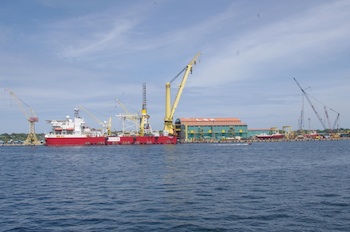
Labuan, Malaysia. May 2011.

Sepilok, Sabah. June 2011.

Lawas, Sarawak. June 2011.

Meden Rudnik, Bulgaria. August 2011.

Bucharest, Romania. August 2011.

Comrat, Gagauzia. August 2011.

Balti, Moldova. August 2011.

Chernivtsi, Ukraine. August 2011.

Kraków, Poland. September 2011.

Bratislava, Slovakia. September 2011.

Brno, Czech Republic. September 2011.

Prilep, Macedonia. September 2011.

Elbasan County, Albania. September 2011.

Prizren, Kosovo. September 2011.

North Stradbroke Island, Australia. October 2011.

Tianjin, China. November 2011.

Vale de Telha, Portugal. December 2011.
Tuesday
On Boxing Day the whole family sat round to watch The Borrowers. This is the latest TV retelling of the charming tale of the two inch tall people who live under floorboards, scavenging from us big people for food and other useful items.
Much of the plot of this version revolves around a professor played by Stephen Fry who captures some of the little people, wants to show them off to the world as an amazing new discovery of natural history and (and this is where it gets far fetched) threatens to dissect them. So the little people spend their entire time avoiding the big people and escaping from them. Which is my problem with The Borrowers.
It is typical of the misanthropy of the mainstream creative arts. Evil humans only want to dissect and eradicate little people. What should happen is that Stephen Fry reveals the little people to the world, and so begins a new age of emancipation for them. There is no question of dissecting them: the human rights activists would not stand for it. And think of the advantages of trade. No more hiding under floorboards and scavenging; the little people get all the benefits of big people technology and big people get all the benefits of little people labour. Not only could they do useful work in confined spaces, but they seem to have human equivalent intelligence so we could run our call centres and get our computer programming done in exchange for fewer resources.
It's a win win, which supposedly doesn't make for good drama.



