close
The Wayback Machine - https://web.archive.org/web/20120103084140/http://desertpeace.wordpress.com/

DOGS TRAINING DOGS IN EAST JERUSALEM

Question: What do you get when you combine racism and land theft?

Answer: An illegal zionist settler!*

BERJAYA

*

The name given to the dog shown in the video below is ‘Shiksa’, one of the ugliest words in the Yiddish language. It translates to non-Jewish woman, but is used in the most derogatory of ways.

It is not an accident that the racist scum in the clip shown chose that name for their ‘pet’ …*I leave it to you to determine who is the mad dog in the video and why is he not on a leash as well?

The guard dogs of east Jerusalem

Meet Shiksa, one of dozens of canines sent to guard in West Bank settlements, dangerous neighborhoods.*

*

In an east Jerusalem neighborhood where tensions between Arabs and Jews run high, sometimes a dog is needed to keep the peace.
*
Yaakov Fauci lives with his Belgian Shepard ‘Shiksa’ in one of the few Jewish houses of an almost entirely Arab neighborhood.

Israel’s Best Friend sends dogs like Shiksa to settlements in the West Bank and to Jewishhomes in dangerous neighborhoods of east Jerusalem.

*

GAZA ~~ THE 3 WEEK NIGHTMARE THAT HAS LASTED FOR 3 YEARS

Two Reports…


A nightmare that lasted three weeks; memories of Gaza massacre

Rafat Abushaban 
*
Emergency workers run alongside burning debris

Israeli leaders threatened to wipe Gaza off of the map during the first hours of bombing. (Hatem Omar / MaanImages )

*

Here comes that difficult time of year again: the anniversary of an event that changed the taste of life for Palestinians inside the Gaza Strip and throughout the world. It is three years since the Gaza massacre, or what Israel called Operation Cast Lead.

I still vividly recall the first hours of this 22-day nightmare, when I was with my classmates at university, sitting a final exam paper. We were almost done with the paper when we heard the first explosion. It is somehow common to hear explosions in Gaza, so we kept still until two louder explosions occurred. It was then that we dropped our pens and looked throughout the clouds of smoke that were getting closer. Supervisors immediately called on us to evacuate the campus through safe routes.

Once we got to the street, it was a different world. There was smoke and ash everywhere and Israeli F16s and drones were filling the horizon. Ambulances and fire trucks were speeding up along the opposite road, civilian cars were going in all directions and people were running as if they had all just entered into a bad dream. No matter how hard you tried to look, there were neither policemen nor officials to help the terrified people running here and there. Up to that moment, we had no idea of what was going on. We just knew that something really bad had happened, and that we were not safe walking on the streets with the lack of of safety procedures and shelters.

However, I will never forget how some young people had the courage to act voluntarily in that crucial time on diverting the traffic and helping other people out, risking their own lives. Two hours later, it was all over the news channels. Approximately forty persons were killed in the first air strikes and Israeli officials were threatening to wipe Gaza off of the map.

Blackout

The bombs kept on falling and the death toll was increasing rapidly. My relatives had gathered at our house, believing that it was in a more secure area than theirs. We were continuously watching the news and had limited our movement outside the house to the extreme. Two days after that, a bomb fell on a main electricity line in our neighborhood, causing a blackout. The blackout remained until after the massacre was over.

By the third or fourth day there was a de facto curfew. Israeli jets were dropping loads of announcements for the people of Gaza to stay at their homes and to call the military about anybody shooting rockets on Israeli towns. The water supply was cut off and we and thousands of other households were isolated from the world. I will never forget how neighbors were so helpful in sharing their water supply with others.

The Saraya, a large security complex near our house, was a military base built during the British mandate of Palestine (1920-1948). This base was targeted during the massacre with heavy missiles until it was totally destroyed. As each missile fell, a window was broken or a door was jammed. We were alerted 24/7 and could barely sleep during the night that was always glowing due to the daily dose of white phosphorus.

Never safe

After the first two weeks, it was apparent that the Israelis had run out of targets as governmental, military and even international aid bases were completely or partially destroyed. Absurdly, the air strikes started targeting open land and already destroyed buildings, presumably just to terrify people. The rubble at the Saraya base was bombed for a third and fourth time.

Some of the blasts were so powerful that rocks and bricks flew for hundreds of meters, hitting all the houses close by. It was a shocking experience witnessing the huge explosions, while seeing and hearing the metal, bricks and wooden parts of your house falling apart all around you. Here I believe is the very basic rule of life in Gaza: the place that was thought to be safer than others is dangerous after all. You are never safe.

During the following days, a two-hour break in the curfew was announced. People rushed to secure their families’ basic needs. I could not forget the long rows of people awaiting their turn to collect some bread or to fill one small gasoline tank (which was the limit per person), but people were sharing their everyday needs with each other It is said that hardship brings people together. The need for unity and helping others was the prevailing feeling inside homes, between families and among neighbors in these harsh days.

After more than 22 days of continuous fear and terror, the operation was over. We lost 1,400 martyrs; thousands of people were wounded with white phosphorus and other state-of-the-art Israeli weapons. Electricity and sewage infrastructure, transportation systems and roads were severely damaged.

International solidarity

In the aftermath of Operation Cast Lead, the international empathy for the Palestinian cause rose and pro-Palestine movements across Europe, the Americas, Asia and Africa became stronger than ever. Demands for boycott, divestment and sanctions against Israel grew louder.

Until today, a number of families that were left homeless by the massacre have not yet managed to find permanent housing. The infrastructure is still damaged and the reconstruction process is moving inefficiently and very slowly due to the banning of construction materials. In the meantime, the Israeli siege remains in place. As I wrote these lines at night, at least two Israeli strikes took place, killing at least one and injuring a dozen, some with serious wounds.

United we can overcome the hurdles and defeat the occupation.

Rafat Abushaban, 23, is a Palestinian activist living in Gaza. His blog iswww.zaitoontree.com.

Source


~~~~~~~~~~~~~~~~~~~~~~~~~~~~~~


Three years ago: A “normal morning” turns to horror in Gaza

Mohammed Suliman 
**
Boy plays with balloon amongst rubble of destroyed building

The memory of Israel’s 22 days of bombing in Gaza evokes sadness, anger, pain and inexplicable pride. (Ashraf Amra / APA images )

*

It was a few minutes past eleven. I woke up “early” to start preparing for my school exams that were due to start in a couple of weeks. It was a lovely morning, warm and sunny. The December sunlight filtered through the curtained windows and so beautifully decorated the carpeted floor.

Everything was completely normal, except that the sky seemed clearer than usual with the absence of the Israeli unmanned drones that would fly and buzz in the sky above. No abnormal signs, no reason to worry, and not a single harbinger of an impending war.

My mom was away for the weekly shopping. My sisters, who had been halfway through their day, were back home from school and were already seated before the television, watching cartoons. I made myself a cup of tea and, as is my habit, started to count the pages I had to finish studying that day. Very soon, I was immersed in my book.

A little while later, and all of a sudden, all hell broke loose. I can’t even remember how it all started. It just happened. There was no beginning, and there was no end.

The bombs rained down from every direction. I felt the floor beneath my feet shake so terribly. The entire building shook back and forth with every falling bomb. It seemed as if all the bombs had been dropped in my neighborhood, just next to where I lived.

The bombing was so horrendously ear-piercing. My heart skipped many a beat. Wide-eyed and petrified, my sisters stood transfixed next to me, tightly clutching my arms. I wanted to calm them down, but not until I calmed down myself first. Not until I could get myself to think clearly, and not until I could understand what was happening in the first place.

This is probably how it began. But this is one simple and detached account of one who was sipping his tea and enjoying the sunlight at his home when this all happened. For many others it was the end.

When I later watched the videos of the first locations to be targeted with the first bombs, I saw numerous bodies lay lifelessly on the ground, many repulsively disfigured — defaced, limbs chopped, torn apart, yet many, thankfully, were in complete shape — but still they were bereft of life.

Horror and agony in the streets

While I was on the rooftop disinterestedly trying to film a few scenes of the aftermath of each of the bombings that would not cease for twenty-two days, mothers, not far from where I stood, were grievously bewailing the deaths of their sons; daughters were sobbing in agony over the loss of their fathers; little children were scared stiff and crying out in horror. Some were running scared for their lives in the streets, and others were lying beneath the rubble, powerless and surrounded by the dead bodies of their siblings.

Typical of all wars, electricity was soon cut off and water was no longer in abundance. Cooking gas and bread became scarce. Basic needs became like priceless luxuries. Dreams, ambitions and hopes were shattered and lost, only to be replaced by survival which becomes everyone’s ultimate goal in war times.

The thought of dying alone

I joined crowds of people queuing up at six in the morning to buy a bag of bread. I saw others in front of oil shops fighting and pushing one another to buy a small amount of kerosene heating oil.

I stayed amongst crowds of people for hours on end in the gas station, hopelessly trying to get our cylinder half-filled with gas — filling a gas cylinder entirely at that time was an unthinkable wish. I developed a daily ritual of testing the amount of water inside our water tank by knocking its sides while leaning my ears against them. I spontaneously joined in the joyous celebrations when the electricity came back on.

I had grown an arcane love for the dark and an unusual appreciation of time. I cherished company and abhorred being alone like never before, for nothing scared me back then as much as the thought of dying alone.

Personal stories behind shocking statistics of death

Nothing yet had made me more dejected than how I became engrossed with following ever-changing statistics. The humanness of the victims was unthinkingly reduced in my mind to mere numbers which were drastically, and always more shockingly, on the rise.

The memory of the first statistics of more than eighty persons killed in the first wave of bombings has been engraved in my mind forever. As I look back on it now, I believe it was an extremely helpful, though selfish, tactic unconsciously devised to help me through the day in my right mind by getting around the insufferable pain of knowing the personal stories behind every one of these numbers.

Nonetheless, every now and then, a few stories would jump out from behind the numbers, and everyone would inevitably listen to them, many against their will, and perhaps soon, they would start to narrate them in a casual manner.

Only this explains the comment by the uncle of a Kashimiri friend in London on the way I spoke of bombings when he asked me about life in Gaza.

He wondered at how casually I talked of bombings as though they were a common thing that didn’t worry me. I told him a common story about little children in Gaza who would be playing in the streets when some bombing hit the nearby area. Their reaction would be to either totally ignore the bombing and carry on playing, or they would stop their game, cheer loudly and clap their hands, as if bombing were reason for one to be happy.

After three years, the 22 days are still engraved

Now it has been three years, and I’m still capable of evoking every minute detail of the twenty-two days which have become an experience I recall with feelings of sadness, anger, pain and a little bit of confusing pride, the reason for which I cannot understand.

The thunderous bombings, the creepy gunfire, the hovering Apache helicopters always sending a chill down the spine. The glass shattering, our neighbor’s wailing, mourners chanting “La Ilaha Illa Allah” (there is no God but God). The smell of kerosene heating oil stuck in my nose, the unnerving hums of our kerosene stove. The large, intricate clouds from the white phosphorus bombs, spreading through the sky like spider webs. My spite toward our neighbors’ generators, the fragile short periods of silence, the gloomy faces filling the green or blue condolence tents. The endless statements of the Ministry of Health’s spokesman.

These and a whole host of other memories form a rare experience. Perhaps it is that we survived that lies behind that odd sense of pride.

Mohammed Rabah Suliman is a 22 year old Palestinian student and blogger from Gaza. Mohammed currently undertakes graduate studies at the London School of Economics. He blogs at Gaza Diaries of Peace and War as well as at The Electronic Intifada, and can be followed on Twitter @imPalestine.

Source

NEW YEAR // NEW OCCUPATION // NEW PHOTOS

BERJAYA
*

 Commentary by Chippy Dee

*

New year greetings from OWS at Liberty Sq. (Zuccotti Park) in NYC.

The occupation site became Mecca to the occupiers and their supporters. About 1,000 people came because it is a place of hope and they felt that this was the place they had to see the new year in. It is the future. 

One of the projects of the evening was to dismantle the reviled NYPD mobile metal barricades around the park. Piece by piece the barricades were torn down and piled up in the center of the square. At one point the police made an attempt to stop the action but seemed to think better of it. 

There was chanting: “Whose park? Our park”, “The people united, will never be defeated”, and “Fuck fascism”. 

One of the older people commented ‘We’ve been asking for years, why aren’t the younger people doing anything ? Well now they are and we have to be here to support them!  

The mood was exuberant and joyful, but also very determined and militant. Someone with a portable projector, projected onto a large building: “99% We are at the beginning of the beginning.” People were wearing T-shirts which said “We’re Still Here” and “Reclaim Your Future” . 

Despite efforts by the 1% this movement is here to stay. A bell cannot be unrung.

*
 Photos © by Bud Korotzer
*
BERJAYA
*
BERJAYA
*
BERJAYA
*
BERJAYA
*
BERJAYA
*
BERJAYA
*
BERJAYA
*
BERJAYA
*
BERJAYA
*
BERJAYA
*
BERJAYA
*
BERJAYA
*
BERJAYA
*
BERJAYA
*
BERJAYA
*
BERJAYA
*
BERJAYA
*
BERJAYA
*
BERJAYA
*
BERJAYA

COLOUR ME A TERRORIST

 I think I am a terrorist. I mean I want the Israelis out of the refugees’ lands, and I call the IDF a group of coldhearted murderers all the time. This obviously makes me a terrorist.

*

Memories of Gaza: when the victim is called the terrorist

by Sarah Ali
*
02 03 ni ca12 10 gaza a little girl 1
A girl in Gaza

I am a terrorist. At least that is what they call me. I grew up hearing the same word being repeated all the time that I thought terrorists were the good guys for a second. They are apparently not. Of the many saddening times I went through, the 2008-2009 offensive that Israel launched on the Gaza Strip is the worst and probably the most painful. I was “lucky” enough to survive and have the chance to speak for those who lost their lives although I am quite sure their death can speak well for them.

*
It was December the 27th, 2008 when the Israeli warplanes started dropping bombs on every place in Gaza, killing anything or anybody getting—or not getting in their way.

The war left lots of people dead. More than 1450 Palestinians were killed, 5600 injured. There were people dying everyday.

Then there was Anwar…

Just when we began to hear the news of Israel’s intentions to end the war,  Anwar Shehada was killed.  Anwar was a 13 year old neighbor of mine who lived a few meters away from where I live. It was the last day of the war when Anwar told her younger sister she was going up to get the laundry from the roof. Her sister asked her not to go; Anwar told her sister not to worry because the war was almost ‘over’. Before her parents could see her going up to the roof, Anwar was already gone. She probably thought that Israel would not kill a beautiful 13 year old girl. Israel proved her wrong. The explosion that killed Anwar was the loudest one I ever heard. I thought it was our house being shelled. The floor was literally shaking. We waited for death. In seconds, we saw the smoke coming out of the neighbor’s house. They said Anwar’s blood was all over the roof. Her head was found in the street.

And then, there was Haneen…

Haneen was actually killed before Anwar, but we knew about her death a week after the end of the war. Haneen was my 5 year old friend who I first met in a mosque to which we both used to go. All I remember about her is the way she liked to tease me. She used to make that sound of ‘meow’ because she knew I hated cats. The ‘meow’ was actually the way she said ‘hi’ each time we saw each other. During the war, Haneen’s family decided to go stay with their relatives in Tal Elhawa, assuming that the area would be less dangerous. Haneen left her house, only to be killed in the house that was thought to be safe.

I cannot imagine the pain Haneen felt when the bomb penetrated her little heart tearing it apart. I do not know what it feels like to lose a child, and I have no idea how tremendous the suffering of Anwar and Haneen’s parents is. I cannot imagine the shock Haneen felt when she saw the ceiling of the bedroom falling down and getting closer to her face. I cannot imagine how a soldier looked right from his plane at that little girl and decided to end her life. I cannot imagine the kind of hatred that soldier had towards Palestinians that made him believe murdering a child is okay. I cannot imagine the denial that soldier lived in that made him think what he did was ‘self-defense’. I cannot imagine how this very same soldier can now eat, drink, sleep, and simply go on with his life. And I cannot understand how stupid Israel has to be to think that I will not fight back for my little friends.

I kept thinking of Haneen for a year after she got killed, but now I do not think too much of her. It is just when I see her mother in the street that I remember how cute Haneen was. In fact, I have become selfish enough to avoid saying hi to Haneen’s mom whenever we meet. Each time I see her, I would hide my face hoping she will not see me. When Haneen was alive, her mother and I used to chat about how smart Haneen was and how bright her future would be. Now I just have nothing to say to her. I cannot make things better. I cannot look her mother in the eye and ask her ‘how are things?’ because each time she replies with, ‘things are good’, I am sure that they are not.

I am living in a world whose concepts are no longer clear to me. A world where the criminal walks free and the victim is called a terrorist. A world where killing a 5 year old kid is permissible. A world that once left me baffled about what is right and what is wrong. I have always thought that we could figure out who the terrorist is simply by looking at who dies on whose side. I was wrong. Israel has the ability to kill Palestinians at night and call them terrorists the next morning.

Now on a second thought, I think I am a terrorist. I mean I want the Israelis out of the refugees’ lands, and I call the IDF a group of coldhearted murderers all the time. This obviously makes me a terrorist. Haneen did not know what a coldhearted blood is! Haneen was a little kid whose life was snuffed out because an Israeli soldier felt like killing somebody, and she just happened to be that somebody. Haneen was an unfortunate human being who was born Palestinian and accordingly guilty. She did nothing wrong to Israel. She was a 5 year old girl who was split into little pieces while in bed. Haneen was too young to die. Who cares about Haneen’s death anyway? She was a terrorist, too.

(Sarah Ali, 20, is a student of English literature at the Islamic University, Gaza. She blogs at Here We Are)


Source

WHAT AWAITS PALESTINE IN 2012?

The Palestinian leadership, including Fatah and Hamas, must get its act together in 2012 and make sure it is not going to be another year of futile waiting.
*
BERJAYA
Palestinians must get their act together in 2012
By Khalid Amayreh
 

2011 was not a particularly bad year for Palestine. In this year, hundreds of Palestinian political and resistance prisoners were able to see the light, having been released from Israeli dungeons and detention camps.

Needless to say, many of these heroes would have spent the rest of their lives in Zionist jails, had it not been for the so-called Shalit deal and Israel’s effective capitulation to Hamas’s conditions for the release of the captive Zionist soldier.

Thanks to the deal, hundreds of Palestinian families, which had lost the hope for ever seeing their beloved ones alive again, breathed a sigh of relief as they were reunited with their children, brothers, husbands and daughters.

Needless to say, Israel had tried every conceivable effort and intelligence act  to locate the captive soldier, but to no avail. After all, Shalit was held under Israel’s nose somewhere in the Gaza Strip for more than 60 months.

This fact alone should make us look with admiration and gratitude to those unknown but heroic soldiers who were able to keep this valuable secret all these months and years.

2011 brought us the Arab Spring, which consigned several tyrannical  pro-American regimes to the dustbin  of history. Some of these regimes, such as that of ex-president Husni Mubarak of Egypt , had been a serious liability for the Palestinian struggle and steadfastness.

For example,  in 2008-09, the Egyptian regime colluded, connived and collaborated with the Zionist entity to murder, torment and vanquish the Gaza Strip, enabling Israel to carry out its Nazi-like  onslaught on the virtually unprotected coastal territory, killing, incinerating and maiming thousands of Palestinians men, women and children.

More to the point, the regime sought effectively to consolidate the criminal Israeli siege on Gaza, by building another concrete wall to make it virtually impossible for Gazans to smuggle even a pack of milk from the Egyptian side of the borders to their starving children on the other side.

Hence, the removal of that regime is considered a great victory for both the Egyptian and Palestinian peoples, for the Egyptians because the corrupt Mubarak regime suppressed human rights and civil liberties in deference to Israeli and American interests, and for the Palestinians because the regime was viewed as a strategic asset for the Zionist regime since it allowed the Zionist entity to savage the Palestinians in exchange for American aid and political protection.

The elections that occurred in Tunisia and Egypt were also auspicious news for the Palestinian cause. The triumph of  Islamic or quasi-Islamic parties, especially the Muslim Brotherhood, is probably some of the best news the Palestinian cause and people have received in many decades.

True, we don’t expect to see miracles very soon as a result of the Arab Spring. However, there is no doubt that the strategic changes taking  place in the Arab world have confused and unsettled Israel’s strategic calculations in the region.

Israel, which is becoming a fully-fledged fascist state, had probably planned to embark on unthinkable measures against the Palestinians, possibly including genocidal massacres, induced emigration and ethnic cleansing.

However, thanks to the Arab Spring, especially the Egyptian revolution, Israel is very likely to think twice before pursuing its lebensraum policy against its neighbors.

The end of 2011 also brought the Palestinian people much closer to national reconciliation and unity.

Hamas agreed to join the PLO and all the sides agreed to form a government of national unity, release political prisoners and hold elections for the Palestinian Authority (PA) as well as for the Palestinian National Council.

What is especially important is that the psychology of the Palestinian people improved significantly during 2011 despite unrelenting Zionist aggressions and provocations.

None the less, there is much to be done in 2012. The National reconciliation must materialize on the ground and ordinary Palestinians must feel its tangible effects.

However,  It is probably  unlikely that true national unity between Fatah and Hamas will  be achievable unless the PA and the Ramallah regime end the  ignominious cooperation and coordination with the Zionist occupation army.

Indeed, the security coordination has been  a sad chapter in recent Palestinian history and it  must be ended sooner than later.

Moreover, with the unmitigated theft of Palestinian land continuing at the hands of the Zionist regime, the PA should have the courage to declare the end of the mendacious peace process.

Yes, dismantling the PA infrastructure may not seem easily done as said. However, if it becomes clear that the existence of the PA militates against and hinders the establishment of a viable and territorially contiguous Palestinian state, then Palestinian leaders must not flinch from  embarking on dissolving the PA. After all the establishment of an independent  Palestinian state is the  raison d’etre of the PA itself, as PA official Sa’eb Erikat said on several occasions.

In any case, the Palestinian leadership should stop playing games with the fate and destiny of the Palestinian people and cause.

We have indulged in futile political games too much and for too long, and must therefore come to the hour of truth.

And reaching the hour of truth should also mean a realization that the creation of a viable Palestinian state on the West Bank, one with Jerusalem as its capital, is no longer a realistic option given the phenomenal spread of Jewish colonies.

Hence, the Palestinian leadership, including Fatah and Hamas, must get its act together in 2012 and make sure it is not going to be another year of futile waiting.

EDUCATING NEW YORKERS TO THE DANGERS OF THE DRONE

BERJAYA
Targeting our Associates, Chippy and Bud
*
Commentary and Photos © by Bud Korotzer
*
The Museum of Modern Art in NYC is holding an exhibit about the Drone: “Less Distance From War”.
*
Outside the museum, demonstrators held an event in conjuntion with the exhibit to alert museum goers and passer byes to the evils of drone warfare.
*
A replica of a drone was set up which incorporated a small electronic camera so anyone standing in front of the drone could see themselves in cross hairs, as can be seen in the image above.
*
BERJAYA
click on above image to enlarge
*
BERJAYA
*
BERJAYA
*
BERJAYA
*
BERJAYA
*
BERJAYA
*
BERJAYA
*
BERJAYA
*
BERJAYA

UNESCO MEMBERSHIP PUNISHABLE BY MORE LAND THEFT

On November 1, Israel’s inner cabinet decided to speed up construction of homes for Jews in Arab east Jerusalem and in other nearby settlements allegedly to punish the Palestinians for winning membership in the UN cultural agency, UNESCO.
*
Israel approves East Jerusalem settlements
Jerusalem municipality approves construction of 130 homes in a move Palestinians say would further isolate Bethlehem.
BERJAYA
Israel is said to be speeding up its building of settlements after Palestinians won  membership in UNESCO [Reuters]
*

The Jerusalem municipality has approved the construction of 130 new homes in illegal settlements in the east of the city.

The homes are to be built in Gilo neighbourhood on land captured from Jordan in the 1967 war.

Municipal spokesman Stephan Miller said on Wednesday the construction was approved by the city’s planning committee after the period to lodge objections to it had ended.

Israel regards West Jerusalem and occupied East Jerusalem as part of one united city. Housing applications there are dealt with on municipal level, usually without any government intervention.

However, the international community sees East Jerusalem as occupied territory, with the same status as the West Bank, and decries unilateral Israeli moves there.

The latest construction approval came 10 days after Israel raised international and Palestinian ire by including three locations in and near East Jerusalem in plans to build 600 homes.

Palestinians regard East Jerusalem as the capital of their future state and object vigorously to any Israeli construction there.

The Palestinian Authority has said it will not resume direct peace talks until and unless Israel halts all construction in its West Bank settlements and in East Jerusalem.

The Gilo project received initial approval in November 2010, in a move the Palestinians said was an attempt to further isolate Bethlehem from east Jerusalem. Gilo lies just a few kilometres north of Bethlehem.

‘New Year message’

Wednesday’s approval did little to improve the mood between Israel and the Palestinians, who have not sat down for face-to-face talks for more than a year after direct negotiations collapsed following a dispute over settlements.

“I guess this is the New Year message that the government of Israel is sending us for 2012: ‘We will continue destroying the peace process and killing the two-state solution through continuing and escalating settlement activity’,” Saeb Erakat, a Palestinian negotiator, said.

“The Quartet and the international community must hold the government of Israel fully responsible for these policies if they want to save the peace process and the two-state solution.”

The Middle East Quartet, which includes top European Union, United States, United Nations and Russian diplomats, has been urging the two sides to return to direct negotiations with next to no success, with each party blaming the other for sabotaging peace efforts.

UNESCO decision

Last week, Britain, France, Germany and Portugal issued a joint statement condemning Israel’s accelerated settlement building, saying it sent a “devastating” message, and urged the Jewish state to reverse the plans.

On November 1, Israel’s inner cabinet decided to speed up construction of homes for Jews in Arab east Jerusalem and in other nearby settlements allegedly to punish the Palestinians for winning membership in the UN cultural agency, UNESCO.

Since then, Israel has issued announcements for 2,057 new homes in Arab east Jerusalem and 1,241 in the West Bank, official figures show.

More than 310,000 Israelis live in illegal settlements in the occupied West Bank, and the number is constantly growing.

Another 200,000 live in a dozen illegal settlement neighbourhoods in east Jerusalem.


Source

THE WAR AT HOME IN SONG … WHY WE OCCUPY

The legend of Woody Guthrie continues with the poetry and song of Joseph Bruchak. Joe is a poet and author by profession, specialising in Native American stories. He has written many children’s books dealing with Native American lore. 
*
Yesterday, the following was reported in the New York Times regarding long overdue honours rewarded to Woody; click HERE to read the article …Bound for Local Glory at Last
*
Woody Guthrie, Around 1943
BERJAYA
*
Also yesterday, Joseph and Jesse Bruchak posted the following on YouTube… Enjoy!
December 28th, A special day for People’s Art!
*

THE ARMENIAN HOLOCAUST AND THE CRUCIFIXION

THE FORGOTTEN HOLOCAUST…
BERJAYA
*
In a strange way I found something rather amusing this morning as I was skimming through the ‘news’ on Ynet’s site. There was a report about Israel possibly recognising the Armenian holocaust as an actual event in history. There definitely is no humour involved in or connected to this very dark period of history, but what I found amusing were the reasons why the call for its recognition now, almost a century after the fact. The reasons are not out of sympathy for the Armenian nation, but because of the status of Turkish-Israeli relations. It has nothing to do with the suffering that the Armenians went through. As the report itself states; The question of what exactly happened there is irrelevant to this issue. After all, no sane historian is willing to accept the Turkish claim that it was merely a matter of a civil war and not a methodical massacre of the Armenians by the Turks.
*
The full report can be read HERE

Recognize Armenian Shoah

Op-ed: With Turkey ties at nadir, time is right to finally recognize Armenian tragedy

 *
There are over 2,500 Armenians living in the city of Jerusalem. The non recognition of the holocaust has not been the strongest point in forging friendships between them, as a community, and the Israelis living in the city. Israel seems to have a knack of not caring about others, especially if they are not part of the ‘chosen ones’ …. perhaps this will be the start of a new policy, although it is highly doubtful.
*
Ok… at this point you might be asking what all of the above has to do with the Crucifixion. I’ll tell you …. I have a God-daughter in Canada named Stephanie, named after me…
She is the daughter of my very dearest friend. His family are French-Canadian Catholics. Not all of the members of the family were thrilled when I, le Juif (the Jew), was asked to be the God-father.
*
At a family dinner that I was invited to I was teasing the wee lassie about something until her grandmother butted in and said “if you don’t stop teasing her I will tell her what you did”! I asked what that was ….. her response shocked me, “You killed Jesus”!
*
Here it is almost 30 years later and that very same logic is being used by some Israeli officials …. both shocking and amusing at the same time. For Israel to speak of holocausts when they themselves are committing one against the people of Palestine is more than ironic.

THE CHANUKAH MASSACRE OF GAZA ~~ THREE YEARS LATER

BERJAYA
*
Today marks the third anniversary of the commencement of Operation Cast Lead, Israel’s 27 December 2008 – 18 January 2009 offensive on the Gaza Strip. 27 December also marks the anniversary of the single bloodiest day in the history of the occupation; on this day three years ago 334 Palestinians were killed by Israeli forces, 76.6% of whom were civilians.
*
Three years after the fact…. the atrocities continue.
Click on the links to get the full reports….
*
13-year-old boy injured by Israeli gunfire in Gaza
*

Israel’s siege punishing Gaza orphans

*
*

*
A post from the archives can be seen HERE
*
GAZA ~~ RELIVING THE CHANUKAH MASSACRE
*

Open letter from Gaza: Three years after the massacre, justice or nothing!

BERJAYA

*

We, Palestinians of Gaza, 3 years on from the 22-day long massacre in Israel’s operation ‘Cast Lead’, are calling on international civil society to make 2012 the year when solidarity with us in Palestine captures the spark of the revolutions around the Arab world and never looks back. On this anniversary we demand an international liberation movement that eventually leads to just that, liberation for us Palestinians from 63 years of brutal military occupation and ethnic cleansing that pours shame on any organisation or government claiming to endorse universal human rights.

We will never forget the hurt of 3 years ago, the criminal onslaught that we lived through, the blood of over 1400 murdered men, women and hundreds of children running through the streets of Gaza, between the rubble, soaking our beds and etched on our minds. We will never forget. For they are still dead, and thousands more are still maimed.[1]

We will never forget the last 63 years during which our land, homes, olive groves, lemon trees and cherished way of life was taken away from us, while Israeli soldiers held our fathers’ faces in the sands, imprisoned them, or shot them in front of us. We will not forget the sickening cowardice of the international community that has allowed and enabled this ethnic cleansing of our people, subjecting us to Israel’s racist Zionist vision that defines us, the indigenous people of Palestine, as the undesired ‘ethnic group’ for the region.

The US continues to ‘reward’ Israel with 6 billion dollars of tax-payers money while the EU increases its trade and diplomatic relations. For the Israeli apartheid regime this translates as the green light to unleash the 4th most powerful military on us to ‘do its worst’ against our civilian population, of which over half in Gaza are children and over 2 thirds are UN registered refugees.

In recent years, civil society and solidarity movements throughout the world have grown in their support for us, especially in 2011. As the world wakes up, the prospect of life without Israeli occupation and its system of race-based subjugation becomes more than a dream. We demand simply, human rights that anyone else would expect. This year, the first taste of liberation in the Western controlled Arab world arrived in Tunisia, Egypt and Libya. Many of those who took to the streets moved beyond their fear of being killed or tortured, facing up to the despotic, Western-backed regimes in the name of freedom for their families, communities and compatriots.

We will never forget them too, as we have lived much of our lives beyond this fear, our resilience against Israeli apartheid growing as the solidarity movements around the world grow. No longer under the boot of Western governments we urge the Arab street to do what the Israeli Apartheid Regime fears the most, to unite and build against them, the state that has violated more United Nations resolutions than any other. The siege breaking attempts into Gaza must continue, the second Free Gaza Flotilla exposed again the brutal and merciless edge of Israel’s hermetic siege.

In Europe and America the Boycott, Divestment and Sanction (BDS)[2] movement is reaching the mainstream. Huge victories have included campaigns against waste and transport infrastructure firm Veolia who build transport routes on Israeli occupied lands.[3] Inspired and supported by Nobel Prize winner and anti apartheid hero Archbishop Desmond Tutu, the University of Johannesburg ended its collaboration with Ben Gurion University in Israel.[4] Other University campuses are pursuing boycott campaigns and major European Trade Unions have broken ties with Israeli Trade Unions. And a growing number of conscientious artists and singers are refusing to perform in Israel.

 All over Israeli internet sites and in government policy are attempts to deter the growing BDS movement,[5]an international strategy that succeeded against a similarly well-armed, Western affiliated apartheid regime in South Africa.

The effect worldwide of the Gaza massacres 3 years ago was a catalyst for a huge rise in worldwide solidarity and action in support of Palestine, just as the South African Sharpeville massacre was for South African blacks in 1960.

Our call this year will accept no compromise. We call upon all Palestine solidarity groups and all international civil society organizations to demand:

  • An end to the siege that has been imposed on the Palestinian people in the West Bank and Gaza Strip as a result of their exercise of democratic choice.
  • The protection of civilian lives and property, as stipulated in International Humanitarian Law and International Human Rights Law such as The Fourth Geneva Convention.
  • The immediate release of all political prisoners.
  • That Palestinian refugees in the Gaza Strip be immediately provided with financial and material support to cope with the immense hardship that they are experiencing
  • An end to occupation, Apartheid and other war crimes with immediate reparations and compensation for all destruction carried out by the Israeli Occupation Forces in Gaza.

For us, the sacrifices for resisting have often meant imprisonment, torture, collective punishment and death. Outside, the risks are lower, but with great possibility. We call on you to Boycott Divest and Sanction, join the many International Trade Unions, Universities, Supermarkets and artists and writers who refuse to entertain Apartheid Israel. Speak out for Palestine, for Gaza, and crucially ACT. There has never been a time when mobilizations are gaining such support. 1994 was the year of South Africa when Apartheid was thrown into the dustbin of history; with your support we can make 2012 the year of free Palestine!

THE TIME IS NOW!

List of signatories:

General Union for Public Services Workers
General Union for Health Services Workers
University Teachers’ Association
Palestinian Congregation for Lawyers
General Union for Petrochemical and Gas Workers
General Union for Agricultural Workers
Union of Women’s Work Committees
Union of Synergies—Women Unit
The One Democratic State Group
Arab Cultural Forum
Palestinian Students’ Campaign for the Academic Boycott of Israel
Association of Al-Quds Bank for Culture and Info
Palestine Sailing Federation
Palestinian Association for Fishing and Maritime
Palestinian Women Committees
Progressive Students’ Union
Medical Relief Society
The General Society for Rehabilitation
General Union of Palestinian Women
Afaq Jadeeda Cultural Centre for Women and Children
Deir Al-Balah Cultural Centre for Women and Children
Maghazi Cultural Centre for Children
Al-Sahel Centre for Women and Youth
Ghassan Kanfani Kindergartens
Rachel Corrie Centre, Rafah
Rafah Olympia City Sisters
Al Awda Centre, Rafah
Al Awda Hospital, Jabaliya Camp
Ajyal Association, Gaza
General Union of Palestinian Syndicates
Al Karmel Centre, Nuseirat
Local Initiative, Beit Hanoun
Union of Health Work Committees
Red Crescent Society Gaza Strip
Beit Lahiya Cultural Centre
Al Awda Centre, Rafah

References

[1] http://www.dci-pal.org/english/display.cfm?CategoryId=1&DocId=917

[2] http://www.bdsmovement.net/call

[3] http://www.bdsmovement.net/2011/veolia-takes-severe-blow-as-it-fails-to-win-485-million-pound-contract-in-west-london-8559

[4] http://www.telegraph.co.uk/news/worldnews/africaandindianocean/southafrica/8404451/South-African-university-severs-ties-with-Israel.html

[5] http://www.hrw.org/news/2011/07/13/israel-anti-boycott-bill-stifles-expression

FOUR KIDS FROM GAZA LOOK BACK AT OPERATION ‘CAST LEAD’

 No child, anywhere, should ever bear witness to the atrocities these children saw….
*
NEVER AGAIN!
*
BERJAYA
*
The story of 4 kids of the extended Samouni family in Gaza. By animated drawings they express what happened to them and their family during operation ‘Cast Lead’.
*
*
Posted at Uruknet

AN ANIMATED LOOK AT PALESTINE

First, what Newt would have us believe …
*
*
What Palestinians have to put up with every day of the year because of such attitudes …
(not animated)
*
*
Despite the above, Palestine celebrates Hope, while celebrating the birth of the Prince of Hope, because this positive sentiment has long been our way of life; Hope and sheer will explains how despite the illegal Israeli acts of colonialism, aggression, and unilateralism, Palestinians continue to march forward believing that independence is eventual and inevitable.
*
*
HASTA LA VICTORIA SIEMPRE!

A MUSICAL INTERLUDE (WITH APOLOGIES TO GEORGE FREDERIC HANDEL)

 HALLELUJAH CORPORATIONS
*
The 1% praise corporate greed…..
*

A CHRISTMAS MESSAGE FROM THE 1%

The following is both thought provoking and revolting at the same time. It demonstrates the contempt that the 1% has for the rest of us….
*
Capitalists “are not the scourge that they are too often made out to be” and the wealthy aren’t “a monolithic, selfish and unfeeling lot,” Cooperman wrote. They make products that “fill store shelves at Christmas…”
*
BERJAYA
*

A Christmas Message From America’s Rich

By Matt Taibbi

BERJAYAt seems America’s bankers are tired of all the abuse. They’ve decided to speak out.

True, they’re doing it from behind the ropeline, in front of friendly crowds at industry conferences and country clubs, meaning they don’t have to look the rest of America in the eye when they call us all imbeciles and complain that they shouldn’t have to apologize for being so successful.

But while they haven’t yet deigned to talk to protesting America face to face, they are willing to scribble out some complaints on notes and send them downstairs on silver trays. Courtesy of a remarkable story by Max Abelson at Bloomberg, we now get to hear some of those choice comments.

Home Depot co-founder Bernard Marcus, for instance, is not worried about OWS:

“Who gives a crap about some imbecile?” Marcus said. “Are you kidding me?”

Former New York gubernatorial candidate Tom Golisano, the billionaire owner of the billing firm Paychex, offered his wisdom while his half-his-age tennis champion girlfriend hung on his arm:

“If I hear a politician use the term ‘paying your fair share’ one more time, I’m going to vomit,” said Golisano, who turned 70 last month, celebrating the birthday with girlfriend Monica Seles, the former tennis star who won nine Grand Slam singles titles.

Then there’s Leon Cooperman, the former chief of Goldman Sachs’s money-management unit, who said he was urged to speak out by his fellow golfers. His message was a version of Wall Street’s increasingly popular If-you-people-want-a-job, then-you’ll-shut-the-fuck-up rhetorical line:

Cooperman, 68, said in an interview that he can’t walk through the dining room of St. Andrews Country Club in Boca Raton, Florida, without being thanked for speaking up. At least four people expressed their gratitude on Dec. 5 while he was eating an egg-white omelet, he said.

“You’ll get more out of me,” the billionaire said, “if you treat me with respect.”

Finally, there is this from Blackstone CEO Steven Schwarzman:

Asked if he were willing to pay more taxes in a Nov. 30 interview with Bloomberg Television, Blackstone Group LP CEO Stephen Schwarzman spoke about lower-income U.S. families who pay no income tax.

“You have to have skin in the game,” said Schwarzman, 64. “I’m not saying how much people should do. But we should all be part of the system.”

There are obviously a great many things that one could say about this remarkable collection of quotes. One could even, if one wanted, simply savor them alone, without commentary, like lumps of fresh caviar, or raw oysters.

But out of Abelson’s collection of doleful woe-is-us complaints from the offended rich, the one that deserves the most attention is Schwarzman’s line about lower-income folks lacking “skin in the game.” This incredible statement gets right to the heart of why these people suck.

Why? It’s not because Schwarzman is factually wrong about lower-income people having no “skin in the game,” ignoring the fact that everyone pays sales taxes, and most everyone pays payroll taxes, and of course there are property taxes for even the lowliest subprime mortgage holders, and so on.

It’s not even because Schwarzman probably himself pays close to zero in income tax – as a private equity chief, he doesn’t pay income tax but tax on carried interest, which carries a maximum 15% tax rate, half the rate of a New York City firefighter.

The real issue has to do with the context of Schwarzman’s quote. The Blackstone billionaire, remember, is one of the more uniquely abhorrent, self-congratulating jerks in the entire world – a man who famously symbolized the excesses of the crisis era when, just as the rest of America was heading into a recession, he threw himself a $5 million birthday party, featuring private performances by Rod Stewart and Patti Labelle, to celebrate an IPO that made him $677 million in a matter of days (within a year, incidentally, the investors who bought that stock would lose three-fourths of their investments).

So that IPO birthday boy is now standing up and insisting, with a straight face, that America’s problem is that compared to taxpaying billionaires like himself, poor people are not invested enough in our society’s future. Apparently, we’d all be in much better shape if the poor were as motivated as Steven Schwarzman is to make America a better place.

But it seems to me that if you’re broke enough that you’re not paying any income tax, you’ve got nothing but skin in the game. You’ve got it all riding on how well America works.

You can’t afford private security: you need to depend on the police. You can’t afford private health care: Medicare is all you have. You get arrested, you’re not hiring Davis, Polk to get you out of jail: you rely on a public defender to negotiate a court system you’d better pray deals with everyone from the same deck. And you can’t hire landscapers to manicure your lawn and trim your trees: you need the garbage man to come on time and you need the city to patch the potholes in your street.

And in the bigger picture, of course, you need the state and the private sector both to be functioning well enough to provide you with regular work, and a safe place to raise your children, and clean water and clean air.

The entire ethos of modern Wall Street, on the other hand, is complete indifference to all of these matters. The very rich on today’s Wall Street are now so rich that they buy their own social infrastructure. They hire private security, they live on gated mansions on islands and other tax havens, and most notably, they buy their own justice and their own government.

An ordinary person who has a problem that needs fixing puts a letter in the mail to his congressman and sends it to stand in a line in some DC mailroom with thousands of others, waiting for a response.

But citizens of the stateless archipelago where people like Schwarzman live spend millions a year lobbying and donating to political campaigns so that they can jump the line. They don’t need to make sure the government is fulfilling its customer-service obligations, because they buy special access to the government, and get the special service and the metaphorical comped bottle of VIP-room Cristal afforded to select customers.

Want to lower the capital reserve requirements for investment banks? Then-Goldman CEO Hank Paulson takes a meeting with SEC chief Bill Donaldson, and gets it done. Want to kill an attempt to erase the carried interest tax break? Guys like Schwarzman, and Apollo’s Leon Black, and Carlyle’s David Rubenstein, they just show up in Washington at Max Baucus’s doorstep, and they get it killed.

Some of these people take that VIP-room idea a step further. J.P. Morgan Chase CEO Jamie Dimon – the man the New York Times once called “Obama’s favorite banker” – had an excellent method of guaranteeing that the Federal Reserve system’s doors would always be open to him. What he did was, he served as the Chairman of the Board of the New York Fed.

And in 2008, in that moonlighting capacity, he orchestrated a deal in which the Fed provided $29 billion in assistance to help his own bank, Chase, buy up the teetering investment firm Bear Stearns. You read that right: Jamie Dimon helped give himself a bailoutWho needs to worry about good government, when you arethe government?

Dimon, incidentally, is another one of those bankers who’s complaining now about the unfair criticism. “Acting like everyone who’s been successful is bad and because you’re rich you’re bad, I don’t understand it,” he recently said, at an investor’s conference.

Hmm. Is Dimon right? Do people hate him just because he’s rich and successful? That really would be unfair. Maybe we should ask the people of Jefferson County, Alabama, what they think.

That particular locality is now in bankruptcy proceedings primarily because Dimon’s bank, Chase, used middlemen to bribe local officials – literally bribe, with cash and watches and new suits - to sign on to a series of onerous interest-rate swap deals that vastly expanded the county’s debt burden.

Essentially, Jamie Dimon handed Birmingham, Alabama a Chase credit card and then bribed its local officials to run up a gigantic balance, leaving future residents and those residents’ children with the bill. As a result, the citizens of Jefferson County will now be making payments to Chase until the end of time.

Do you think Jamie Dimon would have done that deal if he lived in Jefferson County? Put it this way: if he was trying to support two kids on $30,000 a year, and lived in a Birmingham neighborhood full of people in the same boat, would he sign off on a deal that jacked up everyone’s sewer bills 400% for the next thirty years?

Doubtful. But then again, people like Jamie Dimon aren’t really citizens of any country. They live in their own gated archipelago, and the rest of the world is a dumping ground.

Just look at how Chase behaved in Greece, for example.

Having seen how well interest-rate swaps worked for Jefferson County, Alabama, Chase “helped” Greece mask its debt problem for years by selling a similar series of swaps to the Greek government. The bank then turned around and worked with banks like Goldman, Sachs to create a thing called the iTraxx SovX Western Europe index, which allowed investors to bet against Greek debt.

In other words, Chase knowingly larded up the nation of Greece with a crippling future debt burden, then turned around and helped the world bet against Greek debt.

Does a citizen of Greece do that deal? Forget that: does a human being do that deal?

Operations like the Greek swap/short index maneuver were easy money for banks like Goldman and Chase – hell, it’s a no-lose play, like cutting a car’s brake lines and then betting on the driver to crash – but they helped create the monstrous European debt problem that this very minute is threatening to send the entire world economy into collapse, which would result in who knows what horrors. At minimum, millions might lose their jobs and benefits and homes. Millions more will be ruined financially.

But why should Chase and Goldman care what happens to those people? Do they have any skin in that game?

Of course not. We’re talking about banks that not only didn’t warn the citizens of Greece about their future debt disaster, they actively traded on that information, to make money for themselves.

People like Dimon, and Schwarzman, and John Paulson, and all of the rest of them who think the “imbeciles” on the streets are simply full of reasonless class anger, they don’t get it. Nobody hates them for being successful. And not that this needs repeating, but nobody even minds that they are rich.

What makes people furious is that they have stopped being citizens.

Most of us 99-percenters couldn’t even let our dogs leave a dump on the sidewalk without feeling ashamed before our neighbors. It’s called having a conscience: even though there are plenty of things most of us could get away with doing, we just don’t do them, because, well, we live here. Most of us wouldn’t take a million dollars to swindle the local school system, or put our next door neighbors out on the street with a robosigned foreclosure, or steal the life’s savings of some old pensioner down the block by selling him a bunch of worthless securities.

But our Too-Big-To-Fail banks unhesitatingly take billions in bailout money and then turn right around and finance the export of jobs to new locations in China and India. They defraud the pension funds of state workers into buying billions of their crap mortgage assets. They take zero-interest loans from the state and then lend that same money back to us at interest. Or, like Chase, they bribe the politicians serving countries and states and cities and even school boards to take on crippling debt deals.

Nobody with real skin in the game, who had any kind of stake in our collective future, would do any of those things. Or, if a person did do those things, you’d at least expect him to have enough shame not to whine to a Bloomberg reporter when the rest of us complained about it.

But these people don’t have shame. What they have, in the place where most of us have shame, are extra sets of balls. Just listen to Cooperman, the former Goldman exec from that country club in Boca. According to Cooperman, the rich do contribute to society:

Capitalists “are not the scourge that they are too often made out to be” and the wealthy aren’t “a monolithic, selfish and unfeeling lot,” Cooperman wrote. They make products that “fill store shelves at Christmas…”

Unbelievable. Merry Christmas, bankers. And good luck getting that message out.


Taken FROM

PHOTO ESSAY ~~ CHRISTMAS BEHIND THE WALL IN BETHLEHEM

BERJAYA
 *
In photos: Bethlehem celebrates Christmas
 
BERJAYA
*
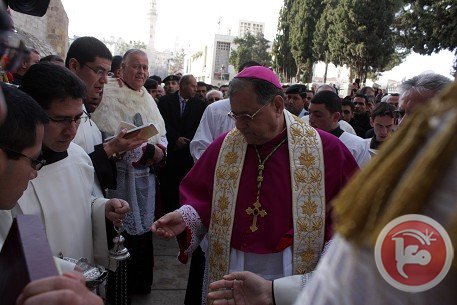
Palestinians and pilgrims take part in day-long celebrations in the West Bank city of Bethlehem awaiting the arrival of the Latin patriarch of Jerusalem, on Saturday, Dec. 24, 2011.

Palestinian Authority officials say attendance at the annual Christmas eve tradition was the highest in decades. The Israeli army estimated that 100,000 visitors entered the city. 

*
*
BERJAYA
*
BERJAYA

*

BERJAYA

*

BERJAYA

*

BERJAYA

*

BERJAYA

*

BERJAYA

*

BERJAYA

*

BERJAYA

*

BERJAYA

*

BERJAYA

*

BERJAYA

*

BERJAYA

*

BERJAYA

*

BERJAYA

*

BERJAYA

*

BERJAYA

*

BERJAYA

*

BERJAYA

*

BERJAYA

*

BERJAYA

*

BERJAYA

*

BERJAYA

*

BERJAYA

*

BERJAYA

*

BERJAYA

*

BERJAYA

*

BERJAYA

*

BERJAYA

*

BERJAYA

*

BERJAYA

*

BERJAYA

*

BERJAYA

*

BERJAYA

*

BERJAYA

*

BERJAYA

*

BERJAYA

*

BERJAYA

*

BERJAYA

*

BERJAYA

*

BERJAYA

*

BERJAYA

*

BERJAYA

*

BERJAYA

*

BERJAYA

*

BERJAYA

*

BERJAYA

*

BERJAYA

*

BERJAYA

*

BERJAYA

*

BERJAYA

*

BERJAYA

*

BERJAYA

*

BERJAYA

*

BERJAYA

*

BERJAYA

*

BERJAYA

*

BERJAYA

*

BERJAYA

*

BERJAYA

*

BERJAYA

*

BERJAYA

*

BERJAYA
Source

LIVE FIRE MORE EFFICIENT KILLER THAN TEAR GAS …

Israeli Sniper Shoots Nabi Saleh Protester with Live Fire (Video)
Two weeks after the killing of Mustafa Tamimi during a demonstration in the village, an Israeli sniper shot a protester with live 0.22″ caliber ammunition, banned for crowd control purposes.
*
*

Earlier today, an Israeli military sniper opened fire at demonstrators in the village of Nabi Saleh, injuring one in the thigh. The wounded protester was evacuated by a Red Crescent ambulance to the Salfit hospital. The incident takes place only two weeks after the fatal shooting of Mustafa Tamimi at the very same spot. Additionally, a Palestinian journalist was injured in his leg by a tear-gas projectile shot directly at him, and two Israeli protesters were arrested.

*

BERJAYA

Protester evacuated after being shot with live ammo in Nabi Saleh today. Picture credit: Oren Ziv/ActiveStills

*

The protester was hit by 0.22″ caliber munitions, which military regulations forbid using in the dispersal of demonstrations. Late in 2001, Judge Advocate General, Menachem Finkelstein, reclassified 0.22″ munitions as live ammunition, and specifically forbade its use as a crowd control means. The reclassification was decided upon following numerous deaths of Palestinian demonstrators, mostly children.

Despite this fact, the Israeli military resumed using the 0.22″ munitions to disperse demonstrations in the West Bank in the wake of Operation Cast Lead. Since then at least two Palestinian demonstrators have been killed by 0.22″ fire:

  • Az a-Din al-Jamal, age 14, was killed on 13 February 2009, in Hebron,
  • Aqel Sror, age 35, was killed on 5 June 2009, in Ni’lin.

Following the death of Aqel Srour, JAG Brig. Gen. Avichai Mandelblit reasserted that 0.22″ munitions are not classified by the IDF as means for dispersing demonstrations or public disturbances. The rules for use of these means in Judea and Samaria are stringent, and comparable to the rules for opening fire with ‘live’ ammunition.

Contrary to the army’s official position, permissive use of 0.22″ munitions against demonstrators continues in non life-threatening situations.

Background
Late in 2009, settlers began gradually taking over Ein al-Qaws (the Bow Spring), which rests on lands belonging to Bashir Tamimi, the head of the Nabi Saleh village council. The settlers, abetted by the army, erected a shed over the spring, renamed it Maayan Meir, after a late settler, and began driving away Palestinians who came to use the spring by force – at times throwing stones or even pointing guns at them, threatening to shoot.

While residents of Nabi Saleh have already endured decades of continuous land grab and expulsion to allow for the ever continuing expansion of the Halamish settlement, the takeover of the spring served as the last straw that lead to the beginning of the village’s grassroots protest campaign of weekly demonstrations in demand for the return of their lands.

Protest in the tiny village enjoys the regular support of Palestinians from surrounding areas, as well as that of Israeli and international activists. Demonstrations in Nabi Saleh are also unique in the level of women participation in them, and the role they hold in all their aspects, including organizing. Such participation, which often also includes the participation of children reflects the village’s commitment to a truly popular grassroots mobilization, encompassing all segments of the community.

The response of the Israeli military to the protests has been especially brutal and includes regularly laying complete siege on village every Friday, accompanied by the declaration of the entire village, including the built up area, as a closed military zone. Prior and during the demonstrations themselves, the army often completely occupies the village, in effect enforcing an undeclared curfew. Military nighttime raids and arrest operations are also a common tactic in the army’s strategy of intimidation, often targeting minors.

In order to prevent the villagers and their supporters from exercising their fundamental right to demonstrate and march to their lands, soldiers regularly use disproportional force against the unarmed protesters. The means utilized by the army to hinder demonstrations include, but are not limited to, the use of tear-gas projectiles, banned high-velocity tear-gas projectiles, rubber-coated bullets and, at times, even live ammunition.

The use of such practices have already caused countless injuries, several of them serious, including those of children – the most serious of which is that of 14 year-old Ehab Barghouthi, who was shot in the head with a rubber-coated bullet from short range on March 5th, 2010 and laid comatose in the hospital for three weeks.

Tear-gas, as well as a foul liquid called “The Skunk”, which is shot from a water cannon, is often used inside the built up area of the village, or even directly pointed into houses, in a way that allows no refuge for the uninvolved residents of the village, including children and the elderly. The interior of at least one house caught fire and was severely damaged after soldiers shot a tear-gas projectile through its windows.

Since December 2009, when protest in the village was sparked, hundreds of demonstration-related injuries caused by disproportionate military violence have been recorded in Nabi Saleh.

Between January 2010 and June 2011, the Israeli Army has carried 76 arrests of people detained for 24 hours or more on suspicions related to protest in the village of Nabi Saleh, including those of women and of children as young as 11 years old. Of the 76, 18 were minors. Dozens more were detained for shorter periods.

Taken from Uruknet

WHEN WILL AMERICA WAKE UP TO THAT FACT THAT ISRAELIS ARE SCREWING HER?

BERJAYA
*
I have written extensively about illegal Israeli visitors working in malls throughout the United States. These crimes continue….. but perhaps what’s happening in Canada will be a wake-up call for Americans as well…. The video presented below demonstrates that they are very aware of the situation….
*
Shalom, your skin looks terrible …
BERJAYA
*
*
Posts from the archives can be seen HERE, and HERE
*
*

Canada: Israelis arrested for illegal work

Canadian border authority detain Israeli nationals working without permit in mall carts; punishment includes $1,000 fine, deportation

*Border Authorities and detectives at the Halifax District Police in Canada arrested Israeli citizens who illegally worked in mall carts around the country, Canadian network CBC reported on Saturday.

According to a report published on the internet site of Shalom Toronto, dozens of Israelis were arrested during raids in apartments and three malls in the country, and they are scheduled for deportation. They might also be barred from entering the United States in the future.

A Canadian Border Authority spokesperson stated that the arrests were carried out as part of an extensive campaign tracking immigrants and refugees who illegally seek employment in Canada. According to the spokesperson, 10 people were arrested during the latest raid, on suspicion of violating immigration laws.

Two men and two women have already been brought in front of a judge and were accused of working without permit. One of the men demanded to have a translator present during the hearing, while the other man reportedly demanded to meet with another lawyer.

The two women pleaded guilty and were fined $1,000 each. One of the women, who arrived to Canada in August, presented the court with a work permit; however the local police claimed the document were forged.

The police said six other people will be brought in front of a judge, but did not disclose their nationalities. During the hearing, the presiding judge suggested that Jewish organizations and the Israeli Consulate should assist the detainees.

The Shalom Toronto website reported that Canada and the United States approved in the beginning of December a plan to increase security cooperation at border crossings. According to the agreement, the two states will share information on foreign nationals whose visas were denied or were denied entry into one of the countries. As part of the agreement, the countries will notify each other of any Israelis and other foreign nationals who were deported due to illegal employment or other reasons.

Source

WOULD JESUS BE IN THE 99%?

BERJAYA
*

Occupy Christmas

By Richard (RJ) Eskow

It doesn’t matter whether or not you believe in God or which faith you follow if you do. Here’s a question worth asking this holiday season: Would Jesus be an Occupy demonstrator?

The Bible suggests that He would.

Radio Free Heaven

A few years ago I was driving through the back roads of Alabama listening to Christian radio and I heard a preacher say that “Satan’s name in the world today is ‘God As I Understand Him.’

” Oh, yes, people,” the preacher said, “You hear his name on a lot of people’s lips: ‘God As I Understand Him’ loves everybody. ‘God As I Understand Him’ hates prejudice. ‘God As I Understand Him’ will let you into Heaven if you’re a good person.”

“But know this, my friends,” said the preacher. “When you hear the phrase ‘God As I Understand Him’ you’re hearing someone invoke the name of Satan.”

As the white Southern Baptist railed against liberalism I came to a little town where poor African American women were carrying heavy parcels in the blistering August heat. I saw men lined up outside an unemployment office and people waiting for buses in the blistering sun. I saw run-down shacks, closed storefronts, and vacant lots.

The preacher was saying that God can only be found through institutionalized churches, the kind that tell their followers how to vote. As he droned on I saw hunger, deprivation, and poverty all around me.

God – as I understand him – wouldn’t like that. As William Blake once wrote, “That Vision of Christ which thou dos’t see/is my Vision’s greatest Enemy.”

The Power and the Glory

Look, I’m just as sick as other people are of seeing the word “Occupy” appropriated for everything from partisan politics to self-promotion. But it’s hard to describe Jesus’ action against the moneychangers in today’s terms without calling it “Occupy the Temple.”

By riding into Jerusalem on a donkey accompanied only by his ragged followers, Jesus was proclaiming a spiritual insurrection of the poor and common people – the 99%, if you prefer – against the wealthy and privileged. When he came to the Temple he overturned the moneychangers’ tables and drove them from sacred ground with a “whip of cords.”

A“whip of cords.” And all that today’s protestors are doing is making themselves visible. There’s no violence against anyone. And yet the howls of outrage can be heard from the oak-lined boardrooms of Wall Street to the hypocritical pulpits of right-wing preachers.

Jesus was trying to reclaim his Jewish faith, the faith of his nation, from a clique of clergymen who had colluded with the unjust government of their day for their own purposes. The Romans and the clergy formed a cynical alliance designed to increase their own power and influence by serving the few at the expense of the many.

Sound familiar?

The Last Drum Circle

Today’s financial elite isn’t satisfied just to make billions at the expense of others. They want to be immune from criticism, too. Goldman Sachs’ CEO says it’s “doing God’s work.” An investment banker desecrates the memory of the Holocaust’s victims by saying that asking him to pay the same tax rates as a cop or firefighter would be like Hitler invading Poland.

They wouldn’t like the messages in the Old or New Testaments or the Talmud. These holy books are all pretty clear in their assessment of unproductive wealth. The prophet Ezekiel put usury on his list of “abominable things.” Jesus drove the moneylenders away with that whip.

Sarah Palin says that “US law should be based on the God of the Bible.” As they say, Be careful what you wish for. That’s why I asked my friend Sudeep Johnson1 to create this picture, which she so artfully did by improvising on a painting of The Last Supper:

BERJAYA

Some people may find it sacrilegious to depict Jesus and His disciples in a drum circle protesting the 1% of their time. But if you read the New Testament with an open mind, it’s not hard to conclude that the real sacrilege is to use the name of Jesus to support wealth, power, and privilege. God as they understand him bears no relationship to the one we find in Scripture.

Eye of the Needle

Like any good Jewish mother, Mary liked to brag about her son’s talents and his lineage. In Luke 1 she says of God the Father,

51 … he hath scattered the proud in the imagination of their hearts.
52He hath put down the mighty from their seats, and exalted them of low degree.
53He hath filled the hungry with good things; and the rich he hath sent empty away.

That’s the Mother of God talking, people! And yes, Bill O’Reilly, I mean you! You’re a Catholic like my mother’s mother. How can you disregard the Mother of God?

And you can almost hear the conservative Christian preachers gasping: Does she mean the job creators? She certainly means the people they call “job creators.” Her son said “it’s easier for a camel to pass through the eye of a needle than for a rich man to enter Heaven.” (And as an aside: If they’re “job creators,” where are the jobs?)

The Faith Stealers

The Jesus who turned water into wine was undercutting the official clergy, telling his followers that every individual could have a personal experience with the transcendent. In other words, he was urging them to discover divinity directly by experiencing “God as they understand him.” Would Jesus recognize those who speak in his name? Or would he say “Depart, I never knew you”?

Most scholars agree that there was a historical Jesus, whose life and death was noted by the Roman historian Josephus in the year 75 CE. Moderate Christians see him as the Son of God who clothed the homeless, healed the sick, and fed the hungry.Many Jews accept him as a great Jewish teacher. Muslims revere him as a prophet. Hindus see him as an avatar of God.

There are also many atheists and agnostics who accept him as a great moral leader. “I wouldn’t want to live in a world where the Sermon on the Mount didn’t exist,” said prominent atheist Kurt Vonnegut Jr. Jackson Browne sang of himself as “a pagan who stands with the Rebel Jesus.”

This is the time of year when those of us who revere him in these different ways are told we must submit to an endless barrage of messages about their authoritarian, right-wing Jesus. If we don’t, we’re told that we’re part of a “War On Christmas.”

The Christmas War

If they’re looking for a war on their Christmas, we say Bring it on! Whenever they spout their distorted, politicized sermons, why not hit ‘em with the Christmas Love Gun? Here’s how to use it:

When they complain about extending unemployment or helping the poor, tell them to reread Matthew 25:31-46, then ponder the fiery fate of those who refuse to feed or clothe the hungry and heal prisoners when they’re sick.

When they talk about protecting bankers, remind them about Ezekiel and those moneylenders in the Temple.

When they bitch about taxes of the size of government, quote that line about “Rendering unto Caesar that which is Caesar’s.”

When they push their Islamophobia, remind them that the Good Samaritan was also from a hated religion, but after Jesus explained his goodness the “Samaritan” label became synonymous with good deeds.

When they push their outmoded drug laws, remind them that Jesus said “It’s not what goes into a man’s mouth that defileth him but what comes out of it.”

  • When they push war, send them to Mathew 5:9. Then offer them your cheek. If they strike it, offer them the other one also.And if they ask you what you think you’re doing by quoting the scriptures they consider “theirs,” tell them you’re Occupying the spirit of Christmas. Or rather, that you’re letting the spirit of Christmas occupy you. It won’t change their minds, but it might make you feel a lot better.Time of the SeasonThere’s something beautiful about a time of year set aside for reflection on greater things, and for kind words and deeds to others. If it’s gentler on you to hear the words “Happy Holidays,” then may your holidays be happy.But if you don’t mind re-occupying the language of the spirit and reinfusing it with its original meaning, here’s our heartfelt greeting for the season:

    May your Christmas be joyful, and your New Year filled with good tidings of insurrection.

Written FOR

TIMELY TOONS ABOUT TIMELY THINGS

Segregated buses in Jerusalem? Here’s a good solution….
*
BERJAYA*
A variation of the above appeared in the Jerusalem Post
*
An invented people? Says who??
*
By Bendib
*
BERJAYA

THE ‘NO-DEAL’ PALESTINIAN PRISONER LEFT BEHIND

Page by page, Marwan Barghouti’s anti-war tome walked out of prison

Joseph Dana

A Palestinian artist finishes a portrait of jailed Palestinian Fatah leader Marwan Barghuti on a cement barrier near the Israeli-controlled Qalandia checkpoint, between Jerusalem and Ramallah. AFP
*A Palestinian artist finishes a portrait of jailed Palestinian Fatah leader Marwan Barghuti on a cement barrier near the Israeli-controlled Qalandia checkpoint, between Jerusalem and Ramallah. AFP
Fadwa, Marwan Barghouti's wife, photographed in 2005 as she is briefed by a security official on her arrival at the El-Tufah checkpoint in Khan Yunes in the southern Gaza Strip. She believes that her husband
*Fadwa, Marwan Barghouti’s wife, photographed in 2005 as she is briefed by a security official on her arrival at the El-Tufah checkpoint in Khan Yunes in the southern Gaza Strip. She believes that her husband “is the natural leader of the Palestinian people … [they want him] to lead them in their fight against occupation”. AFP
*
Palestinians across the West Bank and Gaza celebrated the return of their loved ones last Sunday as the final wave of prisoners were released in an exchange between Hamas and Israel. However, one prisoner was notably absent. Marwan Barghouti, the jailed Fatah leader known by many Palestinians as the “prince of resistance”, remains behind bars in Israel despite promises from the Palestinian leadership that his freedom would be secured through the exchange of captive Israeli soldier Gilad Shalit. On the eve of the prisoner swap, Barghouti released a 255-page book, written secretly behind bars and smuggled out via lawyers and family members, detailing his experience in Israeli jails.

Barghouti is a figure of towering reverence among Palestinians and even some Israelis, regardless of political persuasion. Yet, he was reluctant to begin a life in the political spotlight. In fact, the Israeli occupation came to him, his long-time friend Sa’ad Nimer noted during a long conversation in a dank Ramallah coffee shop. When Barghouti was just 15, living in the small village of Kober just outside Ramallah, Israeli soldiers shot his beloved dog during a military sweep of the village. From that moment on, Nimer said in a haze of nostalgia, the occupation was a personal issue for Barghouti.

A natural leader with admirable charisma and an unwavering hatred of Israeli occupation, Barghouti has been an active political leader since the early 1980s. At age 18, during one of his early stints in an Israeli prison for political organising, he was elected the prisoner representative, a task which required him to unify competing political affiliations of prisoners and negotiate with Israeli authorities. The appointment foreshadowed a long career of uniting Palestinians regardless of political agenda.

Despite his vocal support for the two-state solution and attempts at reconciliation with Israeli civil society, Barghouti has remained a puzzling and aggressive figure for Israel. “When Marwan got out of jail the second time [in 1982 at age 23], the Israelis did not know what to do with him,” said Nimer, who is the director of the Free Marwan Baghouti Campaign based in Ramallah. In the early 1980s, Barghouti was a primary organiser in the Shabibia movement, a Fatah-based student group that campaigned for better education standards in Palestine. The movement, still active in the West Bank, was a primary organising vehicle of the First Intifada.

While not overtly against the occupation, Barghouti’s early political activity was understood by Israel as a threat and he was deported to Jordan under extraordinary circumstances. According to Nimer, “Jordan was not taking deportees at the time, so the Israelis just put him on a helicopter and dropped him into the middle of the Jordanian desert, desperate to get rid of him”.

From Jordan, Barghouti helped organise the First Intifada, relaying messages and tactics to Palestinians, mostly aligned with Shabibia, in the West Bank. After the signing of the Oslo peace accords in 1994 he returned to the West Bank as a member of the Palestinian Legislative Council (PLC), the parliament of the Palestinian Authority, and embraced the peace process wholeheartedly.

During his time as a PLC member, he maintained a tough stance on corruption inside Palestinian politics and won himself many enemies in the upper echelons of power in the West Bank and Gaza. Unlike many of his colleagues in the PLC, Barghouti was never appointed to public office and derived his political capital directly from the people who consistently provided him with strong electoral results.

For Kadoura Fares, the current president of the Palestinian Prisoners Association and former member of the PLC, Barghouti’s pragmatic approach to peace during the 1990s demonstrated his overarching desire to end Israeli occupation at all costs. “We had a meeting with Israeli officials in Jerusalem in 1996,” Fares told me in his comfortable Ramallah office adorned with paintings of the Palestinian national poet Mahmoud Darwish. “I was very worried because of the negative reaction of many Palestinians towards meeting with the Israelis, but Marwan calmed me down. He told me that it was the time for peace and we must pursue it despite the public pressure. He would always say that there is a time for peace and a time for resistance. It was a time for peace.”

When Oslo collapsed and the Second Intifada engulfed Israel and the Palestinian territories in violence, Barghouti embraced armed resistance. He assumed a leadership position in Fatah’s armed wing, coordinating attacks against the Israeli military in the West Bank and Israeli civilians in Tel Aviv. It is for these activities that Israelis understand Barghouti as a terrorist leader. His friends and colleagues maintain that his support of armed resistance as a vehicle to achieving an end to occupation was in line with the popular sentiments expressed on the street at the time.

“He got credibility for supporting armed resistance from the Palestinian street,” recalls Laila Jamal, a member of the Palestinian Authority’s media department from the village of Salfit in the central West Bank. “During that time, we saw the occupation in action and everyone supported armed resistance. He understood this and acted in line with the popular sentiment.”

Barghouti was arrested by Israeli forces conducting sweeps in Ramallah in April 2002 while he was a sitting member of the Palestinian Legislative Council. He was quickly transferred to Israel for trial in a civilian court on multiple counts of murder including authorising and organising an attack in Tel Aviv in which many civilians were killed, attempted murder and membership in a terrorist organisation.

Citing the illegitimacy of the Israeli legal system over occupied Palestinians, Barghouti refused to accept the charges or stage a defence in the Tel Aviv court. During the drawn out proceedings, he delivered impassioned and researched speeches arguing that the court and the practices of the Israeli military in the West Bank were illegal under international law.

He never recognised the authority of the Israeli court system from his first statement to the judge in which he proclaimed, “I am a political leader, a member of the Palestinian Legislative Council, elected by my people. Israel has no right to try me, to accuse me, judge me. This is a violation of international law. I have a right to resist occupation.” Dismissing the allegation, Israel charged him with five life sentences for murdering Israelis and 40 years imprisonment for attempted murder, which he is currently serving.

Since his conviction, Barghouti has done what he knows best; actively campaigning for the reunification of Palestinian political factions. After the 2006 Hamas-Fatah split, which resulted in bloody infighting among the factions, Barghouti organised a prisoners’ campaign with members of Hamas, Fatah as well as PFLP and DFLP that called for immediate reunification. According to those close to him, like Fares, his work on Palestinian unity is a reason why so many Palestinian politicians are afraid of his freedom and a possible reason why he was left out of the recent prisoner swap.

***

If there is one experience that has the potential to unify the Palestinian people, it is the experience of being a prisoner in an Israeli military jail. Barghouti’s new book, One Thousand Nights in Solitude, is, at its core, a book about dealing with the Israeli prison system as a Palestinian. Reading like an instruction manual for coping with the experiences of interrogation and prolonged detainment, the book breaks new ground in the underreported subject of Israel’s treatment of Palestinian political prisoners.

Israel’s military court system has processed roughly 750,000 Palestinians according to the Red Crescent, but exact numbers are hard to obtain. In fact, any sort of exact information about Israel’s military jail system is difficult to find given its role as one of the primary Israeli mechanisms of controlling Palestinian dissent and nascent resistance to the occupation.

According to a recent expose by the Israeli liberal daily Haaretz, military courts have an astonishingly high conviction rate of 99.74 per cent. Many Palestinian defendants are put through a programme of psychological and physical torture that often results in coerced testimonies necessary in the maintenance of a high conviction rate. Haaretz has also released reports seemingly confirming the widespread belief that torture is widely used and that Israeli military judges are often aware that information used in tribunals is obtained through psychological and physical torture.

“He is trying to create a civil resistance inside the military prison system,” said Majad Abdel Hamid, a young artist and political activist in Ramallah. “If all Palestinians refused to recognise the legitimacy of the Israeli military court system, Israel would be in big trouble. This is partly what the new book is about.”

Kept in solitary confinement for an extended period and put through various periods of psychological and even physical torture, Barghouti’s book details the tenacity required to not wilt under such difficult conditions. In the first chapter, he describes in verbose language how Israel used various interrogators to coerce information out of him regarding senior Fatah leaders in the West Bank. This common procedure was extremely tough on Barghouti since, in the words of Sa’ad Nimer, “they wanted information tying Yasser Arafat to terrorism and they never got it from Marwan”.

Following a political career best understood as leading by example, Barghouti sets out to demonstrate how Palestinians can achieve a meaningful non-violent resistance against the military court system. In addition to the practical information of surviving within the Israeli prison system, he details his arguments for Palestinian political unity as a means of resistance to Israeli occupation.

The book devotes great detail to his three years housed in a tiny cell (measuring one by 1.5 metres) in solitary confinement. It is from this experience that the title, One Thousand Nights in Solitude was born.

Fadwa Barghouti is a carefully appointed woman who has spearheaded her husband’s awareness campaign since the beginning of his current imprisonment. From the same village of Kober, Fadwa is a distant relative of Marwan, sharing the same fourth-generation great grandfather. Sitting in her comfortable office overlooking the Muqata compound where Yasser Arafat was confined by Israeli forces at the height of the Second Intifada, Fadwa remains confident that her husband will be released soon, but is visibly upset at the recent failure by Hamas to gain his freedom. “I know why he was not released,” she told me sipping sugary tea, “but I am not going to tell you.”

Sitting under the ubiquitous photo of her husband surrounded by Israeli prison guards with handcuffed hands held high, she glowingly reports that he is using his time in prison to enrich himself intellectually.

He is a ferocious reader, consuming books in English, Arabic, Hebrew and French on topics ranging from French colonial rule in Algeria to the latest biographies of the former US president Bill Clinton and Margaret Thatcher, the former British prime minister. He also has a deep respect for the work of Paulo Coehlo and the Israeli philosopher Yeshayahu Liebowitz. Additionally, Barghouti has written two books and completed his PhD from the University of Cairo entitled, The Legislative and Political Performance of the Palestinian Legislative Council and its Contribution to the Democratic Process in Palestine from 1996 to 2008. His doctorate, like the recent book, was smuggled out of jail one page at a time and took years to complete.

In addition to maintaining public and international pressure on Palestinian and Israeli leaders for the release of her husband, Fadwa has had to raise her family without a father. One of their three sons is now living in the United Kingdom while completing his higher education. His other two sons and one daughter live in the West Bank and are known in Ramallah for their active social lives and lack of interest in Palestinian national politics. Fadwa’s dedication to her husband is demonstrated in the romantic language used to describe his meaning to the Palestinian people.

“Marwan Barghouti is the natural leader of the Palestinian people,” Fadwa said. “In opinion polls, he is regularly shown to be the choice of Palestinians because of his adherence to the two-state solution, his fight against corruption and for the rights of women and democracy. The people want Marwan Barghouti to lead them in their fight against occupation.”

Palestinians are exhausted from the emotional and physical toll of the Second Intifada. Most express dismay at the infighting that has plagued the political establishment since the 2006 fallout between Hamas and Fatah but offer little solution for dealing with it. There is also a sense that the political establishment is no longer working in the interests of the people despite the highly popular attempt to achieve statehood recognition at the United Nations earlier this year, which Barghouti supported from jail.

“I think what is needed now from the leadership is to have honesty and self-reflection. In a way, this is one of the strengths of Marwan Barghouti in that he is honest with Palestinians. He doesn’t b******* us. We are sick and tired of Palestinian leaders who [do],” said Majd Abdel Hamid, who is part of the March 15th youth movement that demanded reconciliation of political factions earlier this year after the revolutions in Egypt and Tunisia reshaped the Middle East. He does not support any Palestinian political party, like many in the March 15th movement, but believes that Barghouti has the power to open a new chapter in the Palestinian national struggle if only he is released from jail.

Dancing around the subject of the recent prisoner swap, Fadwa Barghouti remains confident that the current political leadership is afraid of a free Barghouti. For five years she was told by Fatah and Hamas leaders that her husband’s freedom would come in the form of the captive Israeli soldier Gilad Shalit. But, at the last minute, a month before the controversial deal between Hamas and Israel was signed in Egypt, Barghouti, along with nine other senior political prisoners, were dropped from this list.

“I believe that there was a weak attempt in the prisoners swap to free my husband,” Fadwa said, asserting that securing her husband’s release was indeed possible. “I am talking about the Palestinian leadership of Hamas and Fatah. The people have been demanding his release for the last 10 years and they simply ignored the people’s will.”

Indeed, Marwan Barghouti is often cited as a potential replacement for Palestinian Authority President Mahmoud Abbas. Barghouti along with Kadoura Fares and Mohammad Dahlan threatened to begin an independent party called Al-Mustaqbal (The Future) in 2005 after Abbas offered Barghouti second place in Fatah despite clear indications that Barghouti would win national election. Ultimately, according to Fares, Barghouti felt that a second party would harm Palestinian unity and ran on the Fatah party ticket, securing a seat in the PLC as a Fatah member.

Due to the belief that Barghouti would be part of the recent prisoner swap, the grassroots movement to free him has lost momentum in recent years.

But, according to Fadwa Barghouti, things have changed and with the release of his new book there are renewed efforts to pressure the Palestinian leadership to negotiate his release. The Free Marwan Barghouti campaign is planning to stage several demonstrations in March under the banner that Palestinians refuse negotiations with Israel without a free Barghouti to lead them.

“The pressure is on the politicians, all the politicians, to release Marwan if they want to move forward with negotiations with Israel,” Fadwa told me. “Palestinians want their leader to move them forward and the political establishment will have to deal with this reality in the new year.”

Whenever discussions arise about Marwan Barghouti in Israel or Palestine, one name is unavoidable: Nelson Mandela. In the 1990s, dovish Israeli politicians and political thinkers such as Uri Avenry began calling Barghouti Palestine’s Mandela. The comparison is not without merit: both leaders have refused to swear off armed resistance, both have spent long periods of time in jail, unwilling to cooperate with authorities, and both have enjoyed a unique loyalty from their people that has transcended political affiliations. Israeli society will continue to see Barghouti as a symbol of the violent Second Intifada, but after his inevitable release, they will likely be seeing him sitting at a negotiations table working to end the conflict and dismantle the Israeli occupation.

After the statehood campaign in the UN that failed to achieve independence, Palestinians are left with a power vacuum and a tough road to reconciliation. Now, more than ever, a leader is required to bring Palestine’s political factions together. When asked who might be the leader to open a new chapter in Palestinian politics, Kadura Fares paused, and took a long drag from his ever present cigarette, “it is not necessarily one individual who can do that with the snap of his fingers. Abu Mazen tried, he did a lot, but it was not enough, but I do think that Marwan could be the person.”

Written FOR

« Older entries

Follow

Get every new post delivered to your Inbox.

Join 202 other followers