
Something that keeps me up at night is the fact that not only is the central tendency in most projections of the US economic outlook pretty bleak, the quantity of downside risk in less likely scenarios remains gigantic. This has a lot to do with political issues.
For example, Representative Brad Miller mentioned yesterday that there’s no way Congress would appropriate more funds for a new TARP-style bank bailout even though the last round of bank bailouts ended up costing less than zero dollars. That means that if things get bad and big banks go insolvent, there’s a very good chance of things going really badly and massive bank failures paralyzing the real economy. A run on money market funds could make it impossible for firms to make payroll, which in turn will leave households temporarily insolvent, etc. And it’s not as if the anti-TARP political dynamic is pointing in a “no new bank bailouts but I’d appropriate $700 billion for some other purpose instead.” If the economy hits a major pothole, then we’re going to be left with Fed open market operations as the only politically workable countermeasure.
Alternatively, you can look at Europe where additional stresses on “periphery” countries could lead to nations exiting the Euro which would also imply bank failures and massive capital flight. Here, too, the problem could in principle be addressed by the stronger European countries doling out massive fiscal aid to Ireland, Spain, etc. but the political odds of this happening are basically zero.
In the most likely scenario, neither of these crises occur. But their occurrence is far from impossible, and the odds are overwhelming that if they arise policymakers won’t rise to the challenge.
Eric Trager evidently deems it outrageous that I would have criticized the Israeli blockade of the Gaza Strip as an act of immoral collective punishment without having personally traveled to Israel before. I think the idea that you can’t have a well-founded opinion on an issue without having visited personally is a bit silly and now even though I’m in Israel I still haven’t been to Gaza and won’t be able to make it on this trip. I did, however, have dinner with John Ging who runs the UN operation in Gaza and he’s definitely a guy who’s been there. And guess what, he seems to think the blockade is an immoral and counterproductive form of collective punishment. Because guess what—it is.
Probably the clearest quick token of that fact is that the blockade prevents exports from Gaza. That doesn’t cut down on the smuggling of dangerous weapons into the area. It does, however, render the situation economically untenable since Gaza doesn’t contain sufficient arable land to provide subsistence for its population under a situation of autarky. The population necessarily remains impoverished and aid-dependent, with sky-high unemployment since there’s essentially no economy for people to participate it. This is a good way of making life harsh for the Strip’s residents, nearly half of whom are children, but that in turn is a good way of raising a new generation of anti-Israel extremists. It’s an insane and indefensible strategy if you can even call it a strategy.
And just to show that it’s not only the Israeli government that’s capable of treating Gazans in an indefensible manner the very same Arab leaders who are most inclined to complain about the situation do almost nothing to provide the money the UN needs to keep the population fed. Instead it’s left up to the United States and to do the heavy lifting with a large assist from Norway.
Another small thing I thought was telling is the multi-lingual signage in the Arab-owned hotel in East Jerusalem where we stayed last night. Everything is in many languages, but none of those languages is Hebrew:

All in all it adds up to being one of the few places on earth where you wouldn’t really worry about being perceived as an “ugly American.”
Kevin Drum has a good post on the recurring waves of declinist sentiment in America, but I did want to encourage a different emotional orientation from this one:
But what’s remarkable, really, is how little America has declined. We are perpetually astounded that our military might doesn’t guarantee us instant victory anywhere we go and that other countries are routinely able to make trouble for us, but that says more about our national psyche than about our actual global influence or military power. If anything, our ability to project power may be greater today than it’s ever been, and it’s certainly greater relative to other countries than it was 50 years ago. Economically, our share of GDP fell surprisingly little in the postwar era, from 28% to about 22%, and has stayed very nearly flat since 1980. And political idiocy aside, our ability to lead the world in a rebound from a world historical financial crash has actually been pretty impressive.
Anyway, I find that when I’m feeling depressed I think America is in terminal decline, and when I’m in a good mood I don’t. Despite being sick at the moment, I’m in a relatively good mood today, so I don’t think we’re in decline. But ask me again next week and I might change my mind.
Something to note here is that relative decline would almost certainly be a good thing. America’s share of world population is pretty small, so far and away the most likely scenario for American relative decline would be “catch up” growth in large poor countries such as China, India, Brazil, Indonesia, Pakistan, Bangladesh, and Nigeria. And I hope it happens! A lot of third world countries adopted staggering bad policies in the postwar era. That bolstered America’s relative standing in the world, but it was a human tragedy. Besides which, even if faster growth in those places leads to relative decline in American dominance, it would almost certainly boost our living standards in absolute terms. Healthier, better-educated, freer, richer, more productive people in all those other countries would invent marvelous things, produce great works of art, etc. and we’d all win.
The tragedy would be global stagnation, not American decline.
A couple of shots of Route 443 through the West Bank that I mentioned yesterday. First here’s the Israeli checkpoint semi-blocking the exit/entrance that would lead from a Palestinian village onto the highway:

And here’s a view of the wall that separates the highway from the Palestinian territory on either side of it:

It’s a sort of banal aspect of occupation and settlement in practice that’s a bit far afield from some of the rhetoric you hear. But enough banal things like this, and you don’t really have two states.
Apparently in Austria it’s illegal for a member of the royal family to run for the largely ceremonial office of president.
That’s via Robert Farley who (rightly) thinks the rule should be repealed. Of course in the annals of bad rules about eligibility to run for president, this has nothing on our rule against letting an immigrant run.
Whenever I read reports about US government officials being frustrated by Pakistan’s cooperation in fighting militant groups, I always wonder what it is policymakers are expecting will happen. Our current policy, after all, is to give the Pakistani military a lot of aid that’s predicated on the existence of an Islamist militant threat. If the threat went away, the aid would probably dry up and even if it didn’t dry up it would be redirected away from military matters—we wouldn’t be interested in explicitly funding an arms race with India.
When the Pakistanis give us a desultory effort it seems to me that we’re just getting what we paid for.
On the drive from the airport to Jerusalem, we went past the town of Modi’in-Maccabim-Re’ut, a bedroom community that’s conveniently located between Tel Aviv and Jerusalem. One problem, however, is that the most convenient driving route from the town into Jerusalem is to take Route 443, a limited access highway that cuts through a swathe of the West Bank:

Not the biggest impediment to peace in the universe, but an interesting example of integration-in-practice of Israel and Palestine. A sign of non-integration in practice is that though Palestinians have access to the road in order to get on it from one of the Palestinian villages it passes through you have to stop at a checkpoint, degrading its practical utility.
I’ve arrived at my hotel in Jerusalem, exhausted as one tends to be after a ten-hour flight featuring many screaming babies. It’s of course difficult to achieve really deep insights on a brief trip, but one thing travel does help you do is recognize things that should have been obvious but are nonetheless easy to overlook. For example, I found myself shocked in the passport control line at Ben Gurion Airport by the enormous quantity of Christians on the line. In my mind, Israel is a place that Jews and people interested in politics visit—but there I was face to face with an enormous group of elderly Italians with crucifixes around their neck.
It makes perfect sense, of course, when you think about it for a minute. But in general I hadn’t.
Jan Hatzius, Chief Economist at Goldman Sachs, has a bleak forecast:
We see two main scenarios for the economy over the next 6-9 months — a fairly bad one in which the economy grows at a 1½%-2 percent rate through the middle of next year and the unemployment rate rises moderately to 10 percent, and a very bad one in which the economy returns to an outright recession. There is not much probability of a significantly better outcome. The reason is that “short-cycle” factors such as the inventory cycle and the impulse from fiscal policy are likely to continue deteriorating through early 2011, keeping G.D.P. growth very sluggish.
One note about this is that they don’t try to model geopolitical risks, which as best I can tell are all on the downside. Say Israel launches a war with Iran and Iranian countermeasures end up disrupting global oil supplies, then we’re really doomed.
As this posts I’m heading out the door to catch a flight to NYC where I’ll be transferring to a flight to Israel—I’ve never been before and I’m excited to visit. I’m going on a trip with a small number of journalists (Chris Hayes, Dayo Olopade, Matt Duss, Michelle Goldberg) and it’s organized by the New America Foundation whose general perspective on such matters you’ll see here.
As usual on such trips, blogging will continue but the supply and pace of posts may become somewhat irregular what with time zones, jet lag, being busy, etc.
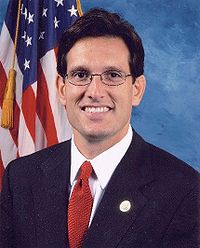
Via Jed Lewison, a bit of messaging Eric Cantor may want to work harder on:
Mr. Cantor believes the American-Jewish community is overwhelmingly Democratic because Jews “are prone to want to help the underdog.” But he thinks the Jewish allegiance to the Democratic Party is changing, in large part because of Israel.
Eric Cantor, rooting agains the underdog since 1963!
Meanwhile, I’m continually baffled by conservative Jews’ never-ending expectation that a massive outbreak of dual loyalties is going to send droves of American Jews’ votes into the arms of the GOP. What’s the model here? Say Obama shifts left on Israel and Henry Waxman gets mad. Then next thing you know he doesn’t care about climate change? Chuck Schumer suddenly wants to ban abortion? How’s this supposed to work?
David Leonhardt has a great column laying out how a lot of the scare stories you’re reading about “unintended consequences” of the Affordable Care Act are in fact intended consequences. For example, instead of getting incredibly terrible and useless health insurance, in the future McDonalds workers will have access to a better insurance program.
It’s worth remarking on the sleazy politics underlying a lot of the press coverage of this stuff. The nature of the business world is that businesses are run by rich people. And human nature is such that rich people would like to pay less in taxes. And the Republican Party is such that it’s eager to oblige rich people with lower taxes. But “hey, I’m a rich guy and I want lower taxes” isn’t necessarily persuasive to non-rich people. So one thing rich people can do to help obtain the lower taxes they crave is use their control of large business enterprises to spin all changes in compensation practices as a disaster for workers caused by Barack Obama’s madcap socialism. Combine that with the extremely robust conservative media machine, and I bet in three months 35% of the country will believe the Affordable Care Act is responsible for seasonal flu.

Exchange rates are boring, but last week Brazilian Finance Minister Guido Mantega came up with the colorful turn of phrase “currency wars” to describe a situation in which a bunch of different countries try to devalue simultaneously. Ever since then the international business press has been full of stories about currency wars. Timothy Geithner even went so far as to explicitly deny that there would be any currency wars, and today the Financial Times got IMF Chief Dominique Straus-Kahn to warn darkly of the perils of currency wars:
“There is clearly the idea beginning to circulate that currencies can be used as a policy weapon,” Mr Strauss-Kahn told the Financial Times on Monday.
“Translated into action, such an idea would represent a very serious risk to the global recovery . . . Any such approach would have a negative and very damaging longer-run impact.”
This seems completely insane to me. I’m mildly optimistic that currency war would be broadly beneficial. But the alternative to the “beneficial” scenario is Paul Krugman’s theory that currency war will do absolutely nothing. That’s not much of a worst-case scenario. A currency war, after all, isn’t an actual war. Nobody gets hurt. It’s just a striking term. If I called it “global uncoordinated quantitative monetary easing” people’s eyes would just glaze over.
Meanwhile, look at the very next paragraph in the FT’s story:
The yen dropped against the dollar on Tuesday after the BoJ announced its decision. Government bonds, stocks and gold prices all rose on the expectation that central banks of the world’s biggest economies would embark on a round of quantitative easing.
There’s much more to the economy than the stock market, but that stuff is all a good sign. Currency war is, in my view, a pointlessly complicated and not particularly effective means of reviving the global economy. But at the margin it’s helping, not hurting.

Greg Sargent reports a striking finding:
A new poll from Pew and National Journal contains a really striking finding: Only one third of Democrats think this Congress has achieved more than other recent Congresses. Meanwhile, 60 percent of Dems think it has accomplished the same or less.
This is sort of nuts. Among other things, this congress passes a comprehensive overhaul of student loans. It also mandated calorie labeling on chain restaurant menus nationwide. It created a pool of community transformation grants to help municipalities reconfigures their infrastructure in a more public health-friendly way. In fact, those things were all in a single bill. The Patient Protection and Affordable Care Act, an act whose major changes are in totally different areas. Plus there were all these other bills!
You can like the 111th Congress or you can dislike it, but there’s just no way to deny that it did a lot more stuff than the four or five congresses before it. That said, I’m not really sure how people are supposed to know about all this since the incumbents responsible for a lot of this sweeping change to come seem almost embarrassed to talk about it at times.
Menzie Chinn posts a chart from “Labor Underutilization Problems of U.S. Workers Across Household Income Groups at the End of the Great Recession” (PDF) by Andrew Sum and Ishwar Khatiwada, with Sheila Palma:

As Larry Bartels has shown legislators tend to simply ignore the policy preferences of low income people and Republicans double-weight the preferences of rich people. Consequently, Democrats are not as alarmed as they should be about the bleak jobs picture and Republicans basically don’t care at all.

Michael Kinsley’s Politico column debuted yesterday with an argument about why I’m wrong and the rigors of “intellectual honesty” demand so much more than accuracy. And I agree with many of his points, there’s more to life than accuracy. But accuracy isn’t really as low a bar to clear as people sometimes seem to think. For example, Kinsley writes:
Here is another justification for taxing the money people leave behind when they die. According to a survey from the Federal Reserve Board, the average American household aged 65 to 74 has assets worth more than $1 million. Typically these amounts get spent down as people get older and sicker, so let’s say the second member of the typical couple dies leaving $500,000. That is far below the threshold for the estate tax. But for years, this couple has been collecting benefits from Social Security and Medicare. These are supposed to be insurance programs. Social Security protects you against the risk of being old and poor. Medicare protects you against the risk of being old and sick. Medicare operates like typical insurance: it pays to cover the costs of medical care and it pays out only if you actually are sick and suffer these costs. Social Security is different: it pays whether or not you’re actually poor.
Brad DeLong observes that the statistically “average” family is not necessarily typical and reports that the 2007 Fed Survey of Consumer Finances (PDF) says the median household in that age range had just $239,000 in assets even though the average was slightly above $1 million. The typical family is going to have less today than they had in 2007, so Kinsley is off here by a factor of four.
(I also don’t think this is a very good description of how Social Security works. If Social Security actually insured you against the risk of being poor, the senior poverty rate would be 0% rather than 13%).
My colleague Lee Fang had a blockbuster story yesterday about the “US” Chamber of Commerce raising funds abroad and then funneling money into its efforts to elect Republicans here at home. But I think most of what you really need to know about it you get from the lame statement they gave to Ben Smith:
AmChams are independent organizations and they do not fund political programs in the United States. We have a system in place for ensuring that they are not government-controlled entities.
A system, eh?
Most of the rest can be dispensed with by the observations that money is fungible and that we wouldn’t be having this conversation had the Chamber not managed to kill the DISCLOSE Act that would have made it harder to have all this secret corporate cash sloshing around political campaigns. But of course they wanted to make it easier to have secret corporate cash sloshing around political campaigns.

He ends up taking some odd directions with it, but I think the main thrust of Rick Hess’ article on making school choice actually work is mostly brilliant. His core point is that for the provision of extra options to drive major improvements in quality, you need a much more complete market system than the one we generally have—one where consumers have information about quality, and where providers lose something of value when consumers choose against them. A system where money doesn’t fully follow students into the charter school system, for example, is a system where losing a certain number of students can be beneficial to the incumbent school operators.
And by the same token, if the idea is that schools faced with competition are going to start doing something differently and thereby improve they need to actually be given the flexibility to change.
Reputation gained through intimidation:
— Apparently my building sits on the former site of a convention center.
— How performance pay works.
— In addition to being a ridiculous thing to patent, Cover Flow is also totally sucky.
— Robert Gordon’s case for economic doom is pretty persuasive, but somehow leaves me feeling more optimistic.
— Contra Greg Mankiw, most Harvard undergrads are pretty unlikeable and I don’t necessarily exempt myself from that critique.
— Who’s suing whom in the mobile phone business.
I’m going to Israel tomorrow for the first time (more details TK), so here’s NOFX’s classic Jewish nationalist anthem “The Brews”.

It turns out that yesterday Robert Waldmann posted a great example of the great books problem I was discussing. Waldmann is explaining Keynes’ account of the classical account of unemployment and reveals that what we call “involuntary unemployment” nowadays was considered voluntary by Keynes:
When contemporary economists speak of “involuntary unemployment” we mean that there are three agents, a worker, an unemployed person and an employer, that the unemployed person would be glad to work for a wage lower (perhaps slightly lower) than the one paid to the worker and the employer would be glad to employ the unemployed person at that lower wage (perhaps laying of the worker). With this definition, involuntary unemployment can occur because labor unions force employers to pay a high wage even if there are people who would accept a lower wage. This case is an example of the “Insider/outsider” model of involuntary unemployment.
Keynes meant something else. He would have called that unemployment voluntary because “labour as a whole” or the workers or the working class were unwilling to supply labour at a lower wage.
To the modern ear, it simply seems absurd to characterize this form of unemployment as “voluntary” since, after all, “labor as a whole” is not an entity to which it makes a great deal of sense to ascribe volition. Equally confusing, as Waldmann explains the “classical” economists Keynes was criticizing held a view on this subject more similar to today’s “new Keynesian” economists than to today’s “neo-classical” economists.
None of this is anyone’s fault, as such, but you probably wouldn’t spend your time reading a lot of 70-100 year-old economics books and when you pick one up out of context the terminology turns out to be very at odds with contemporary practice. The dispute over whether unemployment is “voluntary” or “involuntary” doesn’t even really make sense in today’s context where unemployment is deemed involuntary by definition.

Washington doesn’t want to hear about it at this point, but the fact of the matter is that having passed a big health care overhaul at the beginning of this year we need to keep on reforming our health care system. Simply put, health care costs are still rising way too fast. An in an interview with my colleague Igor Volsky, former Senator Tom Daschle helps shed light on what the problem is.
The headline out of Igor’s piece is that Daschle says, contrary to the White House, that the public option was de facto taken off the table relatively early in the process. This is what I think many people have long suspected, and it will rightly be the subject of continuing inquiry. But also important, I think, is who the deal was struck with—not just insurance companies, but also “the hospital association” and other “stakeholders.”
This is what tends to go missing when people talk about the politics of the public option. Opposition to it, or to similar proposals like Medicare buy-in, isn’t limited to the easily excoriated insurance industry. It extends pretty broadly across the community of health care providers who fear that one of the main ways a public option would control costs would be by aping Medicare to use its market size to drive a hard bargain and cut fees. On the merits, that’s a feature rather than a bug. But it does mean that if we ever want to see a public option, we need to be prepared for a tougher public fight than a simplistic read of poll numbers would indicate. You’d be looking at a protracted public battle with the “stakeholders”—i.e., the highly trusted health care providers—which would be difficult.
That doesn’t mean it’s not worth doing. Essentially any effort to control costs, either the “liberal” ones or the “conservative” ones suffers from this same problem. A huge quantity of our excessive health costs are going into the pockets of hospital administrators, doctors, medical device makers, etc. and any workable method of controlling costs is going to attract opposition from those quarters.

Amy Kazmin has a very interesting FT piece about the promise and peril of India’s rapidly-growing workforce which, thanks to major differences in demographic structure, will soon far exceed China’s. The challenge, like in Brazil, is to provide enough upgrading of the workforce’s skill level to make an employment expansion that matches possible. Otherwise in a country that’s still very heavily rural, you just have a bigger burden on the existing stock of land:
The problem is acute for those from rural areas, where government schools – often staffed by poorly trained, absentee teachers – produce low learning levels and high drop-out rates. But even privileged youths whose families have paid for private education can emerge ill prepared for the modern environment. “Unemployment to a large extent is because people are unemployable in the absence of a significant, urgent dose of skills upgrading,” says Mr Aziz.
Close to one in three of those aged 15 to 35 is functionally illiterate, according to the National Sample Survey Organisation’s most recent data. States with the fastest-growing young populations tend to be the poorest, with the weakest schools and lowest literacy rates. Even rural youths who achieve basic literacy rarely have any vocational training.
India seems to be putting its hopes in a recent Right to Education law that “guarantees free education from six to 14 and mandates a maximum teacher-pupil ratio of one to 30″ while the central government and the states quibble over the costs. My worry here would be about the supply of well-qualified teachers. Small classes are probably better than giant ones ceteris paribus, but if you already don’t have enough good teachers then reducing the number of students who can have access to them may be counterproductive.
That aside, it always strikes me that trying to do more to help India should be a higher priority for US foreign policy. It’s all well and good to point out the massive bad faith of those who backed invading Iraq on “democracy promotion” grounds, but the fact is that we had all this rhetoric about democracy promotion in part because the idea of democratic solidarity sounds good to people. Well there’s this giant democratic country over in Asia that’s growing pretty rapidly but is also stricken with poverty and all kinds of continuing problems.

Another day, another software patent verdict:
Apple Inc. sought to overturn a jury verdict that could force the computer maker to pay up to $625.5 million in damages for infringing a small technology company’s patents.
A federal jury in Tyler, Texas, on Friday found that Apple had infringed three patents owned by Mirror Worlds LLC, a company founded by David Gelernter, a Yale University computer science professor. The jury recommended Apple pay damages of $208.5 million a patent in the case.[...]
The company’s suit, filed in 2008, cites patents covering how data is organized in streams and displayed, alleging Apple’s iPod, iPhone and Macintosh computers violate its patents.
Apple technologies cited in the case include those used in Cover Flow, a graphical interface that is integrated in iTunes so users can flip through images of album artwork; Spotlight, software that lets users conduct a system-wide search for files on their computer; and Time Machine, software that backs up files, so they can be restored at a later date.
Of course Apple doesn’t like this verdict, but it’s important to understand that the real victim here isn’t Apple but hypothetical future Apple competitors who now will only be able to include “cover flow” functionality if they pay a ransom to David Gelertner. Which is why though Apple will contest this particular ruling, they won’t contest the system that led to it. Instead, they’ll just assert that they own the patent on this “technology.”
But the whole thing is nuts. If you’re talking about a capital intensive industry, then the case for patents is strong. The existence of the patents stifles competition but it also attracts capital to the industry. But writing computer code isn’t capital intensive at all. You need a guy with skills and a computer. Except in a world of software patents, to actually comply with the rules you also need an army of lawyers. So actual compliance is extremely difficult and you have all this economically useless post hoc litigation and flailing incumbents enjoying some old-fashioned rent-seeking.
To be clear here, the issue isn’t the copying of code, which is covered by copyright. It’s the copying of the function served by the code. It’d be like saying the makers of Rush Hour need to pay a licensing fee to the producers of Lethal Weapon because they already patented the idea of an interracial action/comedy movie about cops. Then we could argue in court about how much difference it makes that in the newer movie one of the cops is Asian instead of white. At the end of the day, it’d just be one rich movie studio paying another, but independent film producers everywhere would need to worry that if they ever turned out to be responsible for a hit they’d just end up facing a lot of genre patent lawsuits.
I have no real commentary to offer, but Chicago Fed President Charles Evans is making a lot of sense here and seems to be joining NY Fed President William Dudley in recognizing that we could use not just additional quantitative easing, but a move to level targeting rather than rate targeting: “That is a potentially useful policy tool at this point and I definitely think we should study that more. That comes out of the literature.”
 Register
 RSSLogin
 Yglesias Tweets


 Topic Cloud
 ArchivesBlog RollAbout Matt YglesiasContact Me
 Donate


