close
The Wayback Machine - https://web.archive.org/web/20100827135857/http://techcrunch.com:80/greentech
by Matylda Czarnecka on Aug 26, 2010

BERJAYA

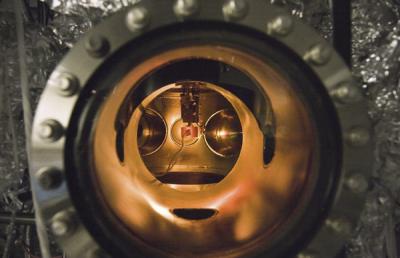
MIT researchers tested the first prototype of the Seaswarm, a pack of robots that use nanotechnology to suck up oil from the surface of the ocean and for immediate processing.

When completed, the robots will be able to travel along oil-spilled waters, collecting oil more cheaply and efficiently than oil skimmers. The robots are large: 16 feet in length and seven feet in width. They push a conveyor belt wrapped by an oil-absorbing nanowire mesh that repels water while slurping up to twenty times its weight in oil.

by Lora Kolodny on Aug 25, 2010

BERJAYALumenergi a Newark, Calif. business closed a $12.7 series B funding round led by Braemar Energy Ventures the company announced today.

It plans to use the capital to take its flourescent and LED lighting control systems — which are like dimmers on steroids and smart pills — from small to mid-sized commercial sites such as schools, courthouses and stores, to large scale commercial and industrial sites.

It will especially seek projects in “energy intensive” regions where the power supply may be limited, or strained by harsh weather for example.

by Matylda Czarnecka on Aug 24, 2010

BERJAYA

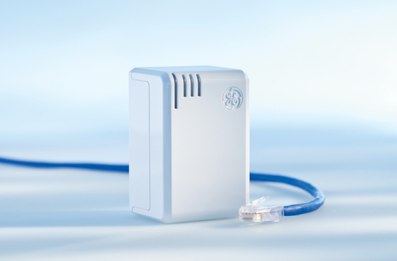
In an effort to push the limits of home energy efficiency, General Electric is partnering with the U.S. Department of Energy on a $5 million project to connect homes in the Western U.S. to its energy management system, LED lights, appliances and solar panels.

The purpose of the project is to research home energy efficiency and test new tracking systems. GE thinks participants will be able to save 70% on their electricity bills: 30% by monitoring and adjusting their energy usage, and 40% by installing solar panels. An average home in the U.S. pays $1,240 a year for its electricity, and GE believes the program could cut this sum by $850. Normally, these types of green energy upgrades take a number of years to pay for themselves.

by Matylda Czarnecka on Aug 23, 2010

BERJAYA

The $24 billion solar panel market could use a good dusting. The benefits of solar energy are well-known, but what’s rarely mentioned is its nemesis: dust. Even a little bit—one-seventh of an ounce per square yard—can weaken a panel’s power conversion by 40%.

To tackle the problem, scientists looked to Mars, where similar technology was developed for space missions to the planet. NASA, along with Boston University, originally developed the self-cleaning technology for its Mars missions, to battle the planet’s red dust. Some of the rovers and other vehicles are solar-powered, and the self-cleaning coating on their solar panels helps them explore more effectively.

by Matylda Czarnecka on Aug 20, 2010

BERJAYA

What’s cooler than a rotating house? One whose solar panels produce five times the energy the house uses. That’s pretty incredible, considering that even zero-energy structures are rare.

German architect Rolf Disch built the home, called Heliotrope, to follow the sun throughout the day. The structure features triple panes of thermally insulated glass to strike a balance between letting light in and keeping the house cooler inside.

by Matylda Czarnecka on Aug 20, 2010

BERJAYA

At the intriguing intersection of green tech and microbial genomics lies a new discovery that could make biofuel production more efficient and affordable. That discovery is a strain of yeast with above-average alcohol tolerance.

Biofuels are made by fermenting crops, and when yeast is used to convert sugars into biomass, the fermentation can create familiar alcohol-based fuels like ethanol and isobutanol.

by Matylda Czarnecka on Aug 18, 2010

BERJAYAQuick, name one of the best things you can do to save energy at home. If you said “turning off the lights,” you’d be wrong. But you are not alone, most Americans say the same thing. A new survey shows most people have misconceptions about what works best to save energy.

Keeping lights off isn’t a bad idea in itself, but it has significantly less impact than swapping out the bulbs for more energy-efficient ones, says Shahzeen Attari, who published a paper on the survey.

by Matylda Czarnecka on Aug 17, 2010

BERJAYAAlternative energy is a growing market, and though many states offer tax credits, rebates, and other incentives to promote clean energy, it can still prove to be an expensive proposition.

It generally also requires plugging your energy source into the grid so you’re not left in the dark when the wind calms or the sun lingers behind clouds.

Here is a roundup of solutions that can help power a home.

by Matylda Czarnecka on Aug 16, 2010

A123Energy storage system producer 24M Technologies spun out of lithium-ion battery maker A123 Systems today to become a separate venture.

The company raised a $10 million Series A funding round from Charles River Ventures and North Bridge Venture Partners.

by Lora Kolodny on Aug 13, 2010

BERJAYA This week Additech, a fuel systems maintenance and software business in Houston, scored a $4.6 million investment SEC filings revealed.

The company’s earlier backers Adams Capital Management, BEV Capital and 9 individual angels provided the tranche money. To date, Additech has raised about $35 million.

The chairman of Additech, Ralph Koehrer, explained in an e-mail that his company will use this money to “grow the number of fuel centers [that have] our service,” and launch a new, “drive clean across America” marketing campaign short term.

by Matylda Czarnecka on Aug 12, 2010

BERJAYA

Airplanes release greenhouse emissions into the atmosphere and require enormous amounts of fuel to fly. A Boeing 747 can consume up to five gallons of fuel per mile. But what if planes could be powered by electricity? Though they won’t replace passenger airliners anytime soon, small, zero-emission, electric planes are flying today.

Engineers have been pursing electric flight for decades. In 1979, the Solar Riser became the first manned electric aircraft to fly. It used photovoltaic cells to charge a battery that powered an electric motor, but could only fly five minutes, at which point it could either glide or land.

Many enhancements have been made since, and several models of electric planes are showing signs of promise. Two of the most interesting planes to fly recently are the E430 and the SkySpark.

by John Biggs on Aug 11, 2010

BERJAYA

A group of charming fellows have created something they’re calling “Social Bicycles,” a bike-sharing system that allows you to drop bikes off almost anywhere there is a bike rack, locate them, and access them with an iPhone app. And it’s all outside of the confines of traditional urban bike-sharing systems.

While we all know that humans are intrinsically violent and destructive, the lads at Sobi are betting that at least some of them won’t destroy the bikes they borrow. The system uses a lock fastened to the bike’s wheel with a GPS system and transmitter built-in. When the bike is locked, it appears on the SoBi app and when you check it out you’re responsible for it.

by Matylda Czarnecka on Aug 10, 2010

BERJAYA

There’s an app for being green, and by an app, I mean a slew of apps. These iPhone apps range from offering general sustainability tips and games to store and product directories.

A lot of green apps focus on offering general tips for everyday actions you can take to help make a difference, which really doesn’t take advantage of the iPhone’s capabilities. Below are the top ten green apps across a range of applications, some of which could help you save money in addition to living on the greener side of the fence.

by Matylda Czarnecka on Aug 10, 2010

NanosysNanosys announced a $25 million Series E round today, as well as an alliance with Samsung to co-develop thin film solar panels, memory products and display technologies.

The funding will allow Palo Alto-based Nanosys to move to a larger manufacturing space to produce its digital display and lighting nanotechnology.

by Matylda Czarnecka on Aug 6, 2010

Sunbox USBA new charger from Horizon Fuel Cell Technologies can help power your gadgets when there’s nowhere to plug into but the sun.

The Sunbox USB has a panel that can be attached outside of a house or tent that connects to a box with several charging ports. Horizon claims the unit can power an LED light included with the device for as long as 11 hours, so long as the panel sees the six to eight hours of sun it needs for a full charge.

by Matylda Czarnecka on Aug 5, 2010

Nesjavellir geothermal plantMost green technologies gather energy above ground, but like Jules Verne, we want to take you on A Journey to the Center of the Earth. Alright, not even close to the center, but deep down nonetheless, where naturally occurring hot water can be turned into clean energy above ground.

It is estimated that the amount of heat within 30,000 feet below the earth’s surface holds potentially 50,000 times more energy than all global oil and natural gas resources combined. According to the Geothermal Energy Association, up to 6,400 megawatts of new capacity could be created from the geothermal projects under development in the U.S. But getting to that energy is proving to be a challenge.

by Devin Coldewey on Aug 4, 2010

BERJAYAI just had the opportunity to test-drive the new Nissan Leaf here in sunny Seattle, and had enough time with the car to garner some first impressions, take some pictures, and shoot a little video.

The Leaf, as you are probably aware, is Nissan’s new plug-in electric vehicle, and the first of the new generation of consumer EVs to be released here in the States. Sure, you’ve got the Tesla, and even the more family-oriented Model S, but they’re beyond the reach of the average city-dweller. Priced at just under $33K ($25K including the government rebate), the car is really competing with Accords and Legacys and the like. While it’s easy to suggest that it also competes with the Volt, the pricing and technology really set the two apart; all they’ve got in common is an electric motor. I tried to keep all that in mind when comparing the car in my mind with others on the market.

by Matylda Czarnecka on Aug 3, 2010

Entech SolarAccording to SEC documents, Entech Solar raised $6.95 million, primarily from Quercus Trust, which owns 54% of the company.

The Fort Worth, Texas based company makes concentrating photovoltaics and tubular skylights meant to replace office and school lighting with sunlight.

by Robin Wauters on Aug 3, 2010

BERJAYA

According to an Ernst & Young analysis based on data from Dow Jones VentureSource, venture capital investment in US-based cleantech companies hit $1.5 billion for the second quarter, in 68 financing rounds. That translates to an increase of 63.8 percent in capital and a 4.6 percent increase in deals compared to the same period last year.

The $1.5 billion mark also means the highest level of venture funding for the cleantech industry was reached since the third quarter of 2008 (i.e. two years ago).

by Matylda Czarnecka on Aug 2, 2010

PETE Device

A Stanford University research group says it found a way to more than double current solar power production efficiency. The technology uses both light and heat from the sun and is inexpensive enough that, if it pans out, it might be able to compete with oil.

Most current technology can either convert light into electricity at relatively low temperatures, or convert the sun’s heat at very high temperatures. Stanford engineers claim they developed a way to do both.

Got a tip? Building a startup? Tell us