


May 30, 2010
Orbit: Final Conflict

Took me a couple of months, but I finally figured out which, out-of-place alien Washington embassy in the short-lived, suspiciously-generous-aliens-move-into-Earth TV series Anish Kapoor's wacked out Orbit Tower reminded me of: the one in Gene Roddenberry's Earth: Final Conflict.

Glad to have that off my plate.
Into Orbit [kosmograd via things]
[images via willwiles and rivenwolf]
May 29, 2010
The Greatest Camo Story Ever Told
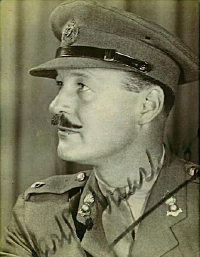 Sure, there's Dutch Camo Landscapes, and Razzle Dazzle, and the Civilian Camouflage Council, but it all pales in comparison to the truly epic WWII camo accomplishments of Jasper Maskelyne and The Magic Gang.
Maskelyne was a British magician-turned-Army camo mastermind who, in 1941, led a ragtag band of desert artists and illusionists who created a series of incredible camo techniques that protected Allied forces in North Africa from aerial reconnaissance and bombardment.
Using burlap and sticks, they disguised trucks as tanks, and tanks as trucks, and they created devices to enable tanks to cover their own tracks across the desert sands. But the most amazing achievements are in his 1949 memoirs, Magic - Top Secret where Maskelyne, whose grandfather, also a magician, invented the pay toilet tells how he saved the port of Alexandria, Egypt from night bombing by building an elaborately lit decoy port, several miles away in the desert. Using incendiary devices and real anti-aircraft artillery, he and his Magic Gang fooled the German bombers with realistic-looking "hits" and return fire; and by morning, his crews would strew papier-mache rubble around the real port, giving simulated damage for the reconn pilots to report back. [below: a German spy photo of part of the port]

The success of the Alexandria decoy was only surpassed by Maskelyne's brilliant [literally] strategy for protecting a vital supply route for the Allies, the Suez Canal. He designed "Dazzle Lights," a rotating structure of made up of mirrors and 24 powerful anti-aircraft searchlights that, when set into motion, gave off a "Whirling Spray,":
[Maskelyne] managed to create beams nine miles long, twenty-four of them from each searchlights [sic] ... the magic mirrors were a success, and the next job was to get the device into mass production. With them, we made twenty-one searchlights serve for the entire one-hundred-mile length of the Suez Canal.That's right, the Suez Canal was saved from being bombed by the biggest lightshow in history: the 100-mile-long, Whirling Spray of almost two dozen Dazzle Lights.
How is it possible that I did not know this before now? Why is this miracle of modern warfare not taught in our military academies? Our elementary schools, even? How are these mindblowing aesthetic achievements not celebrated as a landmark in the history of art? Why is there no Bruckheimer movie, starring Josh Hartnett as the daring soldier magician? Maybe because the entire thing is bullshit.
In 2004, military historian and magician [seriously] Richard Stokes published the findings of his multi-year investigation into Maskelyne's claims. They are gathered in the exhaustively paged website, MaskelyneMagic.com. Working with the magician's son, he had access to Maskelyne's archives and scrapbooks from the war. Stokes also cross-referenced official records, declassified intelligence reports, and consulted experts and historians in the North African war. And there is nothing in the historical record to support Maskelyne's fantastical claims.
On Alexandria, the place where he said he built a decoy port doesn't even exist; neither does the geography he describe match to any in the vicinity of the city. There are no pictures or corroborating eyewitness accounts, and no documentation.
On the Suez front, Stokes demolishes Maskelyne's claim to have invented Dazzle Lights by pointing to similar, tank-based tactics under development since WWI. Again, no record of Dazzle Lights can be found in the historical source material, and extensive accounts of the actual defense of the Canal provide well-documented alternative explanations to Maskelyne's. According to Stokes, Maskelyne didn't actually come up with the Whirling Spray idea until 1942, after the aerial threat had subsided. And he quotes the illusionist's son: "The 'Dazzle Lights' were an idea which was, I believe, constructed only in one prototype and tested on one occasion."
Which appears to be the scene depicted in the photo gallery on Stokes' site, where a searchlight is being outfitted with a faceted, mirrored cone extension:

Which means the photo below, showing an awesomely Duchampian folly, 18 flashlights on a turntable, is somewhat confusing to me:

But with a caption like, "The birth of artificial moonlight, 1942," I'd think that Maskelyne's imagined heroics are long overdue for [re-]creation.
The War Magician| ""Myth is invulnerable to mere facts" - Barthes [all images via MaskelyneMagic.com]
Previously: Bombardment Periphery, Rotterdam, and Los Angeles's 'wigwam' of searchlights; Forrest Myers' light pyramid
Tomasons And Akasegawa Genpei, Translated
I've got browser tabs full of sweet, sweet updates and extensions to some earlier posts. I'll start with Tomasons.

Tomasons [also Thomassons], but really, トマソン, are the inadvertent, useless architectural leftovers, vestiges of a city's churned and rebuilt history. They were invented/ discovered and documented beginning in the 1980s by the Japanese art/architecture collective Rojo Kansatsu [Roadside Observations] and its co-founder Akasegawa Genpei.
At the time, Japan was in the middle of a crazy, real estate-fueled economic bubble, and the built environment was in constant flux. Akasegawa made Tomasons the humorous, overlooked fodder for a magazine column, the compilation of which became a hit in the 80s.
Now, thanks to Kaya Press, Akasegawa's Thomasson writings have been published in English. Should be great stuff. [via metafilter]
Previously, 02/08: On Tomason, or the flipside of Dame Architecture
Related: Roadside Observation [neojaponisme.com]
Related from last week: Berthier's (and Boudvin's) Door, a fake Tomason in Paris [bldgblog, who else]
May 28, 2010
The Togs Must Be Crazy

Colorful, cheap African textiles: they're not just for Yinka Shonibare anymore!
Called Pagne in West Africa and Kanga [also khanga] in Tanzania, 1x1.5m screenprinted cotton wraps are produced all across Africa. There is a tradition to make commemorative kanga for major events, such as the official visit or inauguration of a US president.

Or more typically, the inauguration of a local political leader. Politicians in newly independent nations quickly adapted a traditional practice, and distributed the government-produced fabric for free or at a subsidized cost to their supporters.
As Linda reports in full-color glory on All My Eyes, the Tropen Museum in Amsterdam has a show, "Long Live The President | Portrait Cloths from Africa," which includes over 100 examples of these textiles. Many come from the extensive private collection of Bernard Collet and can be seen online. The Tropen show runs through August 29th. Obviously, everyone should go.
Even more obviously, though, everyone should be commissioning Pagne and Kanga designers to make commemorative patterns for whatever event or non-event they want to propagandize, too. The mind reels at the awesome possibilities.
African Portrait Cloth [all my eyes]
Long Live The President | Portrait Cloths from Africa [tropenmuseum.nl via all my eyes]
Adire African Textiles [adireafricantextiles.com via a.m.e., like basically everything in this post]
May 26, 2010
Nouveau manuel complet du fabricant et de l'amateur de photos

So fantastic. I stumbled across this inadvertent diptych in Google Books, it's pp. 86-7 of P. Ch. Joubert's 1844 addition to the Manuels Roret series, Nouveau manuel complet du fabricant et de l'amateur de tabac.
It's beautiful, somewhere between the process-heavy, content-free abstraction of Walead Beshty and the reverential physical investigations of Abelardo Morell, with a bit of those weird Weegee funhouse mirror photos thrown in for good measure.
And yet they're also entirely of their own time, place, and making.
A few years ago at John Connelly, my buddies Jonah Freeman and Michael Phelan showed some sweet prints of crumpled aluminum foil shot on a flatbed scanner. [Mitterand+Sanz has images] Which could be a great process here. But I'd really love to figure out how to create negatives from these scans and make up some big, old school silver gelatin prints. [thanks GF-R for the heads up on Morell]
Related from last October: Why is Google giving us the finger? [designobserver.com]
Google Image collection of Google Books Finger [via BoingBoing]
May 24, 2010
'Cieli ad alta quota' by Alighiero e Boetti

Hans Ulrich Obrist, is there anything you haven't done? In 1993 as part of the Museum In Progress project, Obrist helped the Italian conceptual artist Alighiero e Boetti realize a longtime idea of putting art on airplanes.
In addition to double-page spreads in their in-flight magazine, Austrian Airlines made six seatback tray-sized puzzles available of Boetti's drawing series, Cieli ad alta quota (High in the Sky).
If any puzzles survived to be collected or traded, they're not generating the typical online info flotsam. Maybe in this case, it should be jetsam.
Museum in Progress On Board [mip.at]
Everyone's An Artist
Artist/curator Anton Vidokle reworks an excellent lecture on the problems of curator/artists in the latest issue of e-flux journal
I feel that whereas artists' engagement with a range of social forms and practices not normally considered part of the vocabulary of art serves to open up the space of art and grant it increased agency, curatorial and institutional attempts to recontextualize their own activities as artistic--or generalize art into a form of cultural production--has the opposite effect: they shrink the space of art and reduce the agency of artists.Curators claiming the mantle of art for their shows is an issue at least as old as the 1960s, but it has been exacerbated, Anton says, by the demise of the critic's power. All in all, a sharp read. [via afc]
Related: Gregory Battcock and 'The Essential Triad'
Pixel Art Minidoc By Simon Cottee
This 11-minute documentary short by Brisbane animator Simon Cottee gives a nice look at contemporary pixel art and its origins.
Unsurprisingly, game developer Jason Rohrer has the most thoughtful perspective on the idealized, ex-post-facto perception of pixels as these perfect, hard-edged squares, which he attributes in part to looking back at old low-res games on new, hi-res monitors.
Cottee et al make the connection between pixels and pointillism, but the focus on animation leaves out the influence both pixel-centric image software, like Photoshop, and pixel-related art shown in galleries. [Juan Cespedes, Cory Arcangel, Sherrie Levine, Joerg Colberg or Thomas Ruff, or even Tauba Auerbach or Gerhard Richter] Still well worth a view.
Slow Cinema vs. Art Cinema
On the occasion of Apichatpong Weerasethakul [1] winning the Palme d'Or, Frieze's Dan Fox has a incisive recap of the debate over Slow Cinema that erupted after Nick James' Sight and Sound recent op-ed calling the genre out as a passive-aggressive dare to the audience to admit they're bored.
The row among film critics and festivalgoers is as annoyingly insidery and lingo-obsessed as any art world argument. [Fox is careful to give equal time to competing terminologies. One blogger critic, Harry Tuttle, thinks Slow Cinema is pejorative, and proffers Contemporary Contemplative Cinema instead, which seems arbitrary. Might as well call it Minimalist Meditative Movies.]
Fox's dead-on point is how insulated and blind these two systems of production and distribution--theater/festival/DVD vs gallery/installation/edition--are from each other. And this, despite the remarkable confluence of interests, strategies, and styles among filmmakers and artists on both sides of the divide:
Much as I admire Tuttle's spirited engagement with his favoured genre of contemporary cinema, nowhere on his timeline of CCC/Slow Cinema is there anything that represents, for instance, the achievements of Structural cinema. This is curious, for if 'plotlessness', 'wordlessness', 'slowness' and 'alienation' are what he is trying to chronicle, where are Andy Warhol's Empire, from 1964, or Michael Snow's 1967 film Wavelength for example? Nor is there any acknowledgement of how these multiple strands of experimental cinema history have fed into the work of artists today.Artists such as Tacita Dean, Sharon Lockhart, and Matthew Barney, for example. [On the other side of the fence, I'm not sure why no one seems to have mentioned my own personal favorite Slow Cineman, Gus Van Sant, who emptied Sundance theaters with Gerry and whose lingering, looming Elephant also won at Cannes.]
Barney has broken theatrical and festival ground with his Cremaster Cycle, of course. But I think Frieze, which has commissioned projects from Weerasethakul, has high hopes for him as a candidate for bringing the worlds of these two film traditions together. We'll see.
Slow, Fast and Inbetween [frieze]
[1] yes, he's in the art world pronunciation guide.
May 23, 2010
Slate-Roofed Houses
A couple of months ago, I wondered aloud about the reason Yves Klein schlepped all the way out to the Parisian suburbs to make the leap into the void for his famous photocollage, Leap into the Void.
The site, 3, Rue Gentil Bernard, Fontenay-Aux-Roses, has changed since October 1960, but it houses a church dedicated to Sainte Rita, with whom Klein had a spiritual connection. [A votive offering assemblage Klein made during one of his pilgrimages to St. Rita's monastery in Italy is in the Hirshhorn's just-opened retrospective.]
As it turns out, I should've just been reading my Art News instead. Kim Levin wrote about Leap Into The Void in the March 2010 issue, and reports that it wasn't Catholic mysticism, but Klein's other passion, judo, that drew him to Fontenay-Aux-Roses.
She cites the 2006 obituary for photographer Harry Shunk who, with his assistant Janos Kender, shot Klein as he "climbed to the top of a wall and dived off it a dozen times--onto a pile of mats assembled by the members of his judo school across the road."
But wait, is it the judo school or the pile of mats that was across the road? After a bit more searching, I found this intro to a 2006 monograph, L'envol d'Yves Klein: L'origine d'une legende, which basically puts Fontenay at the center of Klein's story. [It might help that it was written by a couple of Fontenaysiens, Terhi Génévrier-Tausti and Pierre Descargues.] Anyway, Klein was raised there, and his friend had the Olympic Judo Club there. So yeah.
The best part of Levin's story, though, comes from Michelle White, who curated "Leaps into the Void: Documents of Nouveau Réalist Performance," at the Menil:
after she discovered an odd object in the Menil archives: a piece of slate. It wasn't art--just a piece of slate "collected" by Dominique de Menil in 1981 from the mansard roof that Klein presumably leaped from.The Matteses would be so proud.
White's show includes other photos from the Leap, including this spectacular action detail, which are in the Menil's holdings:

Looks like someone's gotta book a trip to Houston.
Yves Klein's Leap Year [artnews via @johnperrault, yes, he's on twitter now]
Leaps into the Void: Documents of Nouveau Realist Performance, through August, 8, 2010 [menil.org]
National Houses, Inc.
So weird/awesome. A steel panel, prefab, moderne house designed by William Van Alen, and built on top of a craggy boulder at 107th & Riverside, in 1937, seven years after completing his somewhat higher profile project in Midtown, the Chrysler Building?

Christopher Gray has the story--and finds this picture in the Municipal Archives--in
NYT's Streetscapes column.
According to "A Home in Cellophane," a chirpy 1935 Time story about prefabs [found via the Van Alen Institute], Van Alen was actually a director of National Houses, Inc., just one of several prefab startups that were going to pull America's housing market out of the Depression.
The focus of Time's article was actually another venture, American Houses, Inc., who unveiled architect Robert McLaughlin's modular, modernist "machine in which to live," the Motohome, at Grand Central Palace, the same place where Albert Frey & Lawrence Kocher's Aluminaire House had debuted in 1931. [Aluminaire was extensively re/dis/covered here on greg.org in August 2009. Here's a contemporary photo by curator Erik Neil of the house, which is currently on the Islip campus of the NY Institute of Technology.]

Aluminaire was a hastily constructed one-off; the Motohome was a product. It went on "sale," tied with a red bow, and wrapped in cellophane [like the future!] at Wanamaker's department store on April 1. [The half of Wanamaker's that didn't burn to the ground now houses the Astor Place KMart.] There must be some publicity shots or newsreels of this somewhere.

As our country is not dotted with tens of thousands of early International Style or Moderne steel- or asbestos cement-paneled cottages being tended and detoxified by new generations of design-loving caretaker owners, these products failed.
American Houses scrambled to traditionalize its design and materials, and apparently sold around 150 peaked-roof, woodframe Motohomes by 1938. But as of 1991, it sounds like only two of McLaughlin's original modernist Motohouses were still standing; that was when one was discovered in New London, CT, and preservationists persuaded its owner, Connecticut College [image via] to restore, not demolish it. Now the College is working to restore the other modernist prefab next door, dubbed The House of Steel. [Both were bought and used as rental properties by an adventurous museum director named Winslow Ames, who wanted to test the 1930s media's prefab hype.]
Van Alen's National Houses designs did not fare so well. In 1936, his 2-story steel prefab design, called "The House of the Modern Age," was erected for three months on a vacant lot at 39th & Park. It's the little white box in Berenice Abbott's photograph:

The house at 107th & Riverside was an exhibition house, too. And it was obviously torn down, because if it still existed, I'd be living in it. I can't find any other mentions of Van Alen's prefab structures being built, much less surviving.
May 21, 2010
Oh My Heck, Spiral Jetty India Pale Ale
That is so Epic.

From Epic Brewing Company, Salt Lake City, Utah.
Spiral Jetty IPA | Epic Brewing Company [epicbrewing.com via the freshly relocated tyler green]
Related? The Shoppes at Rozel Point, from Visiting Artist (sic), a lecture involving Smithson which I gave at the University of Utah:

Of All The Satelloon Photos I've Loved Before
A digitized collection of vintage NASA Goddard Space Flight Center newsletters led me to the June 23, 1963 issue of LIFE Magazine. If it were possible for any photo of a Project Echo satelloon to be slightly less than awesome, this photo would move forward to be the awesomest:

It's a technician inspecting for leaks during a test inflation of the Echo II at Lakehurst, New Jersey, which was long the Navy's site for giant inflatable vehicles. From the 1930s construction photos of the massive dirigible hangars to the parades of Navy blimps during WWII, the "Lakehurst" is a stealth candidate for awesomest single search term Google's LIFE Magazine image archive. Unfortunately, this photo is not included. I'd love to find it, though; someone deserves a credit.
Here's one of the same test, only there's no location, and it's misdated. credit: NASA. And it's public domain. Here's one of the first ever photos of an Echo satelloon; famous LIFE photojournalist Grey Villet took it while standing next to the antenna used to bounce the first radio signal off Echo I in 1960.

All of this is related to my master plan to show a satelloon as an art object, sure, but it's also precipitated by NASA's latest, the Bullet 580, dubbed, depressingly, "the world's largest inflatable airship," which was test inflated last weekend. At 235 feet long and 65 feet across, it practically fills the Garrett Coliseum in Montgomery, Alabama [below]

If there were a clearer sign that Our Nation has lost its way in the field of Giant Balloons And The Buildings That Hold Them, I can't think of it. A sad, sad day. [images: George Strock/LIFE; AP]
May 20, 2010
'No Artists Were Paid In The Making Of This Commercial'

The ad's been running for a while now, but Jean just spotted this disclaimer at the end of AT&T;'s "Blanket" commercial last night: "The artists Christo and Jeanne-Claude have no direct or indirect affiliation or involvement with AT&T.;"
I will assume they tried to contact Christo by calling him on his iPhone, but they got cut off.
AT&T; Rethink Possible - Blanket Commercial [search youtube if the link is broken]
Previously: The Gates Bill
Please Go To Philoctetes Tonight And Tell Me How It Was
My buddy John Powers has been working on this insane project forlikeever: an artists commentary track--with pictures!--that runs alongside Star Wars IV. Tonight he's presenting it at Philoctetes, and discussing it along with Colby Chamberlain and Luke duBois, who's made a sick score.
I've seen pieces Star Wars and Modernism: an artists commentary emerge in pieces over the months, but tonight's the first time a big section of it will be screened large, and in public. I'm very jealous of all those who can make it out there tonight:
Star Wars and Modernism, an artist commentary conceived and directed by artist John Powers, explores the original 1977 science fiction film as an object. Juxtaposing video with film stills and historical archives, Powers creates a compelling argument that the visual program of the blockbuster can and should be understood in terms of the art, architecture, and politics of Cold-War America. An essay by Powers published in Triple Canopy, with important editorial contributions by Colby Chamberlain, was the genesis of the project. Composer Luke DuBois created the film's original score.Details at Philoctetes.org
May 19, 2010
Koons Makes Art The Old-Fashioned Way

I think we all know that Jeff Koons worked on Wall Street before he became an artist. It's mentioned in many of his profiles. But what, exactly, did he do? And what relevance, if any, does it really have for his work? And on the reception of his work?
Ben Davis provides a perfect example of this bio-factoid-as-analysis in his ambitiously thoughtful unpacking of the aftermath of postmodernism:
Unprecedented new wealth, a more mercurial environment of speculation, the celebration of individualism brought on by the attack on the welfare state, demoralization and fragmentation -- all these form the background for the artistic vocabulary of "postmodernism." I mean, jeez louise, Jeff Koons actually started out as a commodities trader!In her 2005 book, Understanding Interational Art Markets and Management, Joan Jeffri wrote that "Jeff Koons gave up his job as a trader of cotton futures on Wall Street to become an artist."
But the Wall Street connection is not just used to bolster theoretical arguments, or to connect with middle-managers; it's definitional to the art itself.
Continue reading "Koons Makes Art The Old-Fashioned Way"Magnasanti vs. Slave City
Holy smokes, this is so incredible. Vincent Ocasla beat (sic) Sim City by spending three years designing and building Magnasanti, a six million person city that runs flawlessly (sic, again, obv) for 50,000 years. The YouTube video is ominously awesome.
It reminds me of Joep van Lieshout's creepy totalitarian project, Slave City. I'll find some links when I get off this blog-hostile iPad.

Originally called Call Centre, Van Lieshout began designing Slave City, a theoretically self-sufficient, eco-neutral, and highly profitable city of 200,000, in 2005. Reg wrote about Slave City on the occasion of Tim Van Laere Gallery's 2006 show. If I remember correctly, Joep talked about Slave City a lot during his 2007 Tate Artists Talk.
Slave City itself is a little reminiscent of Pig City, the provocatively dystopian proposal to concentrate the Netherlands' sprawling pork industry into highrise farms, which was floated in 2000 by Joep's Rotterdam neighbors, MVRDV.

This is how we end up building The Matrix, people; one cautionary-but-a-little-too-enticing concept study at a time.
interview with Ocasla: the totalitarian Buddhist who beat Sim City [viceland via @jadabumrad]
May 18, 2010
If You See Something, Say Something
Do you find yourself wanting to talk about Group Zero, but the only names you can pronounce are Fontana and Klein [and Westwater]? Do you ever call galleries you're about to walk into, just to hear them say the artist's name? [I just asked at the desk, it's von HILE.]
You may be suffering from Gigli Syndrome, a condition where you avoid saying an artist or designer's name because you're not sure of the pronunciation. Bennifer can't cure all possible outbreaks of Gigli Syndrome, any more than Nomi Malone could inoculate us against the dangers of unknowing mispronunciation, Versace Syndrome.
After typing [well, cut-n-pasting] 0100101110101101.org yesterday morning, I realized a universal cure to either condition is impossible. Americans will never switch to Van Gohchhhh, and Thaddeus Ropatch may never give you more than 10% off, but that doesn't mean we shouldn't do all we can to treat and prevent.

So inspired by my friend Sam, who once helped me avert disaster at Lever House [it's A-B Rosen, not Abby], and as a tribute to the young artist who once printed up business cards reading, "Ed-werd Rew-shay", here is a quick roundup of high-risk artworld names and their correct pronunciations by curators, interviewers, and even the artists themselves:
- 0100101110101101.org: zero-one-dot-org [thx their dealer @magdasawon, pronounced sah-vawn, btw]
- Eija-Liisa Ahtila: AY-ya-lisa AHH-tilah [youtube]
- Kutlug Ataman: KOOT-loo ATTA-mun [tate channel]
- Alighiero e Boetti: Ali-GYAIR-oh BO-etty [he was just one guy, btw. Stuck the "e" in there himself. moma]
- Eli Broad: rhymes with road [thx @manbartlett]
- Marcel Broodthaers: ooh, a Britdown between BROAT-haus and BROOT-ers, with a bit of long O thrown in. I vote for the latter. [mk-g.org]
- Vija Celmins: VEE-ya Sell-muns [youtube thx @lucretiab]
- Marlene Dumas: Mar-LANE du-MAH [moma]
- Rineke Dijkstra: RIN-uh-kuh DIKE-stra [moma]
- Omer Fast: Homer without the H, not Omar [via @magdasawon]
- Os Gémeos: Ose like dose, ZHEH-meh-ose [< a href="http://www.youtube.com/watch?v=ktaUZJEkV-I">coolhunting, alt. pron.: Barry McGee]
- Joseph Grigely: Grig-lee [via hans ulrich (han-ZOOL-rick) at moma]
- Cai Guo-Qiang: Cy, like Twombly, Gwoh, long O, Tsee-ahng, somewhere between a Ch and a Ts [moma]
- Francesca von Habsburg-Lothringen: Hops-burg Lote-ring-en, though I've never heard the Lothringen used/said. [youtube]
- Pierre Huyghe: I say Hweeg to his face, but I almost hear Peter Eleey say Whee. [thx @analogc]
- Dakis Joannou: DOCK-iss ZHO-new [numu youtu]
- Emilia and Ilya Kabakov: KA-buh-Koff, Ka like Kat [youtube, bonus: Andre Putman: PUT like in Putin, man, rhymes with yawn]
- On Kawara: Own, as in rent-to-. Kawara is his family name, so it's Kawara On (河原温) in Japanese. [dude, I speak Japanese. 25 years.]
- Paul Klee: Clay [thx paddy]
- Yayoi Kusama: Yah-yoy Koo-saw-mah. Again, Kusama is her family name, so Kusama Yayoi (草間彌生). [me]
- Aristide Maillol: My-yole [moma]
- Iñigo Manglano-Ovalle: In-EE-go Mawn-glawn-o O-VA-yay [though the guy at SAIC also says peda-GO-gee, so...]
- Laszlo Moholy-Nagy: LAZ-low rhymes with Hasbro, Moley as in holy, Nazh, like gnaws, with a zh on the end [german youtube, but you get the idea]
- Vik Muniz: Moo-NEES [5min]
- Edvard Munch: Moonk [thx paddy]
- Albert Oehlen: Uhrlen, classic umlaut O [moma]
- Maja Oeri, of the Schaulager: Ury, like Early without the "L"; Show- like shower and lager like beer. moma]
- Meret Oppenheim: Merit [moma]
- Francis Picabia: Pih-CAW-bee-uh [moma]
- Otto Piene: PEEN-uh [german youtube]
- Fondazione Sandretto Re Rebaudengo: Ray-Ray-bo-DANG-go, a little like Bojangles [italian youtube]
- Gerhard Richter: For Americans, it's like the scale. For the Teutonically inclined, go ahead and let'er rip, GAIR-haht REESH-tah [gerhard-richter.com]
- Dieter Roth: Rote [german youtube]
- Edward Ruscha: "(Ed-werd Rew-shay)" [walkerart.org and colette.fr thx @valeriemargolis]
- Anri Sala: ON-ree SAHL-LAH [google video]
- Yinka Shonibare: YEEN-kuh SHOW-nih-Bar-eh [tate channel]
- Alec Soth: rhymes with both [youtube, thx @jenbee]
- Sperone: Spare-ownee [just call, you'll see]
- Thyssen-Bornemisza: Tissen BORN-uh-Meesa [youtube]
- Rirkrit Tiravanija: Tier-uh-vah-NEE-juh, there's a reason people just say Rick-rit. hans ulrich at moma]
- Günther Uecker: GOON-ter OO-ker, like a clipped booker [german youtube]
- Joep van Lieshout: Yoop fawn LEASE-howt, [dutch tv, whoops, I've said van lees-hote to his face, too]
- Apichatpong Weerasethakul: A like apple pih-CHAT like room pong WEIR like weird -uh-suh-THA like Thatcher cull like a herd [cannes 2010 press conf]
- Ai Weiwei (艾未未): Eye way way, family name is Ai [paleycenter.org]
- Rachel Whiteread: reed, not red [moma]
- Witte de With: VITT-uh de VIT [dutch youtube]
Some build on each other; once you know Bas Jan Ader [Boss Yan Adder], you can do Jan Dibbetts, Jan Schoonhoven [Skoon-ho-ven], Christian Jankowski [Yan-KOFF-ski], and so on. If your favorites aren't on the list, please feel free to send them along.
May 17, 2010
Chip Of Fools
Washington Post art critic Blake Gopnik commenting on the tiny chip of porcelain Eva and Franco Mattes, the formerly anonymous artists behind 0100101110101101.org, reportedly took from one of Marcel Duchamp's urinal sculptures:
In the case of Duchamp's "Fountain," could it be that the Italians are actively helping his art do its work? The Duchamp urinals we now see in our museums are visibly handcrafted replacements for his mass-produced industrial original, which disappeared early on. By pawning off a piece of handicraft, made by a hired artisan, onto his collectors, I think Duchamp was poking fun at any fool who insisted on getting an "original" Duchamp, instead of heading to their neighborhood plumbing supplier. The chip of porcelain in "Stolen Pieces" is an extension of Duchamp's chipping away at precious art and its status as collectible commodity.Ah, um, no.
Actually, as has been reported recently by no less august a source than The Economist, Duchamp's Fountains replicas include two or three actual, vintage urinals Duchamp signed, showed, or sold; and somewhat more than twelve which were cast, just as porcelain is, from a clay sculpture [aka "the prototype"] made from Arthur Stieglitz's photo of the "original."

16 are included in Duchamp's catalogue raisonnee, including the lost original and a presently lost 1953 reproduction, but not including the prototype or the additional casts Duchamp's dealer Arturo Schwarz apparently made and has been shopping around privately.
Now to Gopnik's fools. Here is a list, as compiled by Cabinet Magazine in 2007, of traffickers and current owners of Fountain:
- The Philadelphia Museum of Art
- Moderna Museet, Stockholm
- San Francisco Museum of Modern Art
- Tate Modern, London
- National Gallery of Canada, Ottawa
- The National Museum of Modern Art, Kyoto
- Dina Vierny Foundation-- Maillol Museum, Paris
- Indiana University Art Museum, Bloomington
- National Museum of Modern Art, Pompidou Center, Paris [which has been both pissed in and attacked with a hammer since the Matteses' own assault]
- The Israel Museum, Jerusalem
- National Gallery of Modern Art, Rome
- Duchamp dealer and MoMA trustee Sidney Janis
- Duchamp dealer and edition publisher Arturo Schwarz
- Larry Gagosian, who sold one to its present owner
Three are in private collections, not including Schwarz's extras. The prototype was sold to Andy Warhol in 1973. Dakis Joannou purchased it at Sotheby's auction of Warhol's estate in 1988. In case you couldn't tell, that's the prototype up there, glazed and signed just like the rest of them.
Which ones of these does Gopnik consider fools and the butt of Duchamp's joke? The Moderna Museet, whose Fountain was donated at Duchamp's request? Or the Philadelphia Museum which, thanks to the Arensburgs, indefatigable Duchamp collectors and supporters for decades, now houses the largest collection of the artist's work in the world, and which was secretly chosen by him as the posthumous recipient of his elaborate, last work, Étant donnés? All the rest? Or just all of them?
update:At AFC, Paddy has a great 1961 quote from Duchamp about his object selection criteria. Me, I unfortunately started my period commentary search in the 1973 Duchamp retrospective catalogue by Anne d'Harnoncourt and Kynaston McShine. But so far, it's really thin. So much effort appears to be devoted to his surrealism and his traditional works: drawings, etc., that really strike me as uncompelling. Funny what a couple of generations of soaking in interpreted Duchampisms will do to a discourse.
Anyway, my point, I hope it's clear, was not just to harsh on Gopnik, but to correct what I believe to be an inapt an unsupported claim that Duchamp considered buyers of readymades (et al) "fools" or that they didn't know what an "original" meant in the artist's context. Just consider how many boites en valise he published. I'm happy to be set straight, but I believe that Gopnik doesn't have a clue that he's basically implying that Duchamp's entire object-based oeuvre is a prank--which the leading museums of the world have apparently fallen for for fifty+ years.
The Civilian Camouflage Council
December 1942, the US is at war, and everyone is tinkering in his basement, doing his part to protect the civilian and industrial landscape against the latest technological threat: aerial photo reconnaissance. From a lengthy, fascinating article in Popular Mechanics:
But today civilians around the world, particularly in the United States where the home workshop abounds, are beginning to do what nature forgot: fooling the spy in the sky with camouflage. A recent estimate indicates that more than 5,000 civilians have taken up camouflage research as a serious occupation.That number did not include the teams of artists and theater designers and architects at various museums, or much of the art and design departments at Pratt, where dean James Boudreau could be seen demonstrating Pratt's "sun machine," which "duplicates sun-shadow conditions at any given moment of the year":

"Since military camouflage is well in hand," Pop Mech said reassuringly, and while "the government has not yet completely coordinated local civilian camouflage efforts," the field is "wide open to patriotic and inquisitive minds."

There followed a primer on basic camo strategies--including Dazzle painting--shadow and lighting, and photo mapping, all illustrated with photos of people photographing painted and sculpted models as if from the air.
Though they were namechecked, the groundbreaking, eerily prescient work of New York's Civilian Camouflage Council [!] went unremarked.
Founded by Long Island architect Greville Rickard, the CCC had, with Pratt's Boudreau, organized an exhibit of industrial camouflage designs at the Advertising Club, which opened December 8, 1941. In Dec. 14 review of the show titled, "Art In A Practical Service To War," the NY Times' Edward Alden Jewell said,
This is a show that every one should see. It illustrates vitally important defense methods as applied to needs that are immediate all over this country. A fortnight ago such needs might have been looked upon by the public as remote and more or less theoretical. Such is the terrible swiftness with which events have moved, they must now be recognized as of prime consequence.Jewell then went on to discuss shifts in camouflage as they related to art history:
The progress of the art of camouflage in, say, the last three decades seems not altogether unrelated to certain "key" phases in the development of painting and sculpture. As I understand it, principles oof Impressionism and even of Cubism were examined and to some extent adapted to the uses of the camoufleur during the last World War. But in contradistinction to this trend, teh present trend parallels what in art parlance we designate as Naturalism. It may be said that in the year 1941 camouflage, whether industrial or strictly military, goes with marked singleness of purpose "back to nature."The show also included contributions from Stanley McCandless, then at Yale, who is known as the father of modern stage lighting.
In August 1942, the CCC-sponsored Pratt exhibit had been combined with military material and restaged at The Museum of Modern Art. Organized by The Modern's Carlo Dyer, "Camouflage in Civilian Defense" was one of at least eight war-themed shows The Modern organized and sent on tour in 1942. Doing its part to beat back isolationism!
Fooling the Spy in the Sky, Pop Mech Dec. 1942 [via google books]
May 16, 2010
One Makakai, Acrylic Pressure Hull, Shipped, Please

I saw a citation in a footnote somewhere, but in the three weeks it took for the Design Review: Industrial Design 23rd Annual, 1977, to arrive, I'd completely forgotten why I'd ordered it.
No matter, this insane image of a Makakai deepwater transparent hull submersible (THS) is worth the $2+shipping.
There's a lot less info online that I'd expect for such an awesome-looking rig, but according to Globalsecurity.org, it was developed at the Naval Undersea Research And Development Center [NURAD?] in San Diego:
Two standard spherical hull designs were available; (a) 66 inch outside diameter and 2.5 inch thickness for 600 ft. operational depth and (b) 66 inch outside diameter and 4.0 inch thickness for 1000 ft. depth. The hulls were fabricated by adhesive bonding of 12 thermoformed spherical pentagons, two of which incorporate metallic hatches.I've just added it to my military industrial geodesic sphere government surplus save search list on eBay. Competing bidders, be warned.
Deep Submersible Rescue Vehicle [globalsecurity.org]

